
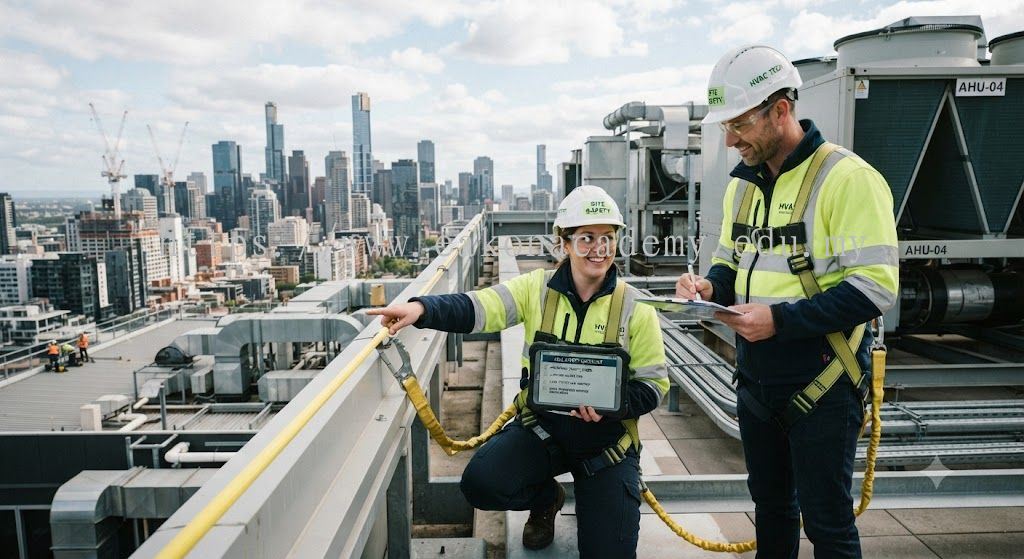
Air Conditioning Technician Fall Safety Procedures: Essential Guidelines for Safe HVAC Work at Height
Air conditioning technician fall safety procedures are essential practices that help HVAC professionals reduce workplace hazards when performing installation, maintenance, and repair tasks at elevated locations. In the air conditioning industry, technicians often need to work at height for activities such as installing outdoor condenser units, servicing rooftop air conditioning systems, maintaining commercial HVAC equipment, and accessing ceiling-mounted units. Without proper fall prevention knowledge and safety training, technicians may face serious risks including falls, injuries, equipment damage, and unsafe working conditions. Eakon Academy provides professional HVAC training programs that focus on improving technician competency, workplace safety awareness, and practical skills required for modern HVAC operations.
Working at height requires careful preparation, proper planning, and effective safety control measures. Air conditioning technician fall safety procedures begin with identifying potential hazards before starting any work activity. Technicians should evaluate the working environment, inspect access equipment, check surface conditions, and determine suitable protection methods. Common risks include unstable ladders, slippery surfaces, incorrect use of safety equipment, poor weather conditions, electrical hazards, and improper handling of tools. Conducting a proper risk assessment allows technicians to implement preventive actions and reduce the possibility of accidents during HVAC projects.
One of the most important aspects of fall safety for air conditioning technicians is the correct selection and use of personal protective equipment (PPE). Safety harnesses, lanyards, anchor points, helmets, and protective footwear are essential safety equipment when working in elevated areas. Technicians must understand how to inspect their PPE, wear equipment correctly, and follow safe operating procedures to ensure effective protection. Proper training helps HVAC workers recognize the importance of fall protection systems and develop responsible safety habits when performing challenging installation and maintenance tasks.
Air conditioning technician fall safety procedures also involve safe ladder usage and access equipment management. Many residential and commercial air conditioning jobs require technicians to use ladders for indoor unit installation, refrigerant piping work, electrical connections, and servicing activities. Before using a ladder, technicians should inspect for defects, ensure proper placement on stable surfaces, maintain three points of contact, and avoid unsafe movements such as overreaching or carrying heavy equipment while climbing. These simple but important procedures can significantly reduce the risk of falls and improve workplace efficiency.
For larger HVAC projects involving rooftops, high-rise buildings, or industrial cooling systems, technicians may require additional fall prevention methods such as scaffolding, mobile elevated work platforms (MEWP), and approved fall arrest systems. Proper training is necessary to ensure technicians understand equipment operation, safety inspections, emergency procedures, and communication methods when working as part of a team. Securing tools and materials is also important because falling objects can create additional hazards for workers and people in surrounding areas.
Implementing effective air conditioning technician fall safety procedures provides many benefits for HVAC companies and professionals. A strong safety culture helps reduce workplace accidents, improve productivity, and ensure compliance with occupational safety expectations. Trained technicians are more confident when working at height and can complete HVAC installation, repair, and maintenance activities with greater accuracy and professionalism. Safety knowledge is especially valuable for technicians handling split air conditioning systems, VRV/VRF systems, commercial HVAC units, and industrial cooling equipment.
Eakon Academy supports the development of competent HVAC technicians through practical and industry-focused training programs. Learning proper air conditioning technician fall safety procedures enables participants to understand hazard identification, fall prevention techniques, safe equipment usage, and emergency response methods. These skills help technicians build confidence while maintaining professional standards in the air conditioning and HVAC industry.
By applying proper fall safety procedures, air conditioning technicians can protect themselves, improve workplace performance, and provide safer HVAC services to customers. Height safety awareness is a fundamental requirement for every professional technician who wants to achieve higher competency, reduce workplace risks, and build a successful career in the HVAC industry.
Lihat detail lebih lanjut tentang EAKON ACADEMY SDN BHD Malaysia
