
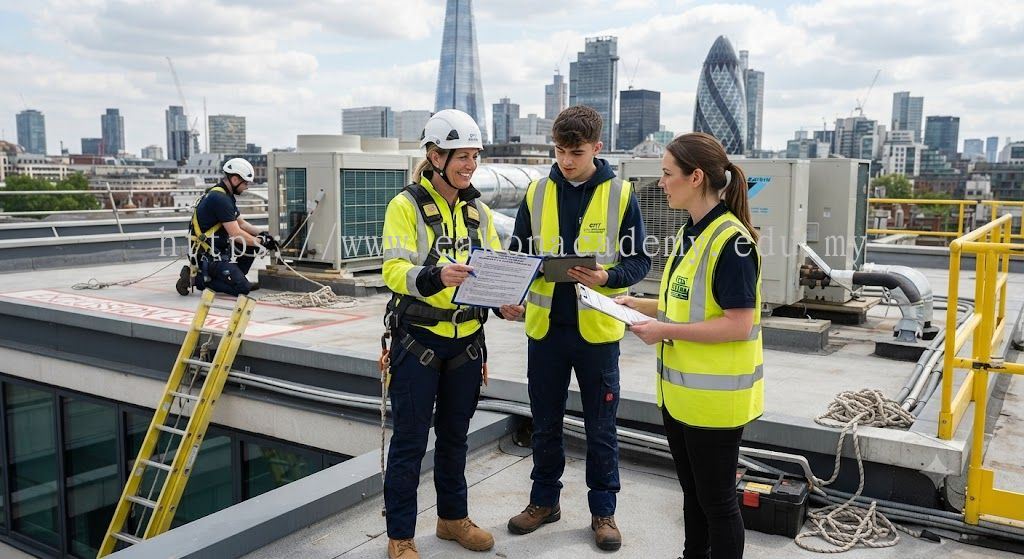
Air Conditioning Installation Risk Assessment at Height for Safe HVAC Work Practices
Air conditioning installation risk assessment at height is a critical safety procedure used to identify, evaluate, and control potential hazards during elevated HVAC installation activities. In the air conditioning industry, technicians frequently perform tasks at height such as installing outdoor condenser units, mounting indoor units on elevated walls, setting up piping systems, installing brackets, performing electrical connections, and carrying out maintenance work on rooftop or commercial HVAC systems. A proper risk assessment at height ensures that every air conditioning installation project is completed safely while reducing the possibility of falls, injuries, equipment damage, and workplace accidents.
At Eakon Academy, eakonacadem.edu.my, professional HVAC training emphasises the importance of effective air conditioning installation risk assessment at height to improve technician competency and workplace safety standards. Before beginning any installation work, HVAC technicians must understand how to identify possible hazards, evaluate risk levels, and implement suitable control measures. This process allows technicians and employers to create a safer working environment by preparing appropriate equipment, selecting correct access methods, and following proper working procedures.
Working at height during air conditioning installation involves various risks that require careful planning and assessment. Common hazards include unstable ladders, incorrect ladder positioning, unsafe scaffolding, lack of fall protection equipment, poor surface conditions, electrical exposure, falling tools, heavy lifting activities, and unpredictable weather conditions. Through a detailed risk assessment, HVAC professionals can determine the safest method to complete installation tasks while protecting themselves, their team members, and people around the work area.
An effective air conditioning installation risk assessment at height begins with a site inspection. Technicians need to examine the installation location, identify the required working height, assess access points, check ground stability, and determine whether additional safety equipment is required. For example, installing an outdoor air conditioning unit on a high-rise building requires proper evaluation of lifting methods, anchor points, safety harness systems, and communication between workers. Careful preparation helps prevent accidents and ensures that installation work is carried out efficiently.
The use of suitable safety equipment is also an important part of height risk assessment for air conditioning installation. Personal protective equipment (PPE) such as safety helmets, safety harnesses, non-slip footwear, and protective gloves can reduce the impact of workplace hazards. In addition, technicians must understand safe ladder practices, mobile elevated work platform (MEWP) operation, and proper tool handling techniques when working at elevated positions. These safety practices contribute to better quality installation results and improved industry professionalism.
For HVAC contractors and technicians in Malaysia, understanding air conditioning installation risk assessment at height is essential due to the increasing demand for residential, commercial, and industrial cooling systems. Modern HVAC projects often involve complex installation environments, including shopping centres, office buildings, factories, and high-rise properties. Proper safety planning allows technicians to manage challenging conditions while maintaining compliance with workplace safety expectations.
Training in air conditioning installation risk assessment at height helps HVAC professionals develop stronger awareness of hazard prevention, emergency response procedures, and safe work practices. It also supports companies in building a positive safety culture, reducing downtime caused by accidents, and improving customer confidence in professional HVAC services. Skilled technicians who understand risk assessment methods can complete installation projects with greater efficiency, reliability, and safety.
Eakon Academy provides HVAC training programmes designed to enhance technical knowledge and safety awareness for air conditioning professionals. By learning proper risk assessment methods, fall prevention techniques, and safe installation procedures, participants can improve their ability to perform HVAC work at height responsibly. Visit eakonacadem.edu.my to discover professional HVAC training solutions that support safer air conditioning installation practices and industry excellence in Malaysia.
Lihat detail lebih lanjut tentang EAKON ACADEMY SDN BHD Malaysia
