
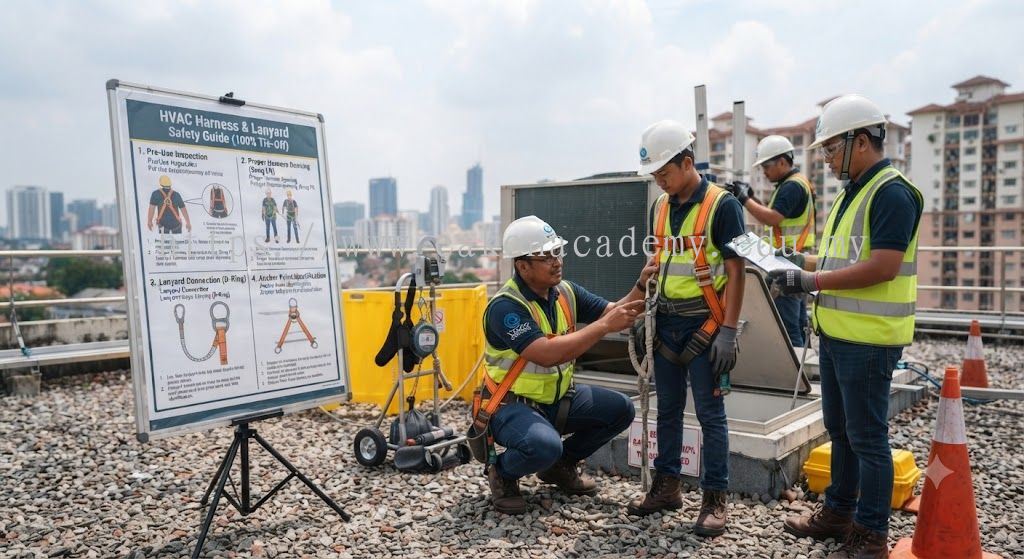
Air Conditioning Harness and Lanyard Safety Guide: Essential Fall Protection for HVAC Technicians Working at Height
Working at height is one of the most common hazards faced by air conditioning technicians during installation, servicing, maintenance, and repair of HVAC systems. Whether installing outdoor condenser units on building façades, servicing rooftop air conditioning equipment, maintaining VRF and VRV systems, or inspecting commercial HVAC installations, technicians are exposed to significant fall risks. This is why following a comprehensive air conditioning harness and lanyard safety guide is essential for every HVAC professional. Proper use of fall protection equipment not only safeguards workers but also enhances productivity, ensures compliance with Malaysian occupational safety requirements, and demonstrates a commitment to professional workmanship. At Eakon Academy (eakonacadem.edu.my), we provide practical training that combines advanced HVAC technical skills with industry-recognised working-at-height safety practices, preparing technicians to perform their duties safely and confidently.
A full-body safety harness is one of the most critical pieces of personal protective equipment (PPE) for technicians working at height. Unlike waist belts, which can cause serious injuries during a fall, a full-body harness distributes fall forces across the shoulders, thighs, chest, and pelvis, significantly reducing the risk of severe injury. Every air conditioning technician should understand how to inspect, wear, adjust, and properly fit a harness before beginning work. The harness should fit snugly without restricting movement, while all buckles, straps, stitching, and D-rings must be checked for signs of wear, damage, corrosion, or fraying. Routine inspections before each use help ensure that the equipment remains reliable and capable of protecting the wearer in the event of a fall.
Equally important is the correct selection and use of safety lanyards. A lanyard connects the technician’s safety harness to an approved anchor point, preventing or arresting falls during elevated work. Various types of lanyards are available depending on the nature of the HVAC task, including shock-absorbing lanyards, adjustable restraint lanyards, positioning lanyards, and self-retracting lifelines (SRLs). Shock-absorbing lanyards are particularly valuable because they reduce the force experienced by the worker during a fall, lowering the risk of injury. HVAC professionals must understand the purpose of each lanyard type and select equipment appropriate for the work environment, access conditions, and potential fall distance.
Selecting an appropriate anchor point is another essential element of an effective fall protection system. Anchor points must be capable of supporting the required load according to applicable safety standards and manufacturer specifications. Air conditioning technicians should never attach their lanyards to guardrails, piping, electrical conduits, scaffolding components not designed for fall protection, or temporary fixtures that cannot withstand fall arrest forces. Instead, they should connect only to certified anchor points specifically engineered for fall protection. Understanding anchor point selection is a key topic in professional HVAC safety training because an improperly selected anchor can result in catastrophic equipment failure during a fall.
Before carrying out any air conditioning installation or maintenance work at height, technicians should perform a comprehensive risk assessment. This involves identifying hazards such as fragile roofs, slippery surfaces, adverse weather, overhead electrical lines, unstable structures, limited access routes, and nearby moving equipment. The assessment should determine whether fall protection is required, what type of harness and lanyard system is appropriate, and whether additional controls such as guardrails, elevated work platforms, or scaffolding should be used. Proper planning significantly reduces workplace accidents and ensures that technicians are fully prepared before work begins.
Routine inspection and maintenance of fall protection equipment are equally important. Harnesses and lanyards should be stored in clean, dry environments away from direct sunlight, excessive heat, chemicals, oils, and moisture that may weaken the materials over time. Equipment should be inspected regularly according to manufacturer recommendations, with detailed records maintained as part of workplace safety documentation. Any harness or lanyard that has been involved in a fall arrest event must be removed from service immediately and replaced, regardless of whether visible damage is present. Regular maintenance extends equipment lifespan while ensuring continued reliability.
Proper training is essential for maximizing the effectiveness of harness and lanyard safety systems. HVAC technicians should receive practical instruction covering harness fitting, lanyard attachment, anchor point selection, fall clearance calculations, emergency rescue planning, suspension trauma awareness, equipment inspection, and safe working procedures. Hands-on training allows technicians to become familiar with real working scenarios, improving confidence and ensuring they can respond appropriately in emergency situations. Employers who invest in regular working-at-height training not only protect their workforce but also improve compliance with workplace safety regulations and reduce costly incidents.
Safe work practices complement the use of fall protection equipment. Technicians should maintain three points of contact whenever climbing, avoid overreaching while working, secure tools to prevent falling objects, communicate effectively with team members, and monitor weather conditions before beginning rooftop or elevated work. High winds, heavy rain, lightning, and poor visibility can significantly increase the risks associated with working at height and should be carefully evaluated before continuing any HVAC task.
As Malaysia’s HVAC industry continues to expand across residential, commercial, and industrial sectors, employers increasingly seek technicians who possess both technical expertise and strong safety competencies. Knowledge of harness and lanyard safety demonstrates professionalism, enhances employability, and contributes to safer workplaces across the industry. Clients also place greater trust in contractors who prioritise occupational safety while delivering high-quality air conditioning services.
At Eakon Academy (eakonacadem.edu.my), we are committed to developing skilled HVAC professionals who understand the importance of working safely at height. Our specialised training programmes combine practical air conditioning installation and servicing techniques with comprehensive fall protection education, including the correct use of harnesses, lanyards, anchor systems, risk assessments, and emergency response procedures. Through realistic hands-on training and expert instruction, technicians gain the confidence, knowledge, and practical experience needed to perform elevated HVAC work safely and efficiently. Mastering the principles outlined in this Air Conditioning Harness and Lanyard Safety Guide helps technicians reduce workplace risks, comply with safety regulations, improve operational efficiency, and build long-term success in the air conditioning and HVAC industry.
Lihat detail lebih lanjut tentang EAKON ACADEMY SDN BHD Malaysia
