
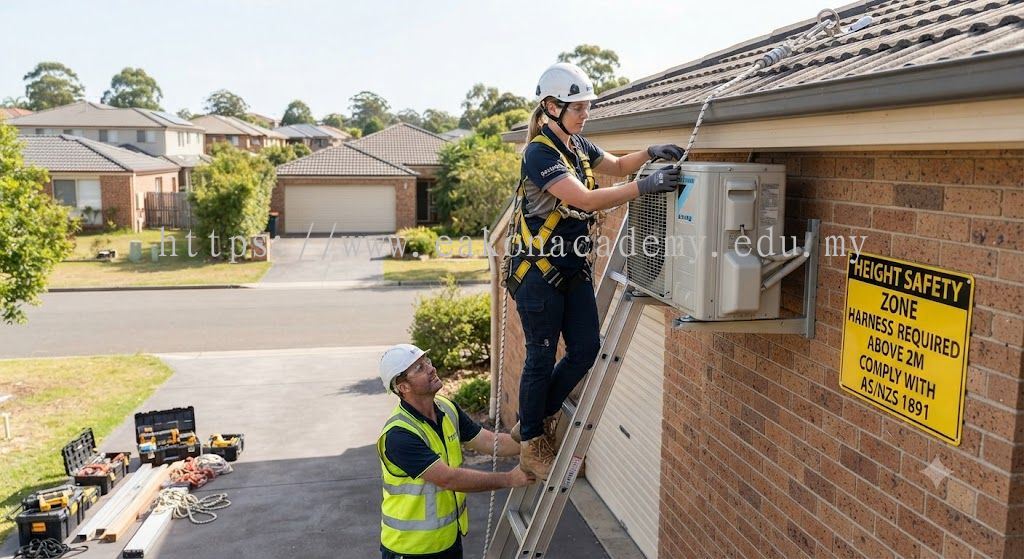
HVAC Installation Height Safety Requirements: Essential Working at Height Guidelines for HVAC Technicians in Malaysia
HVAC installation height safety requirements are an important part of professional air conditioning installation practices, especially for technicians and contractors who perform work at elevated locations. Modern HVAC projects often involve installing indoor units, outdoor condenser units, refrigerant piping systems, ductwork, electrical connections, and mechanical equipment in areas such as rooftops, ceilings, high-rise buildings, and commercial facilities. Without proper height safety procedures, HVAC technicians may face serious risks including falls, injuries, equipment damage, and workplace accidents. Eakon Academy provides professional HVAC training programs designed to improve technician competency, safety awareness, and practical installation skills for Malaysia’s growing HVAC industry.
Working at height is one of the most common hazards faced during HVAC installation activities. Technicians may need to access elevated areas using ladders, scaffolding, mobile platforms, or rooftop access systems to complete installation tasks. Understanding HVAC installation height safety requirements helps professionals identify potential hazards, select appropriate safety controls, and apply safe working procedures. Proper height safety knowledge ensures HVAC technicians can complete installation projects efficiently while maintaining a safe working environment.
Before beginning any HVAC installation project, conducting a detailed risk assessment is one of the most important safety requirements. Technicians and contractors should inspect the work location, identify possible hazards, and determine suitable preventive measures. The assessment should include checking access conditions, surface stability, electrical risks, weather conditions, equipment handling requirements, and potential fall hazards. Proper planning allows HVAC teams to control risks before installation work begins and improves overall workplace safety.
The use of personal protective equipment (PPE) is a critical part of HVAC installation height safety requirements. Technicians working at elevated locations should use suitable safety equipment such as safety helmets, safety harnesses, protective footwear, gloves, and other protective gear depending on the work environment. Correct PPE selection, inspection, and usage help reduce injuries caused by falls, falling objects, sharp materials, and unexpected workplace incidents.
Safe ladder and access equipment practices are also essential for HVAC installation work. Many residential and commercial air conditioning installations require technicians to work on ladders when mounting indoor units, connecting piping, or completing electrical connections. Unsafe ladder placement, unstable surfaces, overreaching, and incorrect climbing techniques can increase the risk of falls. Professional HVAC training helps technicians understand proper ladder inspection, safe positioning, and correct access methods.
For commercial and industrial HVAC projects, height safety requirements become even more important due to larger equipment and more complex working environments. Technicians may need to work on rooftops, mechanical rooms, elevated platforms, and building structures. Safe installation procedures should include fall protection systems, secure movement on elevated surfaces, proper tool handling, and effective communication between workers. These practices help prevent accidents and ensure smooth project completion.
Equipment handling is another important consideration during HVAC installation at height. Air conditioning units, compressors, outdoor condensers, copper piping, and installation tools can be heavy and difficult to transport. Improper lifting methods or unsecured equipment may result in injuries, dropped objects, or property damage. Technicians should receive proper training in lifting techniques, equipment transportation, and safe installation methods to maintain workplace safety.
Electrical and refrigerant safety must also be included in HVAC installation height safety procedures. HVAC technicians must follow proper electrical isolation methods, use appropriate testing equipment, and apply safe refrigerant handling practices. These procedures protect workers from electrical hazards, refrigerant exposure, and system installation risks while ensuring reliable HVAC operation.
Eakon Academy focuses on providing practical HVAC training that combines technical knowledge with essential workplace safety skills. Through hands-on training programs, technicians and contractors can improve their understanding of HVAC installation methods, height safety procedures, hazard control techniques, and professional industry standards. These skills help HVAC professionals perform safer work and deliver higher-quality services to customers.
Following proper HVAC installation height safety requirements is essential for protecting workers, improving installation efficiency, and maintaining professional HVAC standards. Effective safety practices reduce workplace accidents, increase technician confidence, and support successful HVAC project outcomes. Eakon Academy continues to support Malaysia’s HVAC industry by developing skilled, knowledgeable, and safety-conscious technicians who are prepared to meet modern installation challenges and workplace safety expectations.
Lihat detail lebih lanjut tentang EAKON ACADEMY SDN BHD Malaysia
