
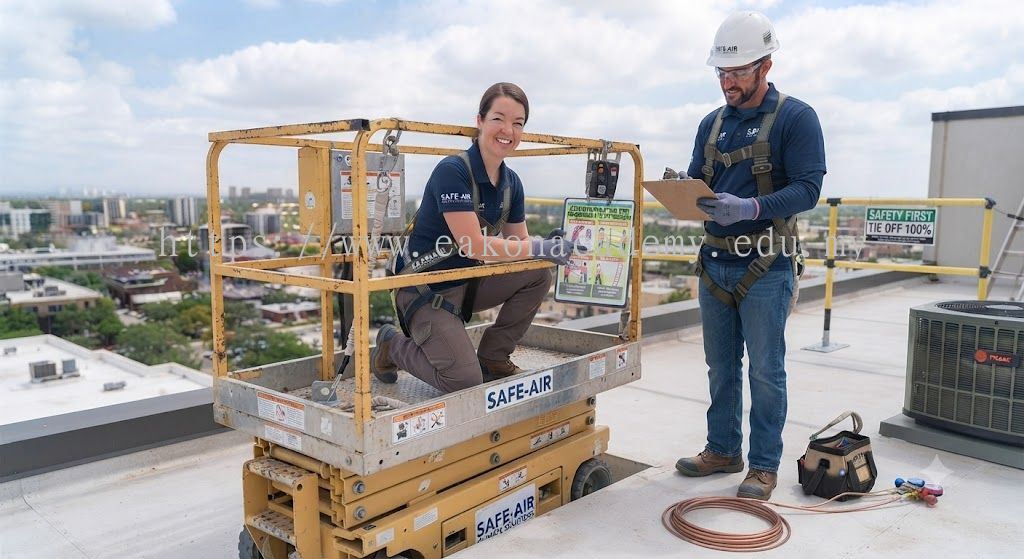
HVAC Elevated Work Platform Safety Procedures – Essential Safety Guide for Professional HVAC Technicians
The HVAC elevated work platform safety procedures are essential guidelines designed to help HVAC technicians safely perform installation, servicing, repair, and maintenance activities when using elevated work platforms. Modern HVAC projects often require technicians to access high-level equipment areas such as rooftops, ceilings, commercial buildings, industrial facilities, and mechanical service locations. Proper knowledge of elevated work platform safety helps reduce workplace hazards, improve technician confidence, and ensure HVAC tasks are completed efficiently according to professional safety practices. At Eakon Academy, we focus on developing skilled HVAC professionals who understand that workplace safety is a fundamental part of quality HVAC operations.
HVAC technicians frequently work in environments where elevated access equipment is required to complete technical tasks. Activities such as installing outdoor condenser units, maintaining commercial air conditioning systems, servicing rooftop HVAC equipment, repairing high-level components, and performing system inspections may require the use of elevated work platforms. Without proper safety procedures, technicians may face risks such as falls, unstable equipment operation, electrical hazards, and falling objects. Understanding HVAC elevated work platform safety procedures allows workers to identify potential hazards and apply effective safety controls before beginning work.
The first step in safe elevated platform operation is conducting a proper workplace assessment. Before using an elevated work platform, HVAC technicians should inspect the working environment, identify possible hazards, and confirm that the equipment is suitable for the required task. Important considerations include checking ground conditions, evaluating surrounding obstacles, reviewing electrical hazards, confirming platform capacity, and ensuring workers understand safe operating procedures. Proper preparation helps create a safer working environment and reduces the possibility of workplace accidents.
Equipment inspection is a critical part of HVAC elevated work platform safety procedures. Technicians should check the condition of the elevated platform before use, including controls, safety features, structural components, and operational functions. Any equipment showing signs of damage or malfunction should not be used until it has been properly inspected and repaired. Regular maintenance and inspection ensure that elevated work platforms remain reliable and safe for HVAC applications.
Personal protective equipment (PPE) is another important component of elevated work platform safety. HVAC technicians may require safety helmets, protective footwear, gloves, safety harnesses, and fall protection systems depending on the working conditions. Correct PPE usage helps protect workers from potential injuries while performing elevated HVAC tasks. Following safe working at height for HVAC technicians principles ensures that technicians understand how to use protective equipment effectively and maintain safe working practices.
Elevated work platforms are commonly used in various HVAC applications, including commercial air conditioning installation, VRF and VRV system maintenance, rooftop HVAC servicing, industrial cooling system projects, and large-scale mechanical installations. These environments often require technicians to handle tools, refrigerant systems, electrical components, and equipment while working at height. Proper safety procedures allow technicians to perform complex tasks with greater control and confidence.
Safe operation of elevated platforms also requires proper communication and teamwork. HVAC projects often involve multiple workers who must coordinate activities carefully to prevent accidents. Technicians should maintain awareness of their surroundings, follow safety instructions, and communicate effectively with team members during elevated work activities. Strong teamwork contributes to a safer and more efficient HVAC workplace.
At Eakon Academy, our HVAC training programs provide practical hands-on learning combined with professional safety knowledge. Participants gain experience in air conditioning installation, servicing techniques, troubleshooting methods, equipment handling, and workplace safety procedures. Understanding HVAC elevated work platform safety procedures helps trainees develop professional skills and prepares them for real-world HVAC industry requirements.
For HVAC contractors and service companies, implementing proper elevated work platform safety procedures improves workplace protection, reduces accident risks, and enhances project performance. A trained HVAC technician who understands safe platform operation can complete installation and maintenance activities more effectively while maintaining high safety standards.
Developing knowledge of HVAC elevated work platform safety procedures is an important step for anyone pursuing a career in the air conditioning and refrigeration industry. Combining technical HVAC expertise with proper height safety awareness allows technicians to work safely, efficiently, and professionally. Eakon Academy provides professional HVAC training programs designed to strengthen technical competency, improve workplace safety knowledge, and prepare future HVAC professionals for successful careers in the modern HVAC industry.
Lihat detail lebih lanjut tentang EAKON ACADEMY SDN BHD Malaysia
