
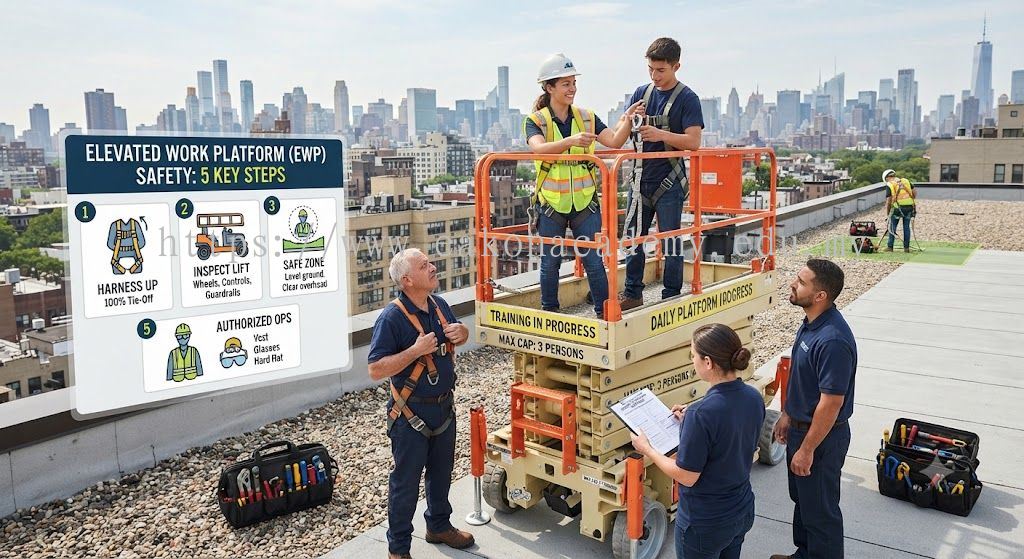
HVAC Elevated Work Platform Safety Training: Professional Working at Height Course for Air Conditioning and Refrigeration Technicians
HVAC elevated work platform safety training is an essential program for air conditioning technicians, refrigeration engineers, HVAC installers, maintenance personnel, mechanical contractors, and facility management professionals who perform installation, servicing, inspection, and repair work at elevated locations. Modern HVAC systems are commonly installed on rooftops, commercial buildings, industrial facilities, shopping malls, hospitals, hotels, warehouses, factories, and high-rise developments where technicians frequently rely on elevated work platforms to safely access equipment. Mobile Elevated Work Platforms (MEWPs), including scissor lifts, boom lifts, vertical mast lifts, and personnel lifts, provide a safer and more efficient alternative to ladders and traditional scaffolding when working at height. However, improper operation of these machines can lead to falls, tip-over incidents, collisions, electrical hazards, and serious workplace injuries. At eakonacadem.edu.my, we provide comprehensive HVAC elevated work platform safety training that combines technical HVAC skills with practical working at height knowledge, ensuring technicians develop the competence required to operate elevated platforms safely while meeting industry best practices and occupational safety requirements.
As commercial and industrial HVAC systems become larger and more complex, technicians are increasingly required to access rooftop air handling units, cooling towers, packaged air conditioning units, VRF and VRV systems, chillers, ventilation systems, and large ductwork installations located several metres above ground level. Elevated work platforms provide safe access to these systems while improving technician mobility and reducing physical strain. Professional HVAC elevated work platform safety training teaches technicians how to select the appropriate access equipment for different job sites while understanding the limitations, capabilities, and safe operating procedures for each type of platform.
A key element of HVAC elevated work platform safety training is workplace hazard identification and risk assessment. Before operating any elevated platform, technicians should assess the work environment by inspecting ground stability, surface conditions, roof edges, overhead obstructions, nearby electrical power lines, weather conditions, access routes, pedestrian traffic, and emergency escape options. Understanding potential hazards before lifting personnel significantly reduces the likelihood of accidents and helps ensure compliance with workplace health and safety regulations. Proper risk assessment also enables contractors to select the most suitable equipment for the task while minimizing operational risks.
Safe pre-operation inspection is another essential component of elevated work platform training. Every Mobile Elevated Work Platform should undergo a comprehensive inspection before use. HVAC technicians learn to inspect tyres, hydraulic systems, batteries, emergency lowering controls, guardrails, platform gates, control panels, brakes, warning devices, stabilizers, and structural components. Identifying equipment defects before operation helps prevent mechanical failures that could result in accidents during elevated HVAC installation or maintenance activities.
Operator competency is fundamental to the safe use of elevated work platforms. Professional training provides practical instruction on operating boom lifts, scissor lifts, vertical lifts, and articulated platforms in accordance with manufacturer recommendations and workplace safety standards. Technicians learn correct operating techniques, safe platform positioning, movement restrictions, load capacity limits, emergency procedures, and safe travel practices. Understanding equipment limitations allows HVAC professionals to complete installation and maintenance work efficiently without compromising safety.
Fall protection remains one of the most important aspects of HVAC elevated work platform safety training. Although elevated work platforms are equipped with guardrails, technicians working in boom lifts or other specified equipment should wear certified full-body safety harnesses attached to approved anchor points within the platform where required by regulations and manufacturer instructions. Proper training covers harness inspection, fitting, lanyard selection, anchor point identification, and fall arrest procedures. Combining platform safety with effective fall protection significantly reduces the risk of serious workplace injuries.
Electrical safety is particularly important when operating elevated work platforms near rooftop electrical systems, transformers, overhead power lines, switchboards, and air conditioning control panels. HVAC technicians learn safe approach distances, lockout/tagout procedures, electrical hazard recognition, and methods for avoiding contact with energized electrical equipment. Electrical awareness is essential because elevated work platforms increase the operator's working height and may unintentionally bring personnel closer to electrical hazards.
Weather conditions also play a significant role in elevated work platform safety. Strong winds, heavy rain, lightning, poor visibility, and slippery surfaces can affect platform stability and operator safety. Professional training teaches HVAC technicians how to evaluate weather conditions before commencing work, understand manufacturer wind speed limitations, and recognize when elevated work should be postponed. Making safe decisions based on environmental conditions protects both personnel and equipment while ensuring professional work standards.
Safe material handling while using elevated work platforms is another important training topic. HVAC technicians frequently transport copper piping, electrical cables, refrigerant tools, mounting brackets, ductwork components, and maintenance equipment while working on elevated platforms. Operators must understand platform load limits, proper weight distribution, and safe storage of tools and materials to prevent falling objects or platform instability. Good housekeeping practices also reduce trip hazards and improve productivity during HVAC installation and servicing projects.
Emergency preparedness is a critical component of every HVAC elevated work platform safety training program. Technicians learn emergency lowering procedures, equipment evacuation methods, rescue planning, communication protocols, first aid awareness, and incident reporting procedures. Employers should ensure emergency rescue plans are established before work begins and that all personnel understand their responsibilities during emergency situations. Regular practical exercises improve confidence and prepare technicians to respond effectively if unexpected incidents occur.
Continuous training and competency assessment remain essential as elevated work platform technology and workplace regulations continue to evolve. HVAC professionals should regularly refresh their knowledge through certified working at height courses, MEWP operator training, fall protection certification, electrical safety education, manual handling instruction, and emergency rescue exercises. Ongoing professional development improves technical competence, strengthens workplace safety culture, reduces accident rates, and supports long-term career growth within the HVAC industry.
At eakonacadem.edu.my, we are committed to producing highly skilled HVAC professionals through practical, industry-focused training programs that integrate advanced air conditioning and refrigeration knowledge with internationally recognized working at height safety practices. Our hands-on courses cover Mobile Elevated Work Platform (MEWP) operation, boom lift safety, scissor lift safety, fall protection systems, risk assessment, rooftop HVAC installation, electrical safety, manual handling techniques, emergency response planning, and occupational safety compliance. Students gain valuable real-world experience that prepares them for residential, commercial, and industrial HVAC projects. By completing HVAC elevated work platform safety training, technicians improve workplace safety, reduce installation and maintenance risks, comply with occupational safety regulations, increase employer confidence, enhance customer trust, and build successful long-term careers in the air conditioning, refrigeration, and HVAC industry while maintaining the highest standards of safety, professionalism, and technical excellence.
Lihat detail lebih lanjut tentang EAKON ACADEMY SDN BHD Malaysia
