
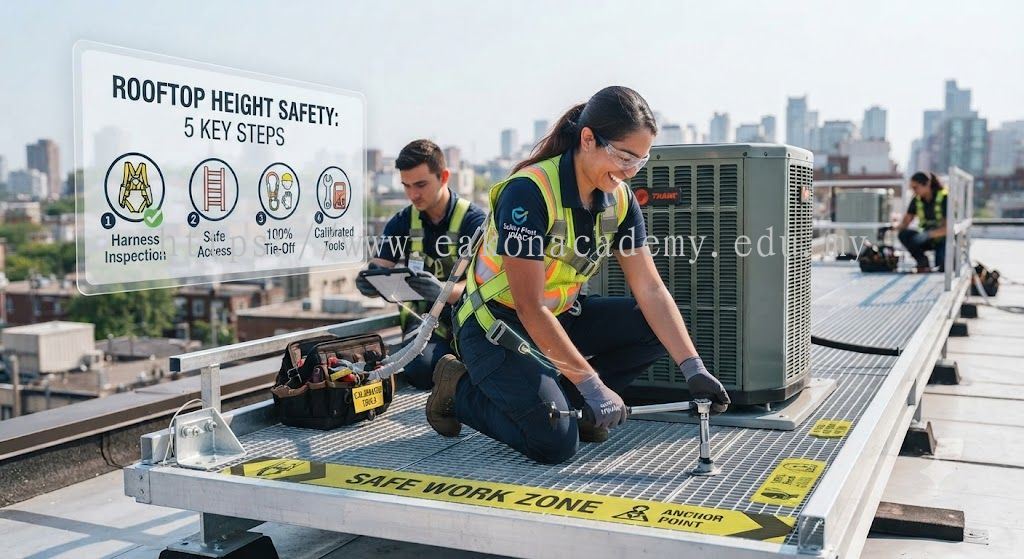
Air Conditioning Installation Height Safety Requirements: Essential Safety Practices for Professional HVAC Installation
Air conditioning installation height safety requirements are a critical component of every successful HVAC installation project. Whether installing split air conditioners in residential homes, VRF and VRV systems in commercial buildings, or large industrial HVAC equipment on rooftops, technicians frequently perform work at elevated locations where fall hazards are present. Understanding and following proper height safety requirements helps reduce workplace accidents, improve installation quality, and ensure compliance with occupational safety regulations. At eakonacadem.edu.my, we provide comprehensive HVAC installation training that integrates practical working-at-height safety knowledge with professional air conditioning installation techniques, preparing technicians to perform their duties safely and efficiently in real-world environments.
Working at height during air conditioning installation involves numerous tasks such as mounting indoor units on high walls, installing outdoor condenser units on elevated platforms, routing refrigerant piping through ceilings, fixing cable trays, connecting ductwork, and servicing rooftop equipment. Each of these activities presents unique hazards that require careful planning and proper safety procedures. Before beginning any installation work, technicians should perform a detailed site inspection and risk assessment to identify potential dangers such as unstable surfaces, weak roof structures, overhead electrical cables, poor weather conditions, limited access points, and inadequate fall protection systems. A thorough risk assessment forms the foundation of a safe HVAC installation project while reducing the likelihood of injuries and costly delays.
One of the most important air conditioning installation height safety requirements is the use of certified fall protection equipment. HVAC technicians working above ground level should wear properly fitted full-body safety harnesses connected to approved anchor points or lifeline systems. Shock-absorbing lanyards, self-retracting lifelines, and horizontal lifeline systems provide additional protection when moving around elevated work areas. Wearing appropriate personal protective equipment (PPE), including safety helmets with chin straps, anti-slip safety footwear, protective gloves, eye protection, and high-visibility clothing, further minimizes workplace risks while improving technician confidence during installation activities.
Ladder safety remains one of the most essential aspects of air conditioning installation. Many HVAC technicians rely on ladders to install indoor wall-mounted units, access ceiling spaces, and connect refrigerant piping. Improper ladder usage is one of the leading causes of workplace accidents within the HVAC industry. Technicians should inspect ladders before every use, position them on firm and level ground, maintain the correct climbing angle, secure the ladder against movement, and maintain three points of contact while ascending or descending. Overreaching should always be avoided, and technicians should select the correct ladder type and height for each installation task to ensure maximum stability and safety.
Commercial HVAC installations often require the use of scaffolding, scissor lifts, boom lifts, mobile elevated work platforms (MEWPs), and elevated access systems. Proper operator training is essential before using these machines. HVAC professionals should understand equipment inspection procedures, load capacity limitations, emergency controls, safe operating techniques, and manufacturer recommendations. Using elevated work platforms correctly allows technicians to safely install rooftop package units, ducting systems, cooling towers, air handling units, and large outdoor condensers while maintaining compliance with workplace safety regulations.
Electrical safety is closely connected with working at height during air conditioning installation. Technicians frequently work near energized electrical systems, rooftop distribution boards, and power supply connections. Before performing electrical installation work, power sources should be isolated using lockout/tagout procedures whenever possible. Insulated tools should be used, and technicians should maintain safe distances from energized equipment to reduce the risk of electric shock while working on elevated structures. Combining electrical safety with effective fall protection creates a comprehensive safety strategy for modern HVAC installation projects.
Environmental conditions significantly affect working-at-height safety. Air conditioning installation should not proceed during severe weather conditions such as heavy rain, lightning, strong winds, or storms. Wet roofs, slippery surfaces, and reduced visibility increase the likelihood of falls and equipment accidents. HVAC contractors should monitor weather forecasts before beginning rooftop installation work and postpone activities whenever conditions become unsafe. Proper planning protects technicians, equipment, and project timelines.
Safe material handling is another important consideration during elevated air conditioning installation. Outdoor condenser units, copper pipes, refrigerant cylinders, duct sections, mounting brackets, and installation tools should be lifted using appropriate mechanical equipment or safe manual handling techniques. Materials should never be carried while climbing ladders, and all tools should be secured to prevent falling objects that could injure workers below. Good housekeeping practices also help maintain clear access routes and reduce trip hazards on rooftops and elevated work platforms.
Emergency preparedness forms an essential part of air conditioning installation height safety requirements. Every installation site should have an emergency response plan that includes rescue procedures for suspended workers, first aid equipment, emergency contact information, and trained personnel capable of responding quickly during accidents. Regular emergency drills help technicians become familiar with rescue procedures while improving overall site safety and preparedness.
Professional training remains the most effective way to improve height safety performance within the HVAC industry. Air conditioning installers should complete certified working-at-height training, fall protection programs, ladder safety courses, elevated platform operation training, and practical rescue exercises. Continuous professional development ensures technicians remain updated with current safety regulations, new equipment technologies, and industry best practices. Employers also benefit from fewer workplace accidents, increased productivity, reduced insurance costs, stronger regulatory compliance, and improved customer confidence.
At eakonacadem.edu.my, we are committed to developing highly skilled HVAC professionals through industry-focused training programs that combine advanced air conditioning installation techniques with comprehensive height safety education. Our hands-on courses provide practical experience in risk assessment, fall protection systems, ladder safety, rooftop installation procedures, elevated work platform operation, emergency response planning, and occupational safety compliance. By mastering air conditioning installation height safety requirements, technicians can perform residential, commercial, and industrial HVAC installations with greater confidence, professionalism, and safety while delivering high-quality workmanship that meets modern industry standards and supports long-term career success in the air conditioning and refrigeration sector.
Lihat detail lebih lanjut tentang EAKON ACADEMY SDN BHD Malaysia
