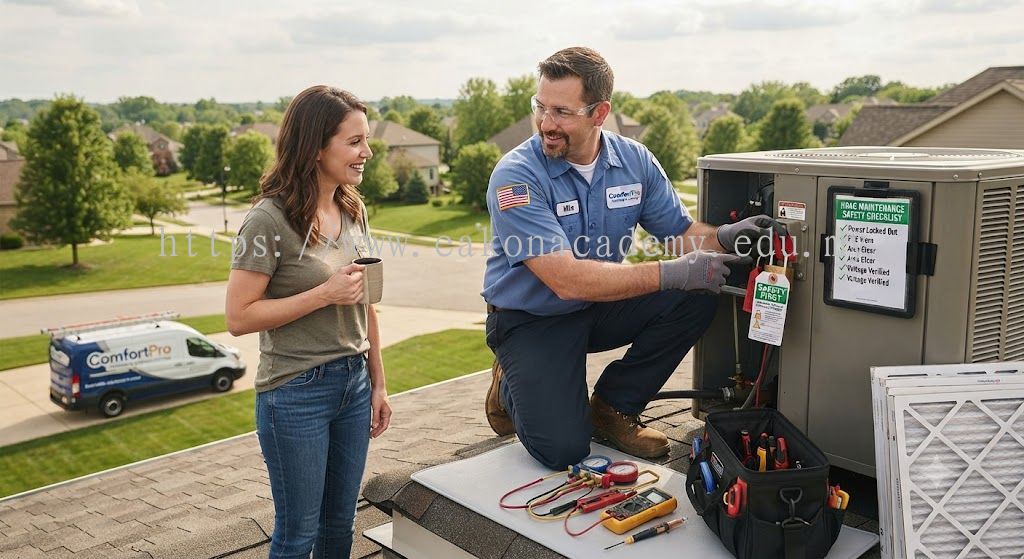
HVAC Maintenance Safety Practices for Safe Servicing, Professional Standards, and Skilled Technician Development
HVAC maintenance safety practices are essential for ensuring technicians can perform heating, ventilation, and air conditioning servicing work safely, efficiently, and professionally. Proper safety procedures help reduce workplace risks, prevent accidents, protect HVAC equipment, and maintain compliance with industry safety requirements. At Eakon Academy, we provide professional HVAC training programs that focus on practical maintenance skills, safety procedures, troubleshooting techniques, and industry-standard practices to prepare technicians for safe HVAC installation, repair, and servicing operations.
HVAC maintenance involves working with electrical systems, rotating equipment, refrigerants, pressurized components, and various mechanical parts. Without proper safety knowledge, technicians may face risks such as electrical hazards, refrigerant exposure, equipment damage, and workplace injuries. Following HVAC maintenance safety practices ensures that technicians understand the correct procedures before performing inspection, cleaning, repair, or servicing tasks on different HVAC systems.
One of the most important HVAC maintenance safety practices is conducting a proper risk assessment before starting any maintenance work. Technicians should evaluate the working environment, identify potential hazards, and prepare suitable safety measures before handling HVAC equipment. This includes checking equipment conditions, understanding system operation, and ensuring proper access to the maintenance area. A careful assessment helps prevent accidents and allows technicians to complete maintenance tasks more effectively.
Electrical safety is a critical part of HVAC maintenance procedures. HVAC systems contain electrical components such as wiring, control panels, capacitors, contactors, motors, and circuit boards that require careful handling. Technicians must follow proper electrical isolation procedures, switch off power supplies, and verify that equipment is safe before beginning maintenance work. Proper training in electrical safety helps technicians reduce the risk of electric shock, equipment damage, and workplace accidents.
Refrigerant handling safety is another important element of HVAC maintenance safety practices. Refrigerants must be handled correctly to protect technicians, equipment, and the environment. Technicians need to understand safe refrigerant recovery, leak detection, pressure testing, vacuum procedures, and charging methods. Proper refrigerant handling skills help prevent exposure risks and ensure compliance with industry requirements. Professional HVAC training provides technicians with the knowledge needed to work safely with different refrigerant systems.
Using the correct personal protective equipment (PPE) is also an essential safety practice during HVAC maintenance. Technicians should use suitable protective equipment such as safety glasses, gloves, protective footwear, and appropriate work clothing when performing servicing tasks. PPE helps reduce the risk of injury from sharp components, electrical hazards, chemicals, and moving equipment. Understanding proper PPE usage is an important part of professional HVAC technician training.
Safe handling of tools and equipment is another important aspect of HVAC maintenance safety. Technicians should inspect tools before use, select the correct equipment for each task, and follow proper operating procedures. Using damaged or incorrect tools can increase the risk of accidents and equipment failure. Proper tool handling techniques improve work efficiency and ensure higher-quality maintenance results.
HVAC maintenance safety practices also include maintaining a clean and organized working environment. Keeping work areas free from unnecessary obstacles, properly storing tools, and managing cables and equipment helps prevent slips, trips, and other workplace hazards. Good housekeeping practices contribute to safer and more productive maintenance operations.
Proper communication and documentation are also important for safe HVAC maintenance activities. Technicians should record maintenance procedures, safety checks, equipment conditions, and repair details. Clear documentation helps improve future maintenance planning and ensures important safety information is available for technicians and facility managers.
Eakon Academy offers comprehensive HVAC training courses designed to develop skilled technicians with strong knowledge of HVAC maintenance safety practices, servicing procedures, troubleshooting methods, and professional safety standards. Our training programs are suitable for beginners, technicians, contractors, and industry professionals who want to improve their technical abilities and build safer working practices.
By applying HVAC maintenance safety practices, technicians can perform reliable servicing work while protecting themselves, customers, and HVAC systems. Visit eakonacadem.edu.my to explore professional HVAC training programs that provide the practical skills and safety knowledge required for successful HVAC maintenance and servicing careers.
Lihat detail lebih lanjut tentang EAKON ACADEMY SDN BHD Malaysia