HVAC Maintenance Planning Best Practices for Effective System Management, Reduced Downtime, and Professional HVAC Training
HVAC maintenance planning best practices are essential for ensuring heating, ventilation, and air conditioning systems operate efficiently, reliably, and safely throughout their operational lifespan. A well-structured HVAC maintenance plan helps organizations prevent unexpected equipment failures, improve energy efficiency, reduce repair costs, and maintain consistent indoor comfort. At Eakon Academy, we provide professional HVAC training programs designed to equip technicians, engineers, and industry professionals with practical knowledge in HVAC maintenance planning, preventive servicing, troubleshooting methods, and modern maintenance strategies.
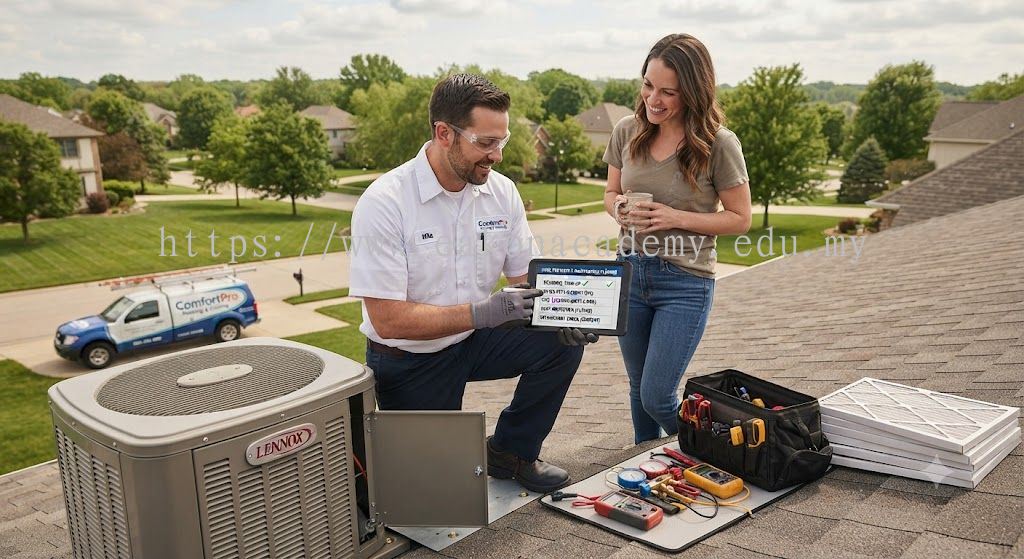
Effective HVAC maintenance planning involves organizing regular inspections, cleaning procedures, performance testing, component servicing, and system evaluations according to equipment requirements and operating conditions. Residential buildings, commercial facilities, factories, hospitals, and industrial plants depend on reliable HVAC systems to maintain comfortable and productive environments. By applying HVAC maintenance planning best practices, technicians can create systematic maintenance schedules that improve equipment reliability and prevent costly breakdowns.
One of the most important HVAC maintenance planning practices is developing a preventive maintenance schedule based on equipment type, usage level, and manufacturer recommendations. Different HVAC systems such as split air conditioners, VRF systems, chillers, and commercial HVAC units require different maintenance approaches. A proper maintenance schedule ensures important tasks such as filter replacement, coil cleaning, refrigerant inspection, electrical testing, and performance checks are completed at the correct intervals. This proactive approach helps extend equipment lifespan and maintain efficient system operation.
A detailed HVAC maintenance plan should include regular equipment inspections and condition assessments. Technicians need to evaluate important components such as compressors, evaporators, condensers, fans, motors, electrical controls, refrigerant circuits, and ventilation systems. Early identification of wear, contamination, or abnormal operation allows maintenance teams to take corrective action before serious failures occur. Professional HVAC training helps technicians develop accurate inspection skills and understand how to evaluate system performance effectively.
Another key element of HVAC maintenance planning best practices is prioritizing preventive maintenance tasks based on equipment importance and operational requirements. Critical HVAC systems in commercial and industrial environments often require more frequent inspections to minimize downtime and maintain business operations. Proper planning helps maintenance teams allocate resources efficiently, prepare necessary tools and spare parts, and complete servicing work with minimal disruption.
Energy efficiency improvement is also an important goal of effective HVAC maintenance planning. Poorly maintained HVAC systems often consume excessive energy due to dirty components, poor airflow, incorrect refrigerant levels, or inefficient operation. A structured maintenance plan helps technicians identify energy-saving opportunities, improve system performance, and reduce unnecessary electricity costs. Regular servicing supports sustainable HVAC operation and helps organizations achieve better energy management.
Maintenance documentation and record keeping are essential parts of professional HVAC maintenance planning. Keeping accurate records of inspection results, repair history, component replacement, and system performance allows technicians and facility managers to monitor equipment conditions over time. Proper documentation supports better decision-making, improves future maintenance planning, and helps identify recurring system issues.
HVAC maintenance planning should also include troubleshooting preparation and emergency response strategies. Having clear procedures for handling equipment failures allows technicians to respond quickly and reduce system downtime. Proper training enables HVAC professionals to diagnose problems efficiently and perform effective repairs while maintaining safety standards.
Eakon Academy offers comprehensive HVAC training courses focused on HVAC maintenance planning best practices, preventive maintenance procedures, troubleshooting techniques, system inspection, and professional servicing skills. Our training programs are suitable for beginners, experienced technicians, contractors, and industry professionals who want to enhance their technical expertise and career opportunities in the HVAC industry.
By implementing HVAC maintenance planning best practices, organizations can improve system reliability, reduce operational expenses, and maintain high-performance HVAC equipment. Visit eakonacadem.edu.my to explore professional HVAC training programs that provide the practical skills and industry knowledge required for successful HVAC maintenance planning and system management.
Lihat detail lebih lanjut tentang EAKON ACADEMY SDN BHD Malaysia