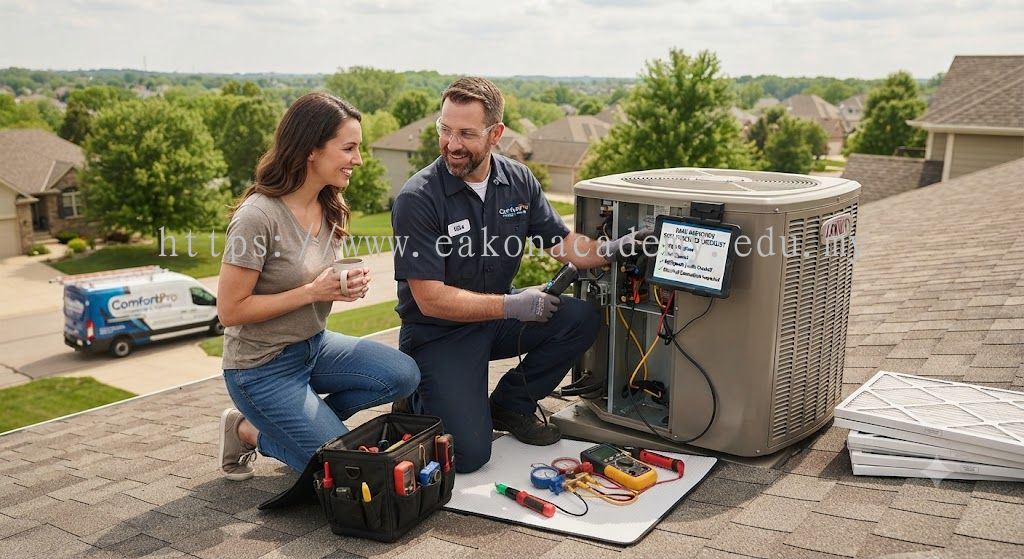
HVAC Inspection Best Practices for Accurate System Assessment, Improved Performance, and Professional Technician Training
HVAC inspection best practices are essential for ensuring heating, ventilation, and air conditioning systems operate safely, efficiently, and reliably. Regular HVAC inspections help identify potential problems, improve system performance, reduce energy consumption, and prevent unexpected equipment failures. At Eakon Academy, we provide professional HVAC training programs that focus on practical inspection methods, system evaluation techniques, troubleshooting skills, and industry-standard maintenance procedures to prepare technicians for modern HVAC servicing requirements.
A comprehensive HVAC inspection is an important part of preventive maintenance because it allows technicians to evaluate the overall condition of HVAC equipment before major issues occur. Residential, commercial, and industrial HVAC systems require regular inspections to ensure all components are functioning correctly. By following HVAC inspection best practices, technicians can detect early warning signs such as unusual noise, poor airflow, refrigerant issues, electrical faults, and mechanical problems that may affect system efficiency.
One of the most important HVAC inspection best practices is performing a complete visual inspection of the entire system. Technicians should check indoor and outdoor units, air filters, coils, fans, ductwork, refrigerant lines, electrical connections, and control systems. Visual inspections help identify dirt buildup, physical damage, corrosion, loose connections, and other conditions that may reduce HVAC performance. Proper inspection techniques enable technicians to provide accurate assessments and recommend suitable maintenance solutions.
Airflow inspection is another important aspect of professional HVAC evaluation. Poor airflow can result from blocked filters, dirty coils, damaged duct systems, or incorrect system settings. Measuring airflow performance helps technicians determine whether the HVAC system is operating efficiently and distributing conditioned air properly. Through hands-on HVAC training, technicians can learn how to perform airflow checks, identify airflow restrictions, and apply effective corrective actions.
Refrigerant system inspection is also a critical component of HVAC inspection best practices. Technicians must check refrigerant pressure, inspect refrigerant lines, identify possible leaks, and evaluate system operating conditions. Incorrect refrigerant levels can reduce cooling capacity, increase energy consumption, and cause damage to compressors and other components. Proper refrigerant inspection skills allow technicians to maintain system efficiency and ensure reliable HVAC operation.
Electrical inspection is another essential procedure during HVAC system evaluation. Technicians should examine wiring connections, electrical terminals, capacitors, contactors, motors, circuit boards, and safety controls. Electrical problems can lead to system failure, reduced efficiency, and potential safety risks. Learning proper electrical inspection and troubleshooting methods enables HVAC technicians to diagnose problems accurately and perform reliable repairs.
Cleaning inspection and component condition assessment are also important parts of effective HVAC maintenance. Technicians should evaluate the condition of filters, evaporator coils, condenser coils, drain systems, and ventilation components. Identifying contamination, blockage, or wear allows maintenance teams to take preventive action before system performance decreases. Regular inspection helps maintain equipment reliability and extends the operational lifespan of HVAC systems.
Proper documentation is another key element of HVAC inspection best practices. Recording inspection findings, system measurements, maintenance recommendations, and repair requirements helps technicians and facility managers track equipment performance over time. Detailed inspection reports support better maintenance planning and allow organizations to make informed decisions regarding HVAC repairs and upgrades.
Energy efficiency improvement is one of the major benefits of regular HVAC inspections. A properly inspected and maintained HVAC system operates more efficiently, reduces unnecessary energy usage, lowers operating costs, and provides better indoor comfort. Professional inspections help ensure HVAC equipment continues delivering reliable performance while supporting sustainable building operations.
Eakon Academy offers comprehensive HVAC training courses designed to develop skilled technicians with practical expertise in HVAC inspection, maintenance, troubleshooting, and servicing procedures. Our training programs are suitable for beginners, experienced technicians, contractors, and industry professionals who want to strengthen their technical knowledge and career opportunities in the HVAC industry.
By understanding and applying HVAC inspection best practices, technicians can improve system reliability, deliver higher-quality services, and support efficient HVAC operations. Visit eakonacadem.edu.my to explore professional HVAC training programs that provide the practical skills and industry knowledge required for successful HVAC inspection and maintenance careers.
Lihat detail lebih lanjut tentang EAKON ACADEMY SDN BHD Malaysia