
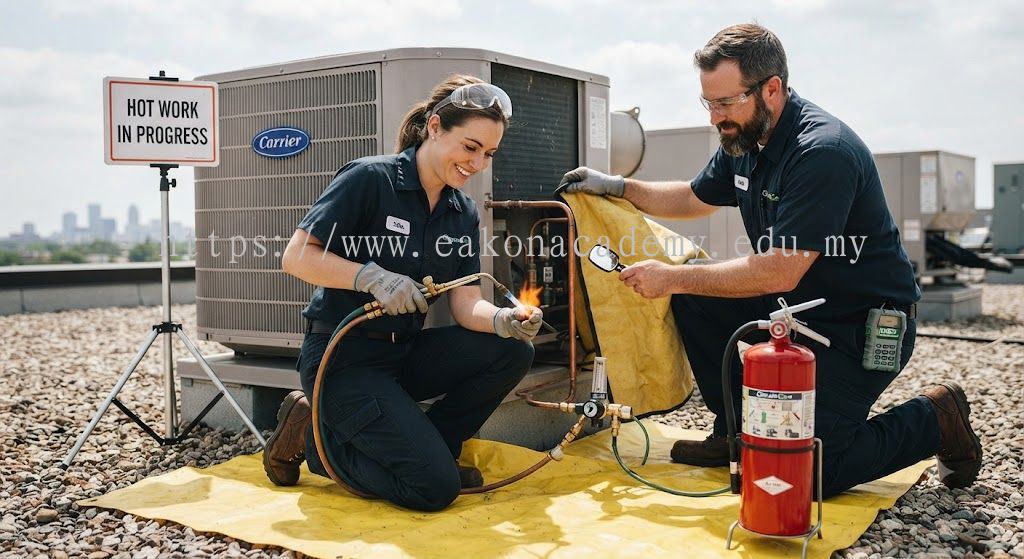
HVAC BRAZING SAFETY PROCEDURES TECHNICIANS GUIDE | COMPLETE REFRIGERATION BRAZING TRAINING & SAFE WORK PRACTICES
HVAC brazing safety procedures are a critical part of every refrigeration and air-conditioning technician’s daily work. Whether installing a new air conditioning system, repairing refrigeration piping, or maintaining commercial HVAC equipment, technicians must follow standardized safety procedures to ensure reliable system performance while protecting themselves and those around them. Brazing involves high-temperature flames, pressurized gases, heated copper tubing, and molten filler metals, making it one of the most important technical skills that requires proper training and strict adherence to safety standards. A comprehensive HVAC brazing safety procedures technicians guide helps professionals perform their work efficiently while minimizing the risk of workplace accidents, equipment damage, and refrigerant leaks.
One of the first safety procedures before beginning any brazing operation is conducting a thorough job site inspection. HVAC technicians should assess the work area for potential hazards, including flammable materials, combustible insulation, electrical wiring, fuel sources, and confined spaces. Removing combustible materials and ensuring adequate ventilation significantly reduces the possibility of fire and harmful fume exposure. Maintaining a clean and organized work environment also improves productivity and allows technicians to move safely while handling brazing equipment.
Proper inspection of brazing equipment is another essential safety procedure. Before igniting the torch, technicians should inspect oxygen and acetylene cylinders, pressure regulators, flashback arrestors, hoses, valves, and torch handles for signs of wear, leaks, or physical damage. Faulty equipment can create serious hazards such as uncontrolled gas leaks, flashbacks, or explosions. Leak testing with approved methods before lighting the torch helps ensure the equipment is functioning correctly and safely. Regular maintenance of brazing equipment extends its service life while improving operational safety.
Personal Protective Equipment (PPE) is an indispensable part of every HVAC brazing safety procedure. Technicians should wear safety goggles with the appropriate lens shade, heat-resistant leather gloves, flame-resistant clothing, long trousers, and steel-toe safety boots. PPE protects against radiant heat, flying sparks, molten filler metal, and accidental contact with hot copper tubing. Depending on the work environment, respiratory protection may also be necessary, particularly when brazing in enclosed areas where ventilation is limited. Proper PPE not only minimizes injuries but also demonstrates professional compliance with workplace safety regulations.
Safe torch ignition and flame adjustment are equally important during brazing operations. HVAC technicians should always follow the manufacturer's recommended lighting sequence and carefully adjust oxygen and fuel gas to produce a neutral flame. A neutral flame provides efficient heating without excessive oxidation or carburization of the copper tubing. Technicians must avoid directing the flame toward nearby combustible materials, refrigerant components, or themselves. Maintaining consistent flame movement around the joint ensures even heating and prevents overheating that may weaken the copper pipe or damage adjacent equipment.
Nitrogen purging has become a recognized best practice in professional HVAC brazing procedures. During brazing, a low and controlled flow of dry nitrogen is introduced into the copper tubing to prevent internal oxidation. Without nitrogen purging, black oxide scale can form inside the pipes and later circulate through the refrigeration system, potentially damaging compressors, expansion valves, filter driers, and other critical components. Proper nitrogen purging produces cleaner piping, improves refrigeration system reliability, and supports longer equipment lifespan.
Temperature control is another important aspect of safe brazing procedures. Technicians should heat the copper fitting evenly rather than concentrating heat in one location. The brazing filler alloy should melt from the heat of the joint itself instead of direct flame contact. This technique produces stronger capillary action and ensures complete filler penetration throughout the joint. Understanding the correct brazing temperature also helps prevent excessive oxidation, copper distortion, and weakened pipe connections.
After completing the brazing process, technicians should allow joints to cool naturally instead of rapidly cooling them with water, which may create thermal stress and microscopic cracks. Once cooled, every joint should undergo a careful visual inspection to verify smooth filler distribution, complete joint coverage, and the absence of voids or pinholes. Pressure testing with dry nitrogen followed by leak detection using approved leak detection methods ensures every connection is secure before refrigerant charging begins. Proper inspection and testing are essential for maintaining HVAC system efficiency and preventing future service problems.
Fire prevention remains one of the highest priorities throughout every brazing operation. A suitable fire extinguisher should always be readily accessible, and technicians should remain alert for smoldering insulation or hidden combustible materials after brazing is completed. In many commercial installations, implementing a fire watch for a designated period after hot work provides an additional layer of protection against delayed ignition. These fire safety procedures help safeguard technicians, customers, equipment, and buildings from preventable incidents.
At eakonacadem.edu.my, our HVAC training programs are designed to prepare future technicians with both advanced technical expertise and a strong commitment to workplace safety. Students receive practical hands-on instruction in copper pipe preparation, safe torch operation, nitrogen purging, silver brazing techniques, leak testing, pressure testing, PPE selection, fire prevention, and complete HVAC brazing safety procedures. Our industry-focused courses combine classroom knowledge with real-world workshop experience, enabling graduates to confidently perform refrigeration piping installations according to professional standards.
Mastering HVAC brazing safety procedures is essential for every technician seeking long-term success in the heating, ventilation, air conditioning, and refrigeration industry. By consistently following proper preparation methods, using appropriate personal protective equipment, practicing safe flame control, conducting thorough inspections, and applying professional-quality brazing techniques, technicians can improve installation reliability, maximize system efficiency, reduce costly repairs, and maintain the highest standards of workplace safety. Continuous training and adherence to industry best practices ensure that HVAC professionals remain skilled, competent, and prepared to meet the evolving demands of the modern HVAC-R industry.
Lihat detail lebih lanjut tentang EAKON ACADEMY SDN BHD Malaysia
