
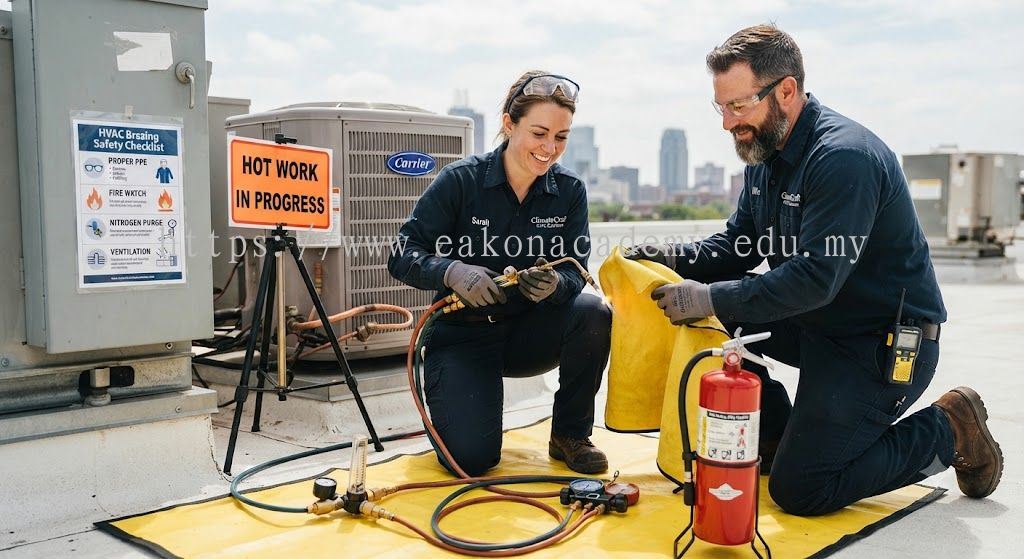
HVAC BRAZING SAFETY GUIDELINES FOR TECHNICIANS | PROFESSIONAL REFRIGERATION TRAINING & INDUSTRY COMPLIANCE
HVAC brazing safety guidelines for technicians are essential standards that ensure safe working practices, high-quality workmanship, and reliable performance in refrigeration and air-conditioning systems. Brazing is a critical process in HVAC-R installation where copper pipes are joined using high-temperature heat and filler materials. Because this process involves open flames, pressurized gases, and molten metal, strict adherence to safety guidelines is necessary to prevent accidents, injuries, equipment damage, and system failure. Following proper HVAC brazing safety guidelines is a core requirement for all technicians working in the industry.
A fundamental guideline in HVAC brazing safety is proper preparation of the work environment. Technicians must ensure that the working area is clean, well-ventilated, and free from flammable materials such as oil, paper, plastic, insulation, and chemical substances. A controlled workspace significantly reduces the risk of fire hazards during brazing operations. Proper organization of tools, gas cylinders, and piping materials also helps maintain a safe and efficient workflow on-site.
Another critical safety guideline is the correct handling and inspection of gas equipment used in brazing, such as oxygen and acetylene cylinders. These gas sources must always be stored in an upright and secured position, away from heat and direct sunlight. Before starting any brazing task, technicians are required to check hoses, regulators, and connections for leaks or damage. Proper gas management ensures safe flame control and reduces the risk of dangerous gas leaks or explosions during HVAC installation work.
Personal protective equipment (PPE) is a mandatory requirement in HVAC brazing safety guidelines for technicians. Proper PPE includes safety goggles, heat-resistant gloves, flame-retardant clothing, and protective footwear. These protective items are designed to shield technicians from burns, sparks, molten metal splashes, and radiant heat. Consistent use of PPE ensures technician safety and minimizes the risk of workplace injuries during brazing operations.
Heat control and torch handling are also essential components of HVAC brazing safety guidelines. Technicians must be trained to properly adjust flame intensity and maintain correct torch angles to ensure controlled and even heating of copper tubing. Overheating or improper flame application can weaken pipe structures, damage surrounding components, and create fire hazards. Safe torch handling techniques help ensure strong, uniform, and reliable brazed joints while maintaining a safe working environment.
Nitrogen purging safety is another important guideline in modern HVAC brazing practices. Introducing nitrogen into copper piping systems during brazing prevents internal oxidation, commonly known as black scale formation. However, nitrogen pressure must be carefully regulated to avoid pipe damage or system failure. Proper understanding of gas flow control ensures both internal pipe cleanliness and safe brazing conditions, contributing to overall system efficiency and longevity.
Emergency preparedness is also a key part of HVAC brazing safety guidelines for technicians. Workers must always have access to fire extinguishers and be trained in basic fire response procedures. In the event of a gas leak, fire outbreak, or equipment malfunction, quick and correct response actions can prevent serious injuries and reduce property damage. Regular safety training and drills help reinforce awareness and preparedness in real-world HVAC environments.
At eakonacadem.edu.my, we are committed to providing high-quality HVAC training programs that emphasize both technical skills and workplace safety. Our courses include hands-on brazing practice combined with comprehensive safety guideline training, nitrogen purging techniques, proper torch handling, and real-world installation standards. This ensures that students are fully prepared for safe and professional HVAC work in the industry.
HVAC brazing safety guidelines for technicians are essential for maintaining safe job sites, improving installation quality, and ensuring long-term system reliability. By following proper safety procedures, HVAC technicians can reduce risks, enhance performance, and build strong professional careers in the refrigeration and air-conditioning industry. Mastering these guidelines is key to achieving safe, efficient, and industry-standard HVAC installations.
Lihat detail lebih lanjut tentang EAKON ACADEMY SDN BHD Malaysia
