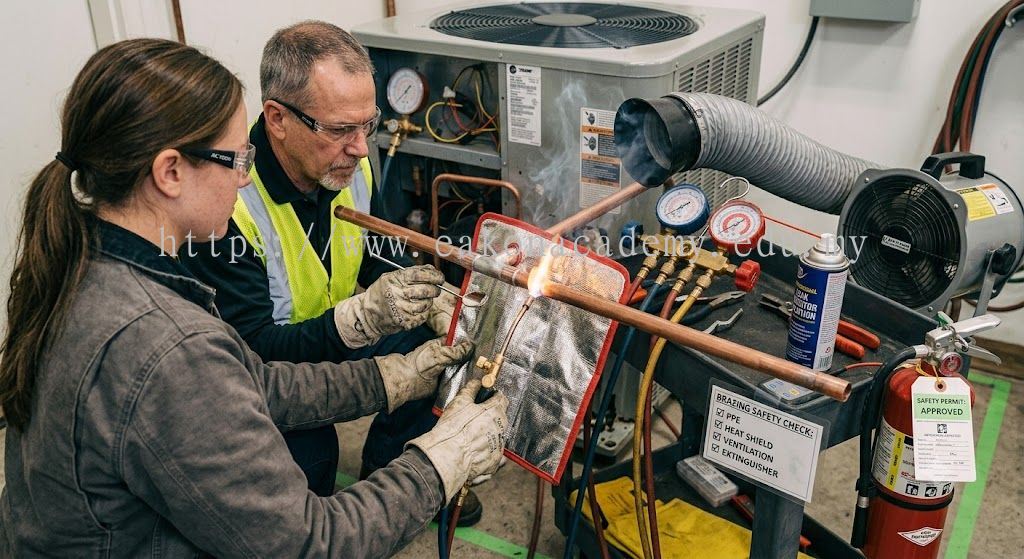
HVAC COPPER PIPE BRAZING SAFETY PROCEDURES: PROFESSIONAL GUIDELINES FOR SAFE, CONTROLLED AND HIGH-QUALITY INSTALLATION WORK
HVAC copper pipe brazing safety procedures are essential guidelines that ensure technicians can perform brazing work on air conditioning and refrigeration systems safely, efficiently, and in compliance with industry standards. At eakonacadem.edu.my, this critical HVAC training topic is included to help learners understand not only the technical aspects of brazing but also the importance of maintaining strict safety discipline during installation, maintenance, and repair work. Proper safety procedures protect technicians, equipment, and building environments while ensuring high-quality brazed joints in copper piping systems.
In HVAC systems, copper pipe brazing involves joining refrigerant lines using high-temperature heat and filler metals to create strong, leak-free connections. Because this process involves open flames, flammable gases, and extreme heat, following HVAC copper pipe brazing safety procedures is essential to prevent accidents such as burns, fire hazards, gas leaks, and equipment damage. Safety is a fundamental requirement in all professional HVAC installations and must be applied consistently in both workshop and field environments.
One of the most important safety procedures is the correct use of personal protective equipment (PPE). Technicians must wear safety goggles, heat-resistant gloves, protective clothing, and appropriate footwear to protect themselves from sparks, heat, and molten filler metal. Eye protection is especially important because brazing involves bright flames and potential exposure to harmful light radiation. Proper PPE significantly reduces the risk of injury during brazing operations.
Another critical aspect of HVAC copper pipe brazing safety procedures is proper handling and storage of gas cylinders. Oxygen and acetylene cylinders must always be secured in an upright position and stored in well-ventilated areas away from heat sources or flammable materials. Technicians must also ensure that gas hoses, regulators, and connections are in good condition and free from leaks before beginning any brazing work. Regular inspection of equipment is essential for maintaining safe working conditions.
Ventilation is also a key safety requirement during brazing activities. Adequate airflow must be maintained to prevent the buildup of harmful fumes and gases produced during the heating process. In confined or indoor spaces, additional ventilation systems or exhaust fans may be required to ensure a safe working environment. Proper ventilation protects technicians from inhaling hazardous fumes and helps maintain air quality during HVAC installation and repair work.
At eakonacadem.edu.my, training programs emphasize real-world application of HVAC copper pipe brazing safety procedures. Students are taught how to assess job site risks, set up safe working environments, and follow step-by-step safety protocols before beginning any brazing task. This includes checking surrounding materials for flammability, ensuring fire extinguishers are available, and maintaining a clear and organized workspace to reduce accident risks.
Fire safety is another essential component of brazing procedures. Technicians must always keep fire extinguishing equipment nearby and be trained in its proper use. Flammable materials must be removed from the work area or properly shielded before brazing begins. Continuous monitoring of the work environment helps prevent accidental fires caused by stray sparks or excessive heat.
Electrical safety is also considered in HVAC copper pipe brazing safety procedures. Technicians must ensure that nearby electrical components are protected from heat exposure and accidental damage. Proper isolation of electrical systems reduces the risk of short circuits or electrical hazards during installation or repair work.
In addition to personal and site safety, proper brazing technique itself contributes to safer HVAC systems. Correct heat control, filler rod application, and joint preparation reduce the risk of weak connections that could later result in refrigerant leaks or system failures. Safe and precise workmanship ensures long-term reliability and reduces maintenance risks.
The importance of HVAC copper pipe brazing safety procedures extends beyond immediate job site protection. Following strict safety standards improves overall installation quality, reduces workplace accidents, and ensures compliance with HVAC industry regulations. Safe working practices also enhance technician professionalism and build trust with clients and employers.
Through structured training at eakonacadem.edu.my, learners gain both theoretical understanding and hands-on experience in applying safety procedures during brazing operations. Practical workshops and guided instruction ensure that students develop safe working habits that meet real-world HVAC industry requirements.
In conclusion, HVAC copper pipe brazing safety procedures are essential for ensuring safe, efficient, and high-quality air conditioning and refrigeration system installation. Mastery of these safety practices allows HVAC technicians to perform brazing work confidently while minimizing risks, protecting equipment, and maintaining long-term system reliability across all applications.
Lihat detail lebih lanjut tentang EAKON ACADEMY SDN BHD Malaysia