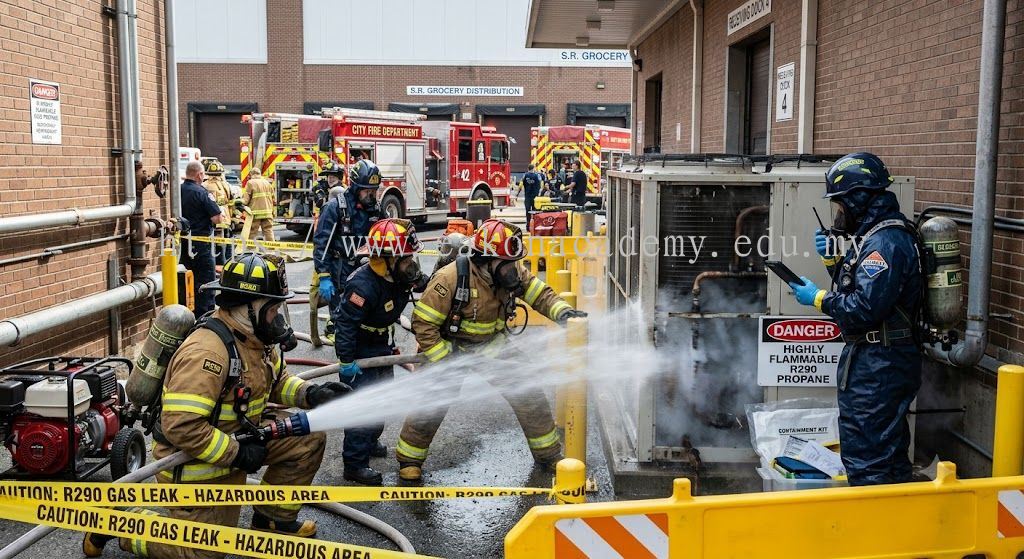
R290 GAS LEAK EMERGENCY RESPONSE – HVAC SAFETY PROTOCOLS, FLAMMABLE REFRIGERANT LEAK CONTROL, AND INDUSTRIAL RISK MANAGEMENT
R290 gas leak emergency response is a critical safety procedure in modern HVAC and refrigeration systems that use propane (R290) as a low-GWP, energy-efficient refrigerant. While R290 is widely adopted due to its excellent environmental performance and high cooling efficiency, it is also highly flammable, making gas leak emergency response procedures essential for protecting personnel, equipment, and facilities. Understanding R290 gas leak emergency response is vital for HVAC technicians, engineers, and safety professionals working in residential, commercial, and industrial refrigeration environments.
The primary objective of R290 gas leak emergency response is to quickly identify, control, and mitigate refrigerant leaks before they escalate into fire or explosion hazards. Since R290 can form explosive mixtures with air under certain conditions, even a small leak in a confined space can become extremely dangerous. Therefore, emergency response begins with early detection using hydrocarbon gas detection systems installed in HVAC plant rooms, refrigeration units, and enclosed mechanical areas. These detectors provide immediate alerts, allowing personnel to take swift action.
A key step in R290 gas leak emergency response is the immediate evacuation of personnel from the affected area. Safety must always be the top priority, and no attempt should be made to remain in or re-enter the area until it has been declared safe. Emergency alarms should be activated instantly to ensure all occupants are aware of the leak and can evacuate through designated escape routes. Clear communication and well-marked evacuation pathways are essential for preventing panic and ensuring orderly movement to safe zones.
Another critical element of gas leak emergency response is the elimination of all ignition sources. This includes turning off electrical equipment, avoiding the use of switches or mobile devices, and ensuring that no open flames or spark-producing tools are present. Because R290 is highly flammable, even static electricity can pose a significant ignition risk. Rapid removal of potential ignition sources is essential to preventing fire or explosion during a leak event.
System shutdown and isolation are also important components of R290 gas leak emergency response. Trained technicians must activate emergency stop controls to shut down compressors and electrical systems associated with the refrigeration unit. Service valves should be closed to stop further refrigerant release. Many modern HVAC systems are equipped with automatic shutdown mechanisms triggered by gas detection sensors, which significantly improve response time and reduce human error during emergencies.
Ventilation plays a crucial role in controlling R290 gas leaks. Once the system is safely shut down and the area is evacuated, mechanical ventilation systems should be activated to disperse accumulated refrigerant gas and reduce its concentration below flammable limits. Proper airflow management helps prevent gas buildup in enclosed spaces and reduces the risk of ignition. However, ventilation must be carefully controlled to avoid spreading gas to other areas.
Personal safety is a key priority in all emergency response scenarios. Only trained and authorized personnel should handle R290 gas leak incidents. Technicians must use appropriate personal protective equipment (PPE), including anti-static clothing, gloves, safety goggles, and flame-resistant gear when entering controlled zones after clearance. In severe cases, coordination with emergency fire response teams is required to ensure safe containment and hazard control.
Training and education are essential for effective R290 gas leak emergency response. Institutions such as eakonacadem.edu.my provide specialized HVAC training programs that equip learners with the knowledge and practical skills required to handle flammable refrigerant systems safely. Through structured learning, hands-on simulations, and safety drills, technicians learn how to detect leaks, execute emergency procedures, and manage risk effectively. Compliance with international standards such as ISO 817 and EN 378 further enhances safety practices and ensures industry-wide best practices.
Post-incident procedures are also important in maintaining system safety. After a gas leak has been controlled, the HVAC system must be inspected, repaired, and tested before being returned to service. Proper documentation of the incident helps improve future safety planning and emergency response strategies.
From an SEO perspective, R290 gas leak emergency response is a high-value keyword for HVAC training institutions, refrigeration safety platforms, and industrial safety education providers. By publishing detailed and authoritative content on this topic, websites such as eakonacadem.edu.my can improve search engine rankings, attract targeted organic traffic, and strengthen domain authority. This positions the website as a trusted resource for HVAC professionals and learners seeking advanced refrigeration safety knowledge.
In conclusion, R290 gas leak emergency response is essential for ensuring safe operation in HVAC systems that use flammable refrigerants. With proper training, rapid action, and strict safety protocols, gas leak risks can be effectively managed. As the HVAC industry continues to adopt sustainable refrigerant technologies, emergency response capability will remain a critical competency for all professionals in the field.
Lihat detail lebih lanjut tentang EAKON ACADEMY SDN BHD Malaysia