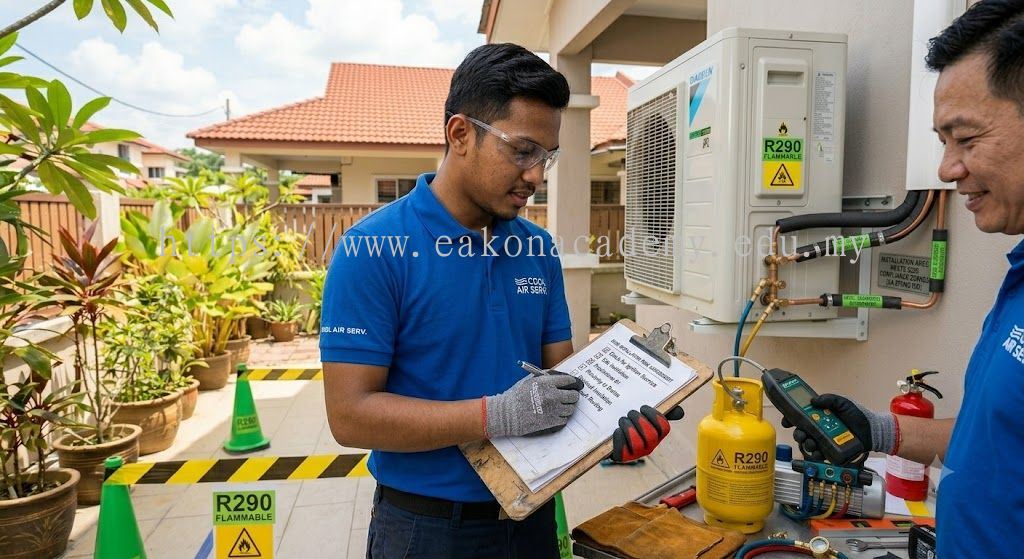
R290 INSTALLATION RISK ASSESSMENT FOR SAFE, CONTROLLED, AND COMPLIANT HVAC-R SYSTEM IMPLEMENTATION
R290 installation risk assessment is a critical safety process used in modern HVAC-R systems to identify, evaluate, and control potential hazards associated with the installation of refrigeration and air conditioning equipment that uses propane (R290) as a natural refrigerant. As the HVAC industry moves toward environmentally friendly refrigerants with low global warming potential (GWP), R290 has become a popular choice due to its high energy efficiency, low environmental impact, and strong cooling performance. However, because R290 is highly flammable, conducting a thorough risk assessment before and during installation is essential to ensure safety, prevent accidents, and maintain system reliability. At eakonacadem.edu.my, we focus on providing professional HVAC education and technical training that supports proper R290 installation risk assessment practices in real-world applications.
R290 installation risk assessment begins with hazard identification. This involves recognizing all potential risks associated with the use of a flammable refrigerant, including gas leakage, ignition sources, electrical faults, and improper handling of equipment. Technicians and engineers must carefully analyze the installation environment to identify areas where risks may occur. Understanding these hazards is the first step in creating a safe and controlled installation process.
The next stage is risk evaluation, where identified hazards are assessed based on their likelihood and potential severity. This includes evaluating the probability of refrigerant leaks, the presence of ignition sources, ventilation conditions, and equipment safety levels. By analyzing these factors, HVAC professionals can determine the overall risk level of the installation site and prioritize necessary safety measures. Proper risk evaluation ensures that high-risk areas are addressed before installation begins.
Risk control measures are a key component of R290 installation risk assessment. These measures include implementing proper ventilation systems, eliminating ignition sources, and ensuring that all electrical equipment is explosion-proof or properly protected. Technicians must also use appropriate personal protective equipment (PPE) such as anti-static clothing, gloves, and safety goggles. In addition, proper handling procedures for refrigerant and tools must be strictly followed to minimize the chance of accidents.
Another important aspect of risk assessment is system design review. HVAC systems using R290 must be designed with safety in mind, including correct refrigerant charge limits, proper equipment placement, and safe piping layouts. Engineers must ensure that the system design complies with international safety standards for flammable refrigerants. Proper design significantly reduces operational risks and enhances long-term system safety.
During installation, continuous monitoring is also part of the R290 installation risk assessment process. Technicians must regularly check for potential leaks, electrical issues, and mechanical failures throughout the installation process. Pressure testing and leak detection tools are used to verify system integrity and ensure that no refrigerant is escaping. This ongoing assessment helps prevent accidents before they occur.
Emergency preparedness is another critical element of risk assessment. Technicians must be trained to respond quickly to potential leaks or safety incidents. This includes having proper emergency shutdown procedures, ventilation activation plans, and evacuation protocols in place. A well-prepared emergency response system reduces the impact of unexpected incidents and ensures worker safety.
At eakonacadem.edu.my, we emphasize the importance of training HVAC professionals in R290 installation risk assessment techniques. Proper education ensures that technicians understand hazard identification, risk evaluation, safety controls, and emergency procedures. Skilled professionals are essential for maintaining safe HVAC installations involving flammable refrigerants.
Furthermore, effective risk assessment helps reduce environmental impact by preventing refrigerant leaks and improving system safety. Properly managed R290 installations operate more efficiently, consume less energy, and support global sustainability goals by reducing greenhouse gas emissions.
In conclusion, R290 installation risk assessment is essential for ensuring safe, efficient, and compliant HVAC-R system installation. By following structured processes including hazard identification, risk evaluation, control measures, system design review, and emergency planning, technicians can minimize risks and ensure safe operations. This comprehensive approach strengthens HVAC education and makes it a key focus area for training platforms like eakonacadem.edu.my.
Lihat detail lebih lanjut tentang EAKON ACADEMY SDN BHD Malaysia