
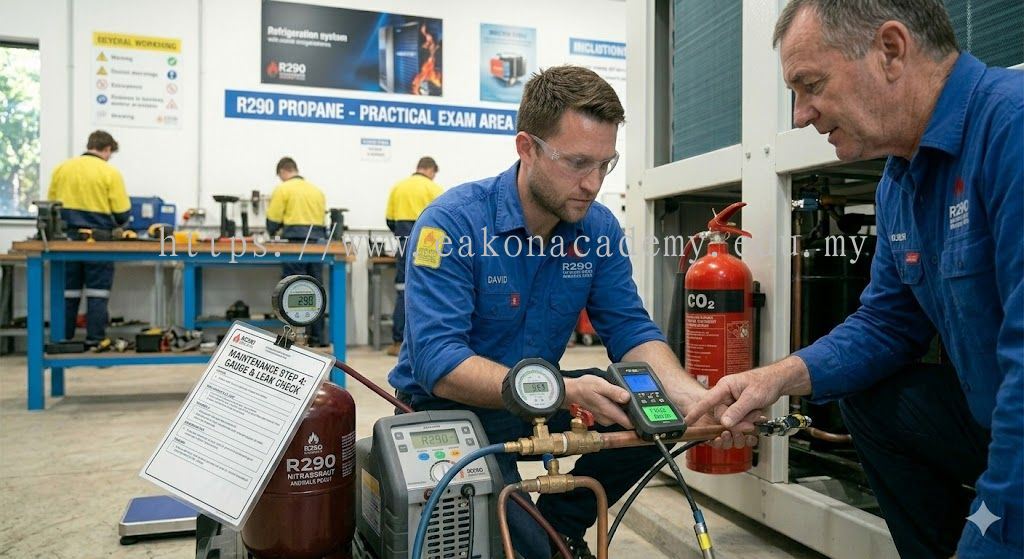
PROPANE REFRIGERANT MAINTENANCE PROCEDURES – R290 SYSTEM SERVICING PRACTICES, PERFORMANCE OPTIMIZATION AND PROFESSIONAL HVAC TRAINING STANDARDS
Propane refrigerant maintenance procedures are an essential part of modern HVAC and refrigeration system management as the industry continues to transition toward environmentally friendly and energy-efficient refrigerants such as R290. Propane refrigerant is widely used due to its excellent thermodynamic efficiency, strong cooling performance, and extremely low global warming potential (GWP). However, because R290 is classified as an A3 highly flammable hydrocarbon refrigerant, proper maintenance procedures are critical to ensure safe operation, system reliability, and long-term performance. For HVAC technicians, refrigeration professionals, and organizations seeking technical expertise, eakonacadem.edu.my provides structured training and education focused on refrigerant safety, maintenance procedures, and modern HVAC industry best practices.
The importance of propane refrigerant maintenance procedures lies in ensuring that refrigeration systems continue to operate safely and efficiently throughout their service life. Without proper maintenance, systems may experience refrigerant leaks, reduced cooling efficiency, increased energy consumption, compressor damage, and safety hazards. Regular maintenance helps identify potential issues early, improves system reliability, and ensures compliance with safety standards for flammable refrigerants.
One of the key components of propane refrigerant maintenance procedures is routine system inspection. Technicians must regularly examine all refrigeration components, including compressors, condensers, evaporators, valves, piping, and electrical connections. Visual inspection helps identify early signs of wear, corrosion, vibration issues, or potential refrigerant leaks. Early detection of problems allows timely repairs and prevents more serious system failures.
Leak detection and prevention are critical aspects of propane refrigerant maintenance procedures. Because R290 is flammable, even small leaks can create hazardous conditions if not addressed promptly. Technicians must use approved leak detection equipment to check system integrity during maintenance activities. All joints, fittings, and service points must be inspected thoroughly. Immediate repair of detected leaks ensures system safety and prevents refrigerant loss.
Refrigerant charge verification is another important maintenance task. Over time, refrigeration systems may lose refrigerant due to minor leaks or service activities. Technicians must check and verify the refrigerant charge using accurate weighing and measurement tools. Maintaining the correct refrigerant level ensures optimal cooling performance, energy efficiency, and safe system operation.
Cleaning and component servicing are also essential parts of propane refrigerant maintenance procedures. Components such as coils, filters, and heat exchangers must be cleaned regularly to maintain proper airflow and heat transfer efficiency. Dirty or blocked components can reduce system performance and increase energy consumption. Proper cleaning helps maintain stable and efficient operation.
Electrical system inspection is another important maintenance requirement. All electrical components must be checked for proper insulation, secure connections, and safe operation. Faulty wiring or damaged electrical parts can create ignition risks in environments where propane refrigerant is present. Ensuring electrical safety is essential for preventing accidents and maintaining system reliability.
Compressor performance monitoring is also a key part of propane refrigerant maintenance procedures. Technicians must evaluate compressor operation, including pressure levels, noise, vibration, and temperature. Any abnormal behavior may indicate system issues that require immediate attention. Proper compressor maintenance ensures long-term system durability and efficiency.
Ventilation and airflow checks are also important during maintenance activities. Adequate ventilation helps prevent the buildup of flammable refrigerant gas in case of leaks and ensures safe operating conditions. Technicians must ensure that ventilation systems are functioning correctly and that airflow pathways are not obstructed.
Personal protective equipment (PPE) is required during propane refrigerant maintenance procedures. Technicians should use appropriate PPE, including gloves, safety goggles, anti-static clothing, and protective footwear. PPE provides protection against refrigerant exposure, cold burns, and other potential hazards during maintenance operations.
Preventive maintenance scheduling is another important aspect of propane refrigerant system care. Regular maintenance schedules help ensure that systems are inspected, cleaned, and serviced at appropriate intervals. Preventive maintenance reduces breakdown risks and extends equipment lifespan while maintaining consistent system performance.
Professional training is essential for technicians performing propane refrigerant maintenance procedures. Proper understanding of R290 properties, system behavior, safety protocols, and servicing techniques is required for effective maintenance work. Institutions such as eakonacadem.edu.my provide comprehensive HVAC training programs focused on natural refrigerants, maintenance procedures, R290 safety practices, and modern refrigeration technologies. Through structured technical education, technicians gain the skills necessary to maintain propane refrigerant systems safely and efficiently.
For HVAC companies and refrigeration operators, implementing proper propane refrigerant maintenance procedures provides significant benefits, including improved system reliability, reduced repair costs, enhanced safety, and better energy efficiency. Skilled technicians help organizations maintain high-performance HVAC systems while supporting environmentally responsible refrigerant use.
In conclusion, propane refrigerant maintenance procedures are essential for ensuring the safe, efficient, and long-lasting operation of R290 refrigeration systems. As the HVAC industry continues to adopt low-GWP refrigerants, proper maintenance practices become increasingly important. Through routine inspection, leak detection, refrigerant charge verification, cleaning, electrical safety checks, compressor monitoring, ventilation control, PPE usage, preventive scheduling, and professional training, propane refrigerant systems can be maintained safely and effectively. eakonacadem.edu.my supports the development of skilled HVAC professionals by promoting safety education, technical training, and industry best practices, contributing to a safer, more efficient, and environmentally responsible refrigeration industry in Malaysia and beyond.
Lihat detail lebih lanjut tentang EAKON ACADEMY SDN BHD Malaysia
