
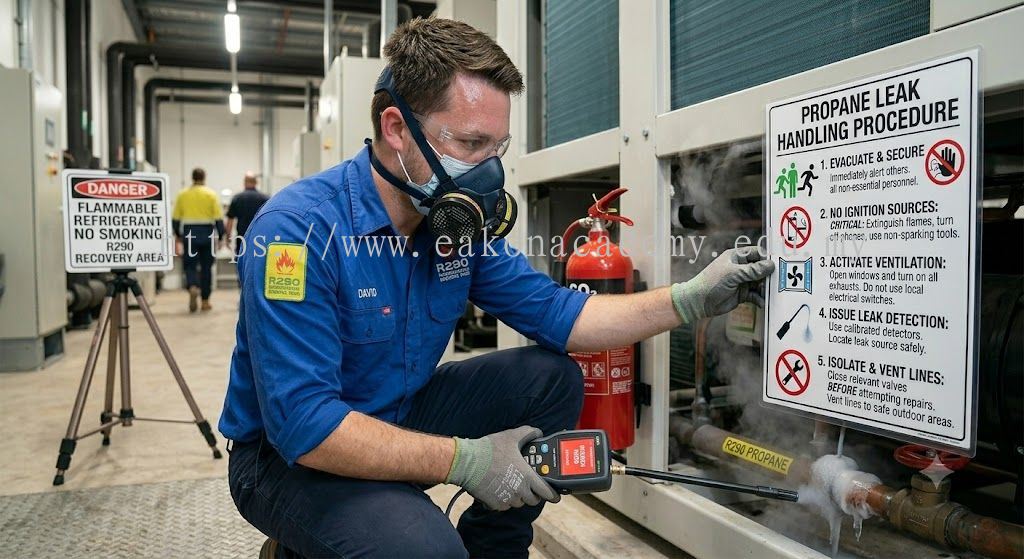
PROPANE REFRIGERANT LEAK HANDLING PROCEDURE – R290 LEAK RESPONSE, SAFETY CONTROL METHODS AND PROFESSIONAL HVAC TRAINING STANDARDS
Propane refrigerant leak handling procedure is a critical safety protocol in modern HVAC and refrigeration systems as the industry increasingly adopts environmentally friendly refrigerants such as R290. Propane refrigerant is widely used due to its excellent energy efficiency, strong cooling performance, and extremely low global warming potential (GWP). However, because R290 is classified as an A3 highly flammable hydrocarbon refrigerant, even small leaks can present significant safety risks if not handled correctly. Proper leak handling procedures are essential to prevent fire hazards, gas accumulation, equipment damage, and workplace accidents. For HVAC technicians, refrigeration professionals, and organizations seeking advanced technical expertise, eakonacadem.edu.my provides structured training and education focused on refrigerant safety, leak handling procedures, and modern HVAC industry practices.
The importance of propane refrigerant leak handling procedure lies in ensuring rapid, safe, and controlled response when refrigerant leakage occurs. Unlike non-flammable refrigerants, propane requires immediate attention due to its ability to form flammable mixtures when released into the air. A well-defined leak handling procedure helps technicians minimize risks, protect personnel, and restore system safety as quickly as possible.
One of the first steps in a propane refrigerant leak handling procedure is immediate hazard recognition and area control. When a leak is suspected or detected, technicians must quickly assess the situation and identify the severity of the refrigerant release. The affected area should be isolated to prevent unauthorized access, and all personnel should be kept at a safe distance. Proper containment of the area helps reduce exposure and prevents further escalation of the hazard.
Ignition source elimination is one of the most critical actions during a propane refrigerant leak response. Since propane is highly flammable, all potential ignition sources must be removed immediately. This includes turning off electrical equipment, avoiding switching devices, stopping welding or hot work activities, and ensuring that no open flames or sparks are present. Eliminating ignition sources significantly reduces the risk of fire or explosion during a leak incident.
Ventilation management is another essential part of propane refrigerant leak handling procedures. Proper ventilation helps disperse leaked gas and reduces the concentration of flammable refrigerant in the air. Technicians must ensure that mechanical or natural ventilation systems are activated to improve airflow within the affected area. Effective ventilation is key to maintaining safe atmospheric conditions during leak response operations.
Leak detection and identification are important steps in controlling propane refrigerant leaks. Technicians must use approved leak detection equipment to locate the source of the refrigerant escape. Once identified, the system should be carefully inspected to determine the cause of the leak, such as damaged piping, loose fittings, or faulty components. Accurate detection ensures that repairs are targeted and effective.
System shutdown and isolation are often required during propane refrigerant leak handling. The refrigeration system should be safely shut down to prevent further refrigerant release. Isolating the affected section of the system helps control the leak and reduces pressure within the refrigeration circuit. Proper shutdown procedures ensure that technicians can safely proceed with repairs.
Repair and containment procedures are essential once the leak source has been identified. Technicians must repair damaged components using approved methods and materials suitable for hydrocarbon refrigerants. After repairs are completed, the system should be pressure tested to confirm that the leak has been fully resolved. Proper repair ensures long-term system reliability and safety.
Personal protective equipment (PPE) is also a key requirement during propane refrigerant leak handling procedures. Technicians should wear appropriate safety gear, including gloves, safety goggles, anti-static clothing, and protective footwear. PPE provides protection against refrigerant exposure, cold burns, and other potential hazards during leak response activities.
Emergency response planning is another critical aspect of propane refrigerant leak management. Technicians and facility personnel must be trained to follow established emergency procedures, including evacuation routes, communication protocols, and fire response actions. A well-prepared emergency plan ensures quick and effective response during leak incidents.
Professional training is essential for ensuring technicians can properly execute propane refrigerant leak handling procedures. Technicians must understand R290 properties, flammability risks, leak detection techniques, emergency response actions, and system safety controls. Institutions such as eakonacadem.edu.my provide comprehensive HVAC training programs focused on natural refrigerants, leak handling procedures, R290 safety practices, and modern refrigeration technologies. Through structured technical education, technicians gain the practical skills required to manage refrigerant leaks safely and effectively.
For HVAC companies and refrigeration operators, implementing proper propane refrigerant leak handling procedures provides significant benefits, including improved workplace safety, reduced accident risks, faster emergency response, and better system reliability. Skilled technicians ensure that organizations can manage refrigerant leaks effectively while maintaining safe and efficient HVAC operations.
In conclusion, propane refrigerant leak handling procedure is essential for ensuring the safe operation of R290 refrigeration systems. As the HVAC industry continues to transition toward low-GWP refrigerants, leak management becomes increasingly important. Through hazard recognition, ignition control, ventilation management, leak detection, system shutdown, repair procedures, PPE usage, emergency planning, and professional training, propane refrigerant leaks can be handled safely and effectively. eakonacadem.edu.my supports the development of skilled HVAC professionals by promoting safety education, technical training, and industry best practices, contributing to a safer, more efficient, and environmentally responsible refrigeration industry in Malaysia and beyond.
Lihat detail lebih lanjut tentang EAKON ACADEMY SDN BHD Malaysia
