
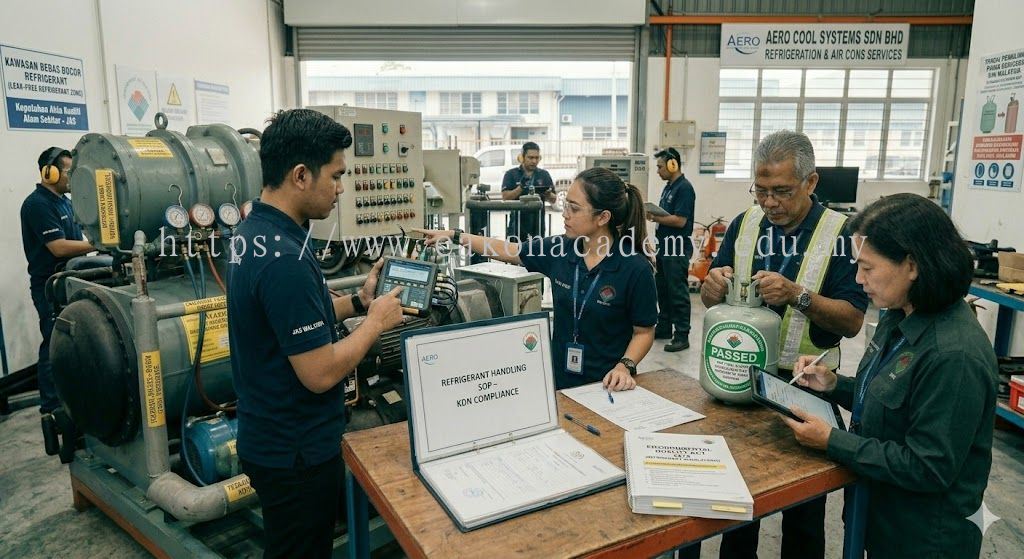
Malaysia Environmental Quality Act Refrigerant Compliance: Strengthening Environmental Protection, Regulatory Compliance, and Sustainable Refrigerant Management
Malaysia Environmental Quality Act Refrigerant Compliance refers to the implementation of environmental regulations, refrigerant management practices, and compliance requirements associated with the Environmental Quality Act (EQA) and related environmental policies administered by the Department of Environment (DOE) Malaysia. These requirements are designed to ensure the responsible use, handling, storage, recovery, recycling, transportation, and disposal of refrigerants used in HVACR (Heating, Ventilation, Air Conditioning, and Refrigeration) systems. As Malaysia continues to strengthen its commitment to environmental sustainability, climate change mitigation, and ozone layer protection, refrigerant compliance under the Environmental Quality Act has become a critical responsibility for industries, commercial facilities, government institutions, and HVACR professionals.
The Environmental Quality Act serves as one of Malaysia’s key legislative frameworks for environmental protection. Within the context of refrigerant management, compliance focuses on minimizing environmental harm caused by refrigerant emissions, particularly substances that contribute to ozone depletion and global warming. Industrial facilities, manufacturing plants, cold storage warehouses, food processing factories, pharmaceutical companies, commercial buildings, shopping malls, hotels, hospitals, logistics centers, and data centers all utilize refrigeration and air conditioning systems that contain refrigerants requiring careful management. Failure to implement proper refrigerant control measures can result in environmental damage, increased greenhouse gas emissions, operational inefficiencies, and potential regulatory consequences.
A primary objective of Malaysia Environmental Quality Act refrigerant compliance is the prevention of refrigerant emissions into the atmosphere. Refrigerants with high Ozone Depletion Potential (ODP) and high Global Warming Potential (GWP) can significantly impact environmental sustainability when released through leaks, improper servicing, or inadequate disposal practices. Organizations are encouraged to establish comprehensive refrigerant management programs that include leak prevention, refrigerant containment, preventive maintenance, recovery procedures, recycling initiatives, and environmentally responsible disposal methods. These practices help reduce emissions while supporting compliance with environmental regulations and sustainability goals.
Leak detection and preventive maintenance are essential components of effective refrigerant compliance. Industrial and commercial refrigeration systems often contain substantial refrigerant charges, making leak management a critical environmental responsibility. Organizations should conduct routine inspections, refrigerant charge verification, pressure testing, equipment performance evaluations, and continuous monitoring where appropriate. Modern leak detection technologies such as electronic refrigerant detectors, infrared monitoring systems, ultrasonic leak detection devices, and automated alarm systems enable facilities to identify refrigerant leaks quickly and implement corrective actions before significant refrigerant losses occur.
Another important aspect of Malaysia Environmental Quality Act refrigerant compliance is refrigerant recovery and recycling. During servicing, maintenance activities, retrofitting projects, equipment replacement, or system decommissioning, refrigerants must be recovered using approved recovery equipment rather than being released into the atmosphere. Recovered refrigerants can be recycled, reclaimed, or disposed of according to environmental guidelines and industry best practices. Proper refrigerant recovery procedures support environmental protection, resource conservation, and long-term sustainability objectives.
The transition toward environmentally friendly refrigerants is increasingly important within modern compliance programs. Organizations are encouraged to evaluate refrigerants based on environmental performance and gradually adopt lower-GWP alternatives where practical. Refrigerants such as hydrofluoroolefins (HFOs), carbon dioxide (CO ), ammonia (NH ), and hydrocarbon refrigerants are gaining popularity due to their reduced environmental impact and compatibility with sustainable cooling strategies. The adoption of environmentally responsible refrigerants supports both regulatory compliance and corporate environmental responsibility initiatives.
Documentation and environmental reporting are fundamental requirements of Malaysia Environmental Quality Act refrigerant compliance. Facilities should maintain comprehensive records of refrigerant inventories, refrigerant purchases, leak incidents, maintenance activities, recovery operations, recycling processes, disposal procedures, and environmental performance indicators. Accurate documentation supports compliance audits, regulatory inspections, environmental reporting obligations, and continuous improvement programs. Effective record keeping also helps organizations monitor refrigerant usage and identify opportunities to improve environmental performance.
Energy efficiency is closely linked to refrigerant compliance. HVACR systems operating with proper refrigerant charge levels and regular maintenance typically consume less energy and provide better cooling performance. Refrigerant leaks and poor refrigerant management can reduce system efficiency, increase energy costs, and contribute to higher carbon emissions. By integrating refrigerant compliance with energy management strategies, organizations can achieve significant environmental and financial benefits.
Workplace safety is another important consideration. Refrigerants may present hazards related to flammability, toxicity, high operating pressure, or oxygen displacement depending on the refrigerant type. Organizations should implement safety procedures, risk assessments, emergency response plans, and employee training programs to ensure safe refrigerant handling and compliance with occupational safety requirements.
Training and competency development are critical for maintaining compliance. HVACR technicians, engineers, facility managers, maintenance personnel, and environmental officers must understand refrigerant regulations, recovery techniques, leak detection procedures, environmental responsibilities, and safety requirements. Continuous professional development helps organizations stay compliant with changing regulations and emerging technologies.
At eakonacadem.edu.my, HVACR professionals, engineers, facility managers, environmental compliance officers, and industrial maintenance teams can access specialized training programs focused on Malaysia Environmental Quality Act refrigerant compliance, refrigerant recovery and recycling, leak detection, environmental reporting, refrigerant safety management, sustainable cooling technologies, and HVACR best practices. These comprehensive training programs provide both theoretical knowledge and practical skills to help organizations strengthen compliance and improve environmental performance.
As environmental regulations continue to evolve and sustainability becomes increasingly important, Malaysia Environmental Quality Act refrigerant compliance will remain a key element of responsible facility management and industrial operations. Organizations that implement effective refrigerant compliance programs can reduce greenhouse gas emissions, protect the environment, improve energy efficiency, strengthen regulatory compliance, and support Malaysia’s long-term environmental objectives. Through professional education and technical training provided by eakonacadem.edu.my, industry professionals can develop the expertise required to manage refrigerants responsibly and contribute to a cleaner, greener, and more sustainable future.
Lihat detail lebih lanjut tentang EAKON ACADEMY SDN BHD Malaysia
