
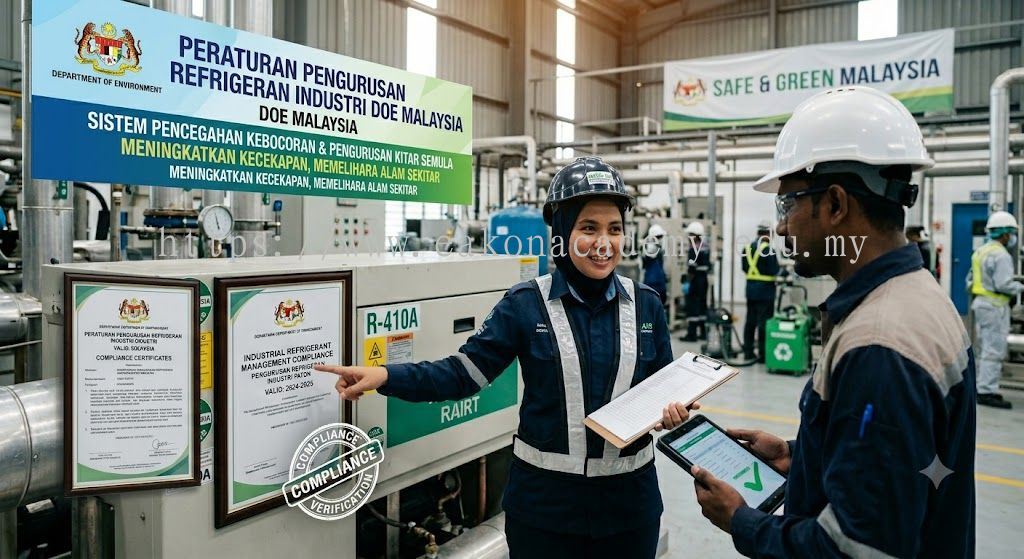
Malaysia DOE Industrial Refrigerant Regulations: A Comprehensive Guide to Environmental Compliance, Sustainable Refrigerant Management, and Industrial HVACR Best Practices
Malaysia DOE Industrial Refrigerant Regulations refer to the environmental requirements, compliance standards, and refrigerant management guidelines established by the Department of Environment (DOE) Malaysia to regulate the use, handling, storage, recovery, recycling, transportation, and disposal of refrigerants within industrial sectors. These regulations are designed to protect the environment, reduce greenhouse gas emissions, prevent ozone layer depletion, and promote the adoption of sustainable cooling technologies throughout Malaysia’s industrial landscape. As industries increasingly focus on environmental responsibility and regulatory compliance, understanding Malaysia DOE industrial refrigerant regulations has become essential for facility managers, HVACR technicians, engineers, environmental officers, and business owners.
Industrial facilities across Malaysia, including manufacturing plants, food processing factories, pharmaceutical facilities, petrochemical operations, cold storage warehouses, logistics centers, electronics manufacturing plants, commercial buildings, and data centers, rely heavily on refrigeration and air conditioning systems to maintain operational efficiency and product quality. These systems contain refrigerants that, if improperly managed, can contribute significantly to environmental challenges such as climate change and ozone depletion. Malaysia DOE industrial refrigerant regulations provide a framework that helps organizations manage refrigerants responsibly while ensuring compliance with national environmental objectives and international agreements such as the Montreal Protocol and the Kigali Amendment.
One of the key objectives of Malaysia DOE industrial refrigerant regulations is the control and reduction of refrigerant emissions. Refrigerants with high Ozone Depletion Potential (ODP) and high Global Warming Potential (GWP) can have serious environmental consequences when released into the atmosphere. Therefore, industries are encouraged to implement comprehensive refrigerant management programs that focus on leak prevention, leak detection, refrigerant recovery, recycling, reclamation, and environmentally responsible disposal. These measures help reduce emissions while improving system reliability and operational efficiency.
Proper refrigerant handling is a fundamental requirement under Malaysia DOE industrial refrigerant regulations. Refrigerants must be stored in approved cylinders and containers, clearly labeled, and handled by trained personnel using appropriate safety procedures. Organizations are expected to establish refrigerant inventory management systems to monitor refrigerant usage, storage, transfer, and recovery activities. Effective refrigerant tracking improves accountability, supports environmental reporting, and helps facilities identify opportunities for reducing refrigerant losses.
Leak detection and preventive maintenance are critical components of compliance. Industrial refrigeration and cooling systems often contain large refrigerant charges, making leak prevention a top priority. Facilities should conduct routine inspections, pressure testing, refrigerant charge verification, and equipment performance evaluations. Advanced leak detection technologies such as infrared sensors, electronic refrigerant detectors, ultrasonic monitoring systems, and automated alarm solutions can help organizations identify leaks early and take corrective action before significant environmental damage occurs.
Another important aspect of Malaysia DOE industrial refrigerant regulations is refrigerant recovery and recycling. During maintenance, servicing, equipment upgrades, retrofitting projects, or system decommissioning, refrigerants must be recovered using approved equipment rather than being released into the atmosphere. Recovered refrigerants can be recycled, reclaimed, or managed according to environmental guidelines. These practices help conserve resources, reduce environmental impact, and strengthen compliance with regulatory requirements.
The transition toward environmentally friendly refrigerants is also a major focus of modern refrigerant regulations. Industries are increasingly encouraged to adopt low-GWP refrigerants and sustainable alternatives such as hydrofluoroolefins (HFOs), carbon dioxide (CO ), ammonia (NH ), and hydrocarbon refrigerants where appropriate. These alternatives help reduce climate impact while maintaining effective cooling performance and supporting long-term environmental sustainability goals.
Documentation and environmental reporting are essential elements of Malaysia DOE industrial refrigerant regulations. Organizations should maintain accurate records of refrigerant inventories, maintenance activities, leak incidents, recovery operations, recycling procedures, refrigerant purchases, and disposal activities. Comprehensive documentation supports regulatory inspections, environmental audits, compliance verification, and sustainability reporting initiatives.
Safety management is closely integrated into industrial refrigerant regulations. Certain refrigerants may present hazards related to toxicity, flammability, high operating pressure, or oxygen displacement. Organizations must conduct risk assessments, implement emergency response plans, provide appropriate personal protective equipment (PPE), and ensure employees receive proper refrigerant safety training. Effective safety management helps protect workers, equipment, and facility operations while supporting regulatory compliance.
Training and professional development are essential for maintaining compliance with Malaysia DOE industrial refrigerant regulations. HVACR technicians, maintenance personnel, engineers, facility managers, and environmental officers must possess the knowledge and skills necessary to handle refrigerants safely and responsibly. Ongoing training ensures personnel remain informed about regulatory updates, industry best practices, environmental requirements, and emerging refrigerant technologies.
At eakonacadem.edu.my, HVACR professionals, industrial engineers, facility managers, environmental compliance officers, and maintenance teams can access specialized training programs focused on Malaysia DOE industrial refrigerant regulations, refrigerant recovery and recycling, leak detection, environmental compliance, refrigerant safety management, industrial refrigeration systems, and sustainable cooling technologies. These industry-focused programs combine technical expertise with practical hands-on learning to help organizations strengthen compliance and operational performance.
As Malaysia continues to strengthen environmental protection initiatives and climate commitments, Malaysia DOE industrial refrigerant regulations will remain a cornerstone of responsible industrial operations. Organizations that implement effective refrigerant management practices can reduce greenhouse gas emissions, improve energy efficiency, enhance workplace safety, strengthen environmental compliance, and support national sustainability goals. Through professional education and technical training offered by eakonacadem.edu.my, industry professionals can develop the expertise required to manage refrigerants responsibly and contribute to a cleaner, greener, and more sustainable future for Malaysia’s industrial HVACR sector.
Lihat detail lebih lanjut tentang EAKON ACADEMY SDN BHD Malaysia
