
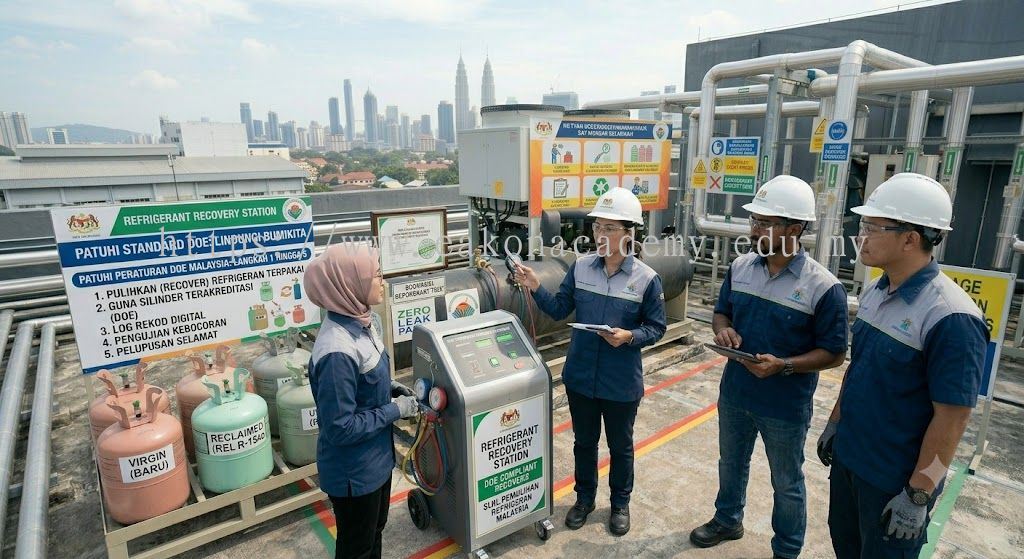
DOE Malaysia Refrigerant Management Requirements: Essential Compliance Standards for Sustainable HVACR Operations and Environmental Protection
DOE Malaysia Refrigerant Management Requirements refer to the environmental regulations, operational procedures, and compliance standards established by Malaysia’s Department of Environment (DOE) to govern the responsible handling, storage, usage, recovery, recycling, transportation, and disposal of refrigerants used in HVACR (Heating, Ventilation, Air Conditioning, and Refrigeration) systems. These requirements are designed to minimize the environmental impact of refrigerants, reduce greenhouse gas emissions, protect the ozone layer, and support Malaysia’s commitment to international environmental agreements such as the Montreal Protocol and the Kigali Amendment. As industries continue to prioritize sustainability and environmental responsibility, understanding and implementing DOE Malaysia refrigerant management requirements has become increasingly important for businesses, facility operators, and HVACR professionals.
The DOE Malaysia refrigerant management requirements framework applies to a wide range of sectors, including commercial buildings, manufacturing facilities, hospitals, hotels, supermarkets, shopping malls, data centers, pharmaceutical plants, food processing facilities, cold storage warehouses, and residential developments. These facilities depend heavily on refrigeration and air conditioning systems to maintain operational efficiency and occupant comfort. Because refrigerants can contribute to ozone depletion and global warming if improperly managed, strict compliance with refrigerant management requirements is essential to ensure environmental protection and regulatory adherence.
One of the primary requirements under DOE Malaysia refrigerant management guidelines is the proper handling of refrigerants throughout their entire lifecycle. This includes the selection of environmentally responsible refrigerants, safe storage practices, correct charging procedures, regular maintenance, leak prevention, recovery during servicing, recycling when appropriate, and proper disposal at the end of equipment life. Organizations are encouraged to adopt refrigerants with lower ozone depletion potential (ODP) and lower global warming potential (GWP) to support national sustainability goals and reduce environmental risks.
Leak detection and prevention are central components of DOE Malaysia refrigerant management requirements. Refrigerant leaks can result in significant environmental harm, increased operating costs, and reduced system efficiency. To address this issue, organizations should implement preventive maintenance programs that include routine inspections, refrigerant charge verification, pressure testing, and advanced leak detection technologies. Early identification and repair of refrigerant leaks help reduce emissions while improving HVACR system reliability and performance.
Another important aspect of DOE Malaysia refrigerant management requirements is refrigerant recovery and recycling. During servicing, equipment upgrades, retrofitting, or system decommissioning, refrigerants must be recovered using approved equipment rather than being released into the atmosphere. Recovered refrigerants can be recycled, reclaimed, or disposed of according to environmental regulations. These practices support resource conservation, reduce environmental impact, and help organizations maintain compliance with regulatory requirements.
Documentation and record keeping are also critical elements of effective refrigerant management. Organizations should maintain detailed records of refrigerant purchases, usage, recovery activities, recycling operations, leak incidents, maintenance activities, and disposal procedures. Accurate documentation supports environmental reporting, facilitates regulatory audits, and demonstrates compliance with DOE Malaysia refrigerant management requirements. Comprehensive record management also enables organizations to identify trends, improve refrigerant control measures, and strengthen sustainability initiatives.
Training and competency development play a crucial role in successful refrigerant management programs. HVACR technicians, maintenance personnel, facility managers, and environmental officers must possess the knowledge and skills necessary to handle refrigerants safely and responsibly. Training programs covering refrigerant handling procedures, leak detection techniques, recovery operations, environmental regulations, and safety requirements help ensure compliance while reducing environmental risks.
Energy efficiency is closely linked to refrigerant management. Properly maintained HVACR systems with optimal refrigerant charge levels operate more efficiently, consume less energy, and generate lower carbon emissions. Organizations that integrate refrigerant management with energy management strategies can achieve significant operational savings while supporting environmental sustainability objectives.
At eakonacadem.edu.my, HVACR professionals, facility managers, engineers, maintenance personnel, and environmental compliance officers can access specialized training programs focused on DOE Malaysia refrigerant management requirements, refrigerant recovery and recycling, leak detection, environmental compliance, HVACR maintenance best practices, and sustainable cooling technologies. These industry-focused courses provide practical knowledge and hands-on experience to help participants implement effective refrigerant management systems within their organizations.
As Malaysia continues to strengthen environmental regulations and climate action initiatives, compliance with DOE Malaysia refrigerant management requirements will remain a critical priority for organizations operating HVACR systems. Businesses that adopt proactive refrigerant management practices can reduce environmental impact, improve energy efficiency, enhance regulatory compliance, and support national sustainability goals. Through professional education and technical training provided by eakonacadem.edu.my, industry professionals can develop the expertise needed to manage refrigerants responsibly and contribute to a cleaner, greener, and more sustainable future for Malaysia’s HVACR industry.
Lihat detail lebih lanjut tentang EAKON ACADEMY SDN BHD Malaysia
