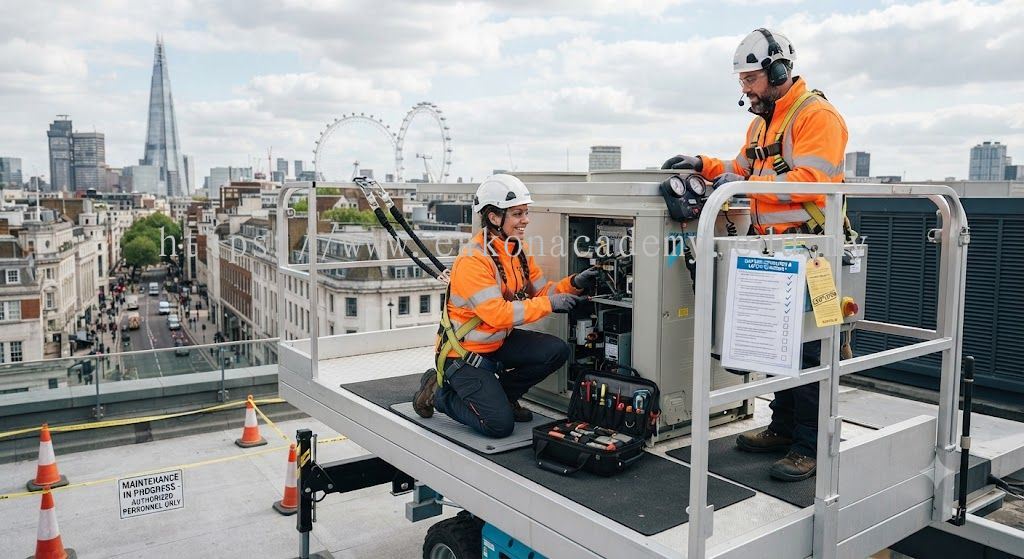
HVAC Elevated Work Platform Maintenance Safety: Essential Safety Guide for Air Conditioning Technicians
HVAC maintenance activities often require technicians to access air conditioning equipment installed at elevated locations, including rooftops, high ceilings, commercial buildings, industrial facilities, and mechanical service areas. When standard access methods are not suitable, technicians may use elevated work platforms (EWPs) such as scissor lifts, boom lifts, and mobile elevated work platforms to safely reach HVAC systems. However, operating and working from elevated platforms involves specific safety risks, including falls, equipment instability, electrical hazards, and improper operation. Understanding proper HVAC elevated work platform maintenance safety procedures is essential to protect technicians, prevent workplace accidents, and ensure efficient air conditioning maintenance operations. At Eakon Academy (eakonacadem.edu.my), our HVAC training programmes focus on developing skilled technicians who understand both technical maintenance requirements and safe working practices when using elevated access equipment.
Elevated work platforms provide an effective solution for HVAC technicians who need safe access to high-level equipment such as rooftop air conditioning units, commercial condensers, VRF and VRV systems, ducting systems, ventilation equipment, and industrial cooling installations. However, these platforms must be used correctly to ensure technician safety. Proper training, equipment inspection, workplace planning, and compliance with safety procedures are important factors in reducing risks during elevated HVAC maintenance activities.
Before using an elevated work platform for HVAC maintenance, technicians should conduct a thorough workplace risk assessment. This process involves identifying potential hazards such as uneven ground conditions, overhead obstacles, electrical systems, weather conditions, nearby machinery, restricted working areas, and potential fall hazards. A proper risk assessment allows technicians and supervisors to select suitable equipment, establish safe operating procedures, and prepare emergency response plans before beginning maintenance work.
One of the most important safety requirements for elevated work platform maintenance is ensuring that only trained and authorised personnel operate the equipment. HVAC technicians should understand the operating procedures, control functions, safety features, and limitations of the elevated platform before use. Training should include equipment inspection, safe positioning, movement control, emergency lowering procedures, and correct platform operation techniques. Proper operator knowledge helps prevent accidents caused by incorrect handling or unsafe practices.
Equipment inspection is a critical part of HVAC elevated work platform maintenance safety. Before each use, technicians should inspect the platform for damaged components, hydraulic leaks, faulty controls, worn tyres, safety rail issues, alarms, emergency stop functions, and other defects. Any equipment showing signs of damage or malfunction should not be used until proper repairs are completed. Regular maintenance and inspection ensure the elevated work platform remains reliable and safe for HVAC applications.
Fall protection is another essential consideration when working from elevated platforms. Depending on the equipment type and working conditions, technicians may require suitable fall protection systems such as full-body safety harnesses, lanyards, and approved attachment points. Proper use of fall protection equipment reduces the risk of injury in situations involving sudden movement, unstable conditions, or unexpected platform incidents. Technicians should understand how to inspect and correctly use their safety harness systems before performing elevated maintenance work.
Personal protective equipment (PPE) is an important part of HVAC elevated work platform safety. Technicians should wear suitable safety helmets, safety footwear, protective gloves, safety glasses, high-visibility clothing, and appropriate workwear. Safety helmets protect against falling objects and overhead hazards, while safety footwear provides better stability when working inside elevated platforms. Protective gloves and eye protection help reduce injuries from sharp materials, dust, debris, refrigerants, and maintenance activities.
Electrical safety must always be considered when using elevated platforms for HVAC maintenance. Many air conditioning systems contain electrical components such as compressors, control panels, motors, and wiring connections. Elevated platforms may also be used near overhead electrical systems, creating additional risks. Technicians should identify electrical hazards before operation, maintain safe distances from electrical sources, and follow proper electrical isolation procedures when servicing HVAC equipment.
Safe positioning and movement of elevated work platforms are also important for preventing accidents. Technicians should ensure the platform is placed on stable and suitable ground before operation. The surrounding area should be clear of obstacles, vehicles, and unnecessary personnel. Overloading the platform, exceeding weight limits, or using the equipment in unsuitable weather conditions can create serious safety risks. Following manufacturer guidelines helps maintain safe platform operation.
Tool and material management should also be considered during elevated HVAC maintenance. Technicians should organise tools properly and prevent equipment from falling from the platform. Tool bags, secure storage methods, and proper handling procedures reduce risks to workers below and prevent damage to HVAC systems. Good organisation improves productivity and creates a safer working environment.
Weather conditions can significantly affect elevated work platform safety. Strong winds, heavy rain, lightning, and slippery surfaces can increase the risk of platform instability and technician injury. Before starting outdoor HVAC maintenance, technicians should evaluate environmental conditions and stop work when conditions become unsafe. Proper weather assessment is an important part of professional maintenance planning.
Emergency procedures are a key element of HVAC elevated work platform safety. Technicians should understand emergency lowering systems, communication methods, rescue procedures, and first aid requirements. A prepared emergency response plan ensures that workers can respond quickly and effectively if equipment failure, medical emergencies, or unexpected incidents occur during elevated maintenance activities.
Continuous safety training is essential for HVAC technicians who use elevated work platforms. Professional training should cover platform operation, equipment inspection, fall protection systems, PPE usage, hazard identification, electrical safety, and emergency response procedures. Well-trained technicians are better equipped to perform elevated HVAC maintenance safely while maintaining high service standards.
At Eakon Academy (eakonacadem.edu.my), we are committed to providing professional HVAC training that prepares technicians for modern industry requirements. Our specialised programmes cover air conditioning installation, servicing, maintenance, troubleshooting, working at height safety, elevated work platform procedures, PPE requirements, electrical safety, refrigerant handling, and industry best practices. Through practical hands-on training, students gain the skills and confidence required to perform HVAC work safely in residential, commercial, and industrial environments. By following proper HVAC Elevated Work Platform Maintenance Safety procedures, technicians can reduce workplace hazards, improve maintenance efficiency, protect themselves and others, comply with safety requirements, and deliver professional HVAC services with confidence.
更多 EAKON ACADEMY SDN BHD 相关资料 Malaysia