
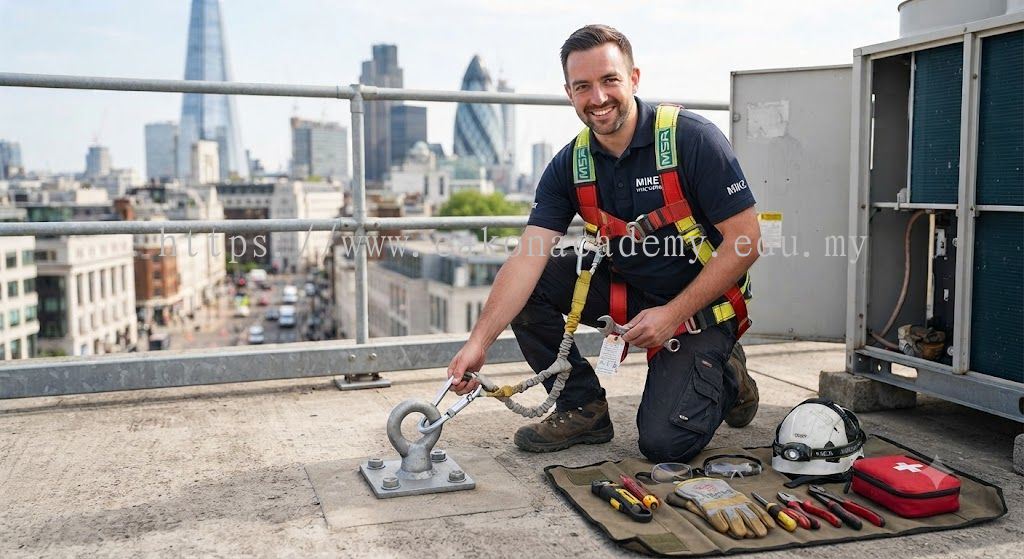
HVAC Height Safety Kit for Technicians: Essential Fall Protection Equipment for Safe Air Conditioning Installation and Maintenance
Working at height is an everyday responsibility for many HVAC professionals, making a complete HVAC height safety kit for technicians an essential investment for workplace safety. Air conditioning technicians regularly install outdoor condenser units, service rooftop package systems, maintain VRF and VRV equipment, inspect commercial ventilation systems, and repair industrial chillers in elevated locations where fall hazards are present. Without the correct safety equipment, even routine HVAC maintenance can become a high-risk activity. A properly equipped height safety kit helps minimise accidents, improves technician confidence, ensures compliance with Malaysia's Occupational Safety and Health (OSH) regulations, and demonstrates a company's commitment to maintaining professional safety standards. At Eakon Academy (eakonacadem.edu.my), our specialised HVAC training programmes combine technical air conditioning skills with practical work-at-height safety education, preparing technicians to perform elevated tasks safely and efficiently in residential, commercial, and industrial environments.
The most important component of every HVAC height safety kit is the full-body safety harness. This essential item provides the primary connection between the technician and the fall protection system. Unlike traditional waist belts, a full-body harness distributes fall arrest forces across the shoulders, chest, thighs, and pelvis, significantly reducing the risk of serious injury should a fall occur. Technicians should inspect the harness before every use, checking for frayed webbing, damaged stitching, cracked buckles, bent D-rings, corrosion, and signs of excessive wear. Proper fitting is equally important because a loose or incorrectly adjusted harness may not perform effectively during an emergency. Professional HVAC safety training teaches technicians how to inspect, wear, adjust, and maintain harnesses according to recognised safety standards.
A complete height safety kit also includes a shock-absorbing lanyard or self-retracting lifeline (SRL). Shock-absorbing lanyards reduce the force experienced during a fall by gradually absorbing energy before the technician comes to a complete stop. Self-retracting lifelines automatically extend and retract as the technician moves, providing greater mobility while limiting fall distance. Depending on the type of HVAC work being performed, technicians may also use twin-leg lanyards that allow continuous attachment while transferring between anchor points or positioning lanyards that provide additional stability when carrying out installation or maintenance tasks. Selecting the correct connection system improves both worker safety and productivity.
A certified anchor point is another essential part of every HVAC height safety kit. The anchor point provides the secure structural attachment that supports the technician in the event of a fall. Certified roof anchors, structural steel members, permanent lifeline systems, and approved temporary anchorage devices are suitable options when installed correctly. HVAC technicians should never connect their fall protection equipment to refrigerant piping, electrical conduits, cable trays, handrails, ductwork, or lightweight building structures because these are not designed to withstand fall arrest forces. Proper anchor point selection should always form part of the workplace risk assessment conducted before elevated work begins.
A height safety helmet with a chin strap is equally important. Helmets specifically designed for working at height remain securely attached while technicians climb ladders, operate elevated work platforms, or move around rooftops. The chin strap prevents the helmet from falling off during movement or in the event of a fall, ensuring continuous head protection. These helmets also protect workers from falling tools, construction materials, and accidental impacts commonly encountered during HVAC installation and maintenance.
Safety footwear forms another key component of the height safety kit. Air conditioning technicians should wear boots with steel toe protection, puncture-resistant midsoles, anti-slip soles, and oil-resistant materials. These features improve traction on ladders, rooftops, scaffolding, and elevated work platforms while protecting technicians from falling equipment, sharp construction materials, and slippery surfaces. Comfortable footwear also reduces fatigue during extended installation or maintenance work, helping technicians maintain balance and concentration throughout the day.
Protective work gloves are essential because HVAC technicians frequently handle copper tubing, sheet metal, electrical cables, aluminium fins, refrigerant cylinders, and hand tools. Cut-resistant gloves help prevent lacerations while maintaining the flexibility required for detailed installation work. Heat-resistant gloves should be worn during brazing operations to protect against burns from hot copper pipes, torches, and molten filler materials. Selecting the appropriate glove for each task improves both safety and work quality.
Every height safety kit should also include eye protection. Safety glasses or impact-resistant goggles protect technicians from drilling dust, refrigerant splashes, metal fragments, flying debris, grinding sparks, and chemical exposure encountered during installation, servicing, and maintenance activities. Good eye protection helps prevent serious injuries while maintaining clear vision during detailed HVAC tasks such as electrical troubleshooting, refrigerant charging, and system commissioning.
Additional safety equipment may include high-visibility clothing, particularly for technicians working on construction sites or industrial facilities where vehicle traffic and multiple contractors are present. Reflective safety vests improve visibility and reduce the risk of struck-by accidents. Tool lanyards should also be included to prevent hand tools from falling and creating hazards for workers below. Portable first aid kits, emergency whistles, communication devices, and rescue equipment further enhance overall worksite preparedness and emergency response capability.
Safe access equipment is another important element of height safety. Elevated work platforms such as boom lifts and scissor lifts provide secure working platforms for servicing rooftop air conditioning equipment and commercial HVAC systems. Operators should complete pre-use inspections, verify load capacities, understand emergency controls, and follow manufacturer operating procedures. Where ladders are used, they should be inspected before every use, positioned on firm level ground, secured against movement, and climbed while maintaining three points of contact. Safe access equipment complements the height safety kit by reducing exposure to unnecessary fall risks.
Every HVAC project involving work at height should begin with a comprehensive workplace risk assessment. Technicians should identify roof conditions, weather hazards, overhead electrical lines, restricted access areas, fragile surfaces, falling object risks, structural stability, and emergency rescue requirements before selecting appropriate safety equipment. Effective planning ensures the correct height safety kit is available while helping employers comply with occupational safety regulations and industry best practices.
Emergency rescue planning is equally important. Every work-at-height activity should include a documented rescue procedure with readily available rescue equipment, trained personnel, emergency communication methods, and first aid arrangements. Suspension trauma awareness, rescue drills, and emergency response training help ensure technicians can be rescued quickly if a fall occurs, significantly reducing the severity of injuries.
At Eakon Academy (eakonacadem.edu.my), we are dedicated to developing highly skilled HVAC professionals who understand that workplace safety is an essential part of technical excellence. Our industry-focused HVAC training programmes combine practical air conditioning installation, servicing, troubleshooting, and maintenance skills with specialised education in working at height, fall protection systems, personal protective equipment, anchor point selection, elevated work platform operation, ladder safety, emergency rescue procedures, and workplace risk assessment. Students receive valuable hands-on experience using industry-standard height safety equipment under the supervision of experienced instructors, preparing them for successful careers across Malaysia's residential, commercial, and industrial HVAC sectors. By investing in a complete HVAC Height Safety Kit for Technicians, employers and technicians can minimise workplace accidents, improve operational efficiency, comply with Malaysian occupational safety requirements, protect lives, and deliver professional air conditioning services that meet the highest standards of safety, reliability, and quality.
更多 EAKON ACADEMY SDN BHD 相关资料 Malaysia
