
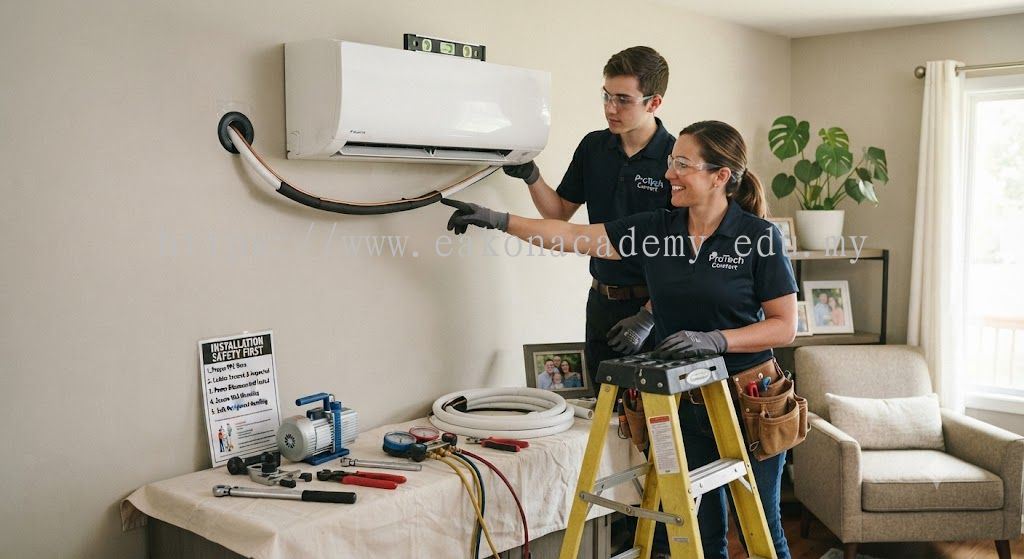
Air Conditioning Installation Safety Best Practices for Professional HVAC Training and Secure System Installation
Air conditioning installation safety best practices are essential guidelines that help HVAC technicians complete installation work safely, efficiently, and professionally. Installing air conditioning systems involves working with electrical components, refrigerant systems, heavy equipment, specialized tools, and technical procedures that require proper knowledge and safety awareness. Following correct safety practices reduces workplace risks, prevents equipment damage, and ensures that air conditioning systems operate reliably after installation. Eakon Academy provides professional HVAC training programs designed to develop skilled technicians with strong knowledge of air conditioning installation safety best practices for residential, commercial, and industrial applications.
Safety is one of the most important aspects of professional air conditioning installation. Before beginning installation work, technicians must conduct proper preparation, inspect equipment conditions, review installation requirements, and identify potential workplace hazards. Understanding safety procedures allows technicians to complete tasks confidently while protecting themselves, customers, and surrounding property. Professional HVAC training teaches participants how to follow structured safety practices and apply industry-approved installation methods.
One of the key air conditioning installation safety best practices is proper handling of electrical systems. HVAC technicians must understand electrical safety procedures, including power isolation, correct wiring methods, grounding requirements, and the use of suitable testing equipment. Incorrect electrical installation can result in equipment failure, electric shock risks, or fire hazards. Through professional HVAC training, learners develop essential electrical knowledge and safe working habits required for modern air conditioning installation.
Refrigerant handling safety is another critical part of air conditioning installation. Technicians must understand correct refrigerant handling procedures, proper connection methods, leak testing processes, and system preparation techniques. Refrigerant systems operate under pressure and require careful handling to prevent leaks and safety issues. Applying proper refrigerant installation practices helps protect technicians while maintaining system efficiency and environmental responsibility.
Using the correct tools and equipment is also an important safety practice during air conditioning installation. HVAC technicians should be trained to operate tools such as vacuum pumps, pressure gauges, pipe cutters, flaring tools, and electrical testing devices correctly. Improper tool usage can lead to installation errors, damaged components, or personal injury. Professional training helps technicians improve their technical confidence and perform installation tasks with greater accuracy and safety.
Working conditions and installation environments must also be considered when applying air conditioning installation safety best practices. Technicians may need to work at heights, handle heavy equipment, or operate in limited spaces. Proper use of personal protective equipment, safe lifting techniques, and workplace safety procedures helps reduce the risk of accidents. A strong safety culture allows HVAC professionals to maintain high-quality workmanship while completing projects efficiently.
Another important safety practice is ensuring correct mounting and installation of air conditioning components. Indoor and outdoor units must be securely installed using appropriate brackets, supports, and fixing methods. Improper mounting can cause vibration, equipment damage, and safety hazards. Following professional installation guidelines ensures that air conditioning systems remain stable and reliable throughout their operating life.
After installation is completed, technicians should perform safety inspections and system testing before operation. Checking electrical connections, refrigerant conditions, drainage systems, airflow performance, and overall equipment operation ensures that the installation meets professional standards. Proper commissioning helps identify potential issues and confirms that the system is safe for customer use.
Learning air conditioning installation safety best practices is valuable for anyone pursuing a career in HVAC installation, servicing, and maintenance. Skilled technicians who understand safety procedures can provide better services, reduce installation risks, and improve customer confidence. Safe installation practices also contribute to longer equipment lifespan, better energy efficiency, and improved system reliability.
Eakon Academy offers HVAC training courses focused on practical skills, technical knowledge, and industry safety standards. By mastering air conditioning installation safety best practices, participants can enhance their professional capabilities and prepare for opportunities in the growing HVAC industry. Comprehensive training helps develop qualified technicians who can deliver safe, efficient, and reliable air conditioning installation solutions for residential, commercial, and industrial environments.
More detail about EAKON ACADEMY SDN BHD Malaysia
