
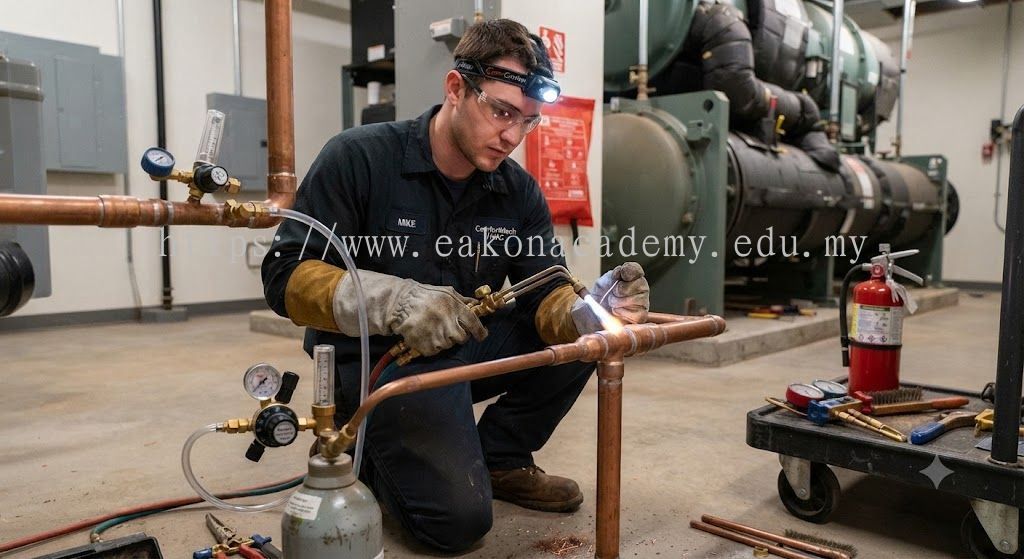
SAFE HVAC BRAZING NITROGEN PURGING PRACTICES | PROFESSIONAL COPPER PIPE INSTALLATION & REFRIGERATION TRAINING
Safe HVAC brazing nitrogen purging practices are essential industry procedures used to ensure high-quality, leak-free, and internally clean copper pipe installations in refrigeration and air-conditioning systems. In HVAC-R applications, brazing is the process of joining copper tubing using high-temperature heat and filler metals, forming permanent joints that must withstand pressure, vibration, and continuous system operation. During this process, nitrogen purging plays a critical role in preventing internal oxidation and maintaining system cleanliness. Because improper brazing can lead to contamination, blockages, and refrigerant system failure, following safe nitrogen purging practices is a key requirement for all HVAC technicians. At eakonacadem.edu.my, we provide professional HVAC training that emphasizes both brazing safety and proper nitrogen purging techniques for real-world applications.
A fundamental aspect of safe HVAC brazing nitrogen purging practices is understanding why nitrogen is used during brazing operations. When copper tubing is heated without nitrogen flow, oxygen inside the pipe reacts with the heated copper surface, forming black oxide scale. This internal contamination can circulate through the HVAC system, causing damage to compressors, expansion valves, filter driers, and other critical components. By introducing a controlled flow of dry nitrogen, technicians prevent oxidation and ensure the internal surfaces of copper pipes remain clean, smooth, and free from harmful deposits.
Proper nitrogen flow control is one of the most important skills in HVAC brazing nitrogen purging practices. Technicians must learn how to regulate nitrogen pressure to maintain a low, steady flow throughout the brazing process. Excessive nitrogen pressure can cause turbulence or damage pipe joints, while insufficient flow may fail to prevent oxidation. Correct adjustment ensures that nitrogen gently displaces oxygen inside the piping system, protecting internal surfaces without affecting brazing quality or joint formation.
Another key element of safe HVAC brazing nitrogen purging practices is correct setup of nitrogen equipment. Technicians must properly connect nitrogen cylinders, regulators, and flow meters before starting brazing work. All connections must be checked for leaks, and cylinders must be secured in an upright position to ensure safe handling. Understanding how to safely operate nitrogen systems is essential for maintaining both workplace safety and system cleanliness during HVAC installation work.
Nitrogen purging is especially important during copper pipe brazing in closed HVAC systems, where internal contamination cannot be easily removed once installation is complete. Proper purging ensures that oxidation is minimized at the source, reducing the risk of long-term system failure. This is particularly critical in commercial refrigeration, air-conditioning systems, and industrial HVAC applications where system reliability and efficiency are top priorities.
Safe HVAC brazing nitrogen purging practices also include coordination with flame control and brazing technique. Technicians must ensure that nitrogen flow is maintained consistently throughout the entire brazing process, from initial heating to completion of the joint. Proper synchronization between nitrogen purging and torch operation ensures that copper joints are both structurally strong and internally clean. This combination of skills is essential for producing professional-grade HVAC installations.
Post-brazing inspection is another important step in nitrogen purging practices. After completing brazing, technicians must ensure that nitrogen flow is properly stopped and that all joints are visually inspected for proper filler penetration and sealing. Pressure testing using nitrogen is then performed to confirm system integrity and ensure there are no leaks before refrigerant charging. These steps are critical for maintaining HVAC system performance and reliability.
Personal Protective Equipment (PPE) and safety procedures are also part of safe HVAC brazing nitrogen purging practices. Technicians must wear safety goggles, heat-resistant gloves, flame-resistant clothing, and safety boots when working with both brazing equipment and pressurized nitrogen systems. Proper safety awareness ensures safe handling of equipment and reduces workplace risks during HVAC installation.
At eakonacadem.edu.my, our HVAC training programs are designed to provide both theoretical knowledge and practical hands-on experience. Students are trained in copper pipe brazing techniques, nitrogen purging procedures, flame control, leak testing, pressure testing, PPE usage, fire safety, and complete refrigeration system installation practices. This ensures that every trainee is fully prepared for real-world HVAC industry requirements.
Safe HVAC brazing nitrogen purging practices are essential for ensuring system cleanliness, efficiency, and long-term reliability. By mastering proper nitrogen techniques, HVAC professionals can prevent internal oxidation, improve installation quality, reduce system failures, and build successful careers in the refrigeration and air-conditioning industry.
More detail about EAKON ACADEMY SDN BHD Malaysia
