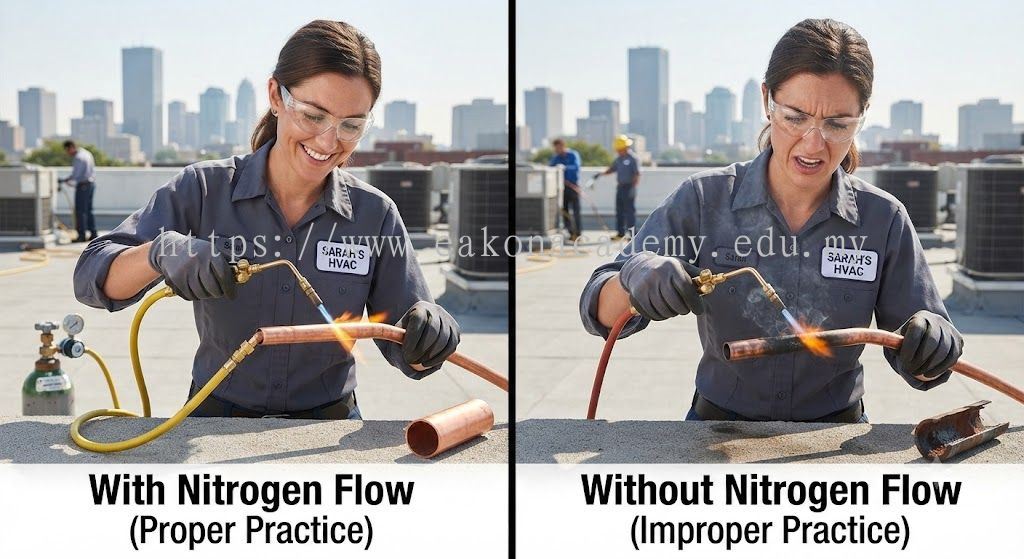
Nitrogen Flow Control During HVAC Brazing
Eakon Academy is a leading provider of professional HVAC-R education, offering industry-focused training programs that prepare technicians with the practical knowledge and hands-on skills required for successful careers in refrigeration and air conditioning. One of the most important technical subjects covered in modern refrigeration training is nitrogen flow control during HVAC brazing. Proper nitrogen flow control has become an essential industry practice because it prevents internal oxidation, protects refrigeration system components, improves brazed joint quality, and ensures long-term system reliability. As HVAC-R systems become more energy efficient and technologically advanced, technicians must understand how to accurately control nitrogen flow throughout the brazing process to meet professional installation standards and manufacturer recommendations.
Nitrogen flow control during HVAC brazing begins with understanding the purpose of nitrogen purging. During copper pipe brazing, high temperatures generated by the brazing torch cause oxygen inside the tubing to react with heated copper surfaces. This reaction forms copper oxide scale, commonly referred to as black oxidation inside the pipe. Once the refrigeration system is placed into operation, these contaminants may circulate with the refrigerant and compressor oil, clogging expansion valves, restricting refrigerant flow, contaminating lubrication systems, and causing premature compressor wear. Maintaining controlled nitrogen flow throughout the brazing process eliminates oxygen from the inside of the piping, preventing oxidation and preserving the cleanliness of the refrigeration circuit.
One of the key principles of nitrogen flow control during HVAC brazing is maintaining a gentle and continuous nitrogen purge. The objective is not to pressurize the refrigeration system but to slowly displace oxygen from the inside of the copper tubing. Nitrogen should flow at a low, stable rate that provides continuous protection without creating turbulence inside the pipe. Excessive nitrogen flow may cool the copper joint too quickly, interfere with the movement of molten brazing alloy, or reduce the quality of the finished connection. On the other hand, insufficient nitrogen flow may allow oxygen to remain inside the tubing, increasing the likelihood of internal oxidation. Learning to achieve the correct balance is one of the defining skills of a professional HVAC technician.
Proper equipment setup is another important aspect of nitrogen flow control during HVAC brazing. Before beginning any brazing work, technicians should securely position the nitrogen cylinder in an upright position and connect it to an approved pressure regulator and flow control device. Regulators, hoses, fittings, and connections should be inspected carefully for leaks or damage before opening the cylinder valve. Nitrogen should enter one end of the refrigeration piping while the opposite end remains open, allowing a steady flow through the entire section being brazed. This arrangement ensures that oxygen is continuously displaced while maintaining safe and consistent operating conditions throughout the installation.
Copper pipe preparation also plays a significant role in successful nitrogen flow control during HVAC brazing. Copper tubing should be accurately measured, cut, deburred, and thoroughly cleaned before assembly. Removing dirt, moisture, oil, and oxidation from the pipe surfaces improves filler metal bonding and enhances the overall quality of the brazed joint. Correct pipe alignment and proper joint clearance allow the brazing alloy to flow evenly through capillary action while nitrogen continues to protect the inside of the tubing from oxidation.
Heat control and nitrogen flow must work together throughout the brazing process. Technicians should use a properly adjusted neutral flame and apply heat evenly around the copper fitting rather than directly heating the filler alloy. Uniform heating allows the brazing alloy to melt smoothly and flow naturally into the joint, creating a strong metallurgical bond. Nitrogen flow should begin before heating starts and continue until the brazed joint has cooled sufficiently. Maintaining uninterrupted nitrogen flow throughout both the heating and cooling stages prevents oxygen from entering the tubing while the copper remains at elevated temperatures, ensuring clean internal pipe surfaces from start to finish.
Inspection and testing are essential final steps in nitrogen flow control during HVAC brazing. After the joints have cooled naturally, technicians should perform a detailed visual inspection to verify smooth filler distribution, complete penetration, and consistent joint appearance. Pressure testing with dry nitrogen confirms the structural integrity of the refrigeration piping, while leak detection procedures verify that every brazed connection is fully sealed before refrigerant charging. These quality control measures reduce future service calls, improve customer satisfaction, and ensure compliance with HVAC-R industry standards.
At Eakon Academy, students receive extensive practical instruction in nitrogen flow control during HVAC brazing through classroom learning and realistic workshop exercises. The curriculum includes copper pipe preparation, nitrogen cylinder handling, pressure regulator adjustment, torch operation, silver brazing techniques, leak testing, pressure testing, refrigeration system commissioning, and workplace safety. This comprehensive approach prepares graduates to perform professional-quality HVAC-R installations in residential, commercial, and industrial environments while meeting the expectations of employers and industry regulations.
In conclusion, mastering nitrogen flow control during HVAC brazing is essential for producing clean, efficient, and dependable refrigeration systems. Proper nitrogen purging prevents internal oxidation, protects compressors and other critical HVAC components, improves refrigerant circulation, enhances energy efficiency, and extends equipment lifespan. When combined with accurate copper pipe preparation, controlled heat application, comprehensive inspection, and professional training from Eakon Academy, technicians develop the expertise needed to deliver leak-free, high-performance refrigeration systems that comply with modern HVAC-R industry standards and provide long-lasting operational reliability.
More detail about EAKON ACADEMY SDN BHD Malaysia