HVAC Brazing Nitrogen Flow Safety Procedures
Eakon Academy is a leading HVAC-R training institution committed to preparing future technicians with practical knowledge, technical expertise, and industry-standard safety practices. One of the most essential topics covered in professional refrigeration training is HVAC brazing nitrogen flow safety procedures, which focuses on the safe and correct use of nitrogen during copper pipe brazing operations. Nitrogen purging is widely recognized as an industry best practice because it prevents internal oxidation inside refrigeration piping while improving system cleanliness and long-term reliability. However, technicians must also understand the proper safety procedures associated with handling pressurized nitrogen cylinders, regulators, hoses, and brazing equipment to ensure a safe working environment.
HVAC brazing nitrogen flow safety procedures begin with proper preparation before any brazing work starts. Technicians should always inspect nitrogen cylinders, regulators, hoses, and fittings for signs of damage, corrosion, or leaks before connecting the equipment. All cylinders must be stored and transported in an upright position and secured with chains or approved restraints to prevent accidental tipping. Regulators should be compatible with the nitrogen cylinder and installed according to manufacturer recommendations. Before opening the cylinder valve, technicians should verify that all connections are secure and that the regulator adjustment is fully released to prevent sudden pressure surges.
Personal protective equipment (PPE) plays a vital role in HVAC brazing nitrogen flow safety procedures. Every technician should wear safety glasses or a face shield to protect against flying particles and accidental pressure release. Heat-resistant gloves protect hands from hot copper tubing and torch equipment, while flame-resistant clothing minimizes the risk of burns during brazing operations. Safety footwear and appropriate work attire further reduce workplace hazards, particularly when working in commercial or industrial mechanical rooms where heavy equipment and pressurized systems are present.
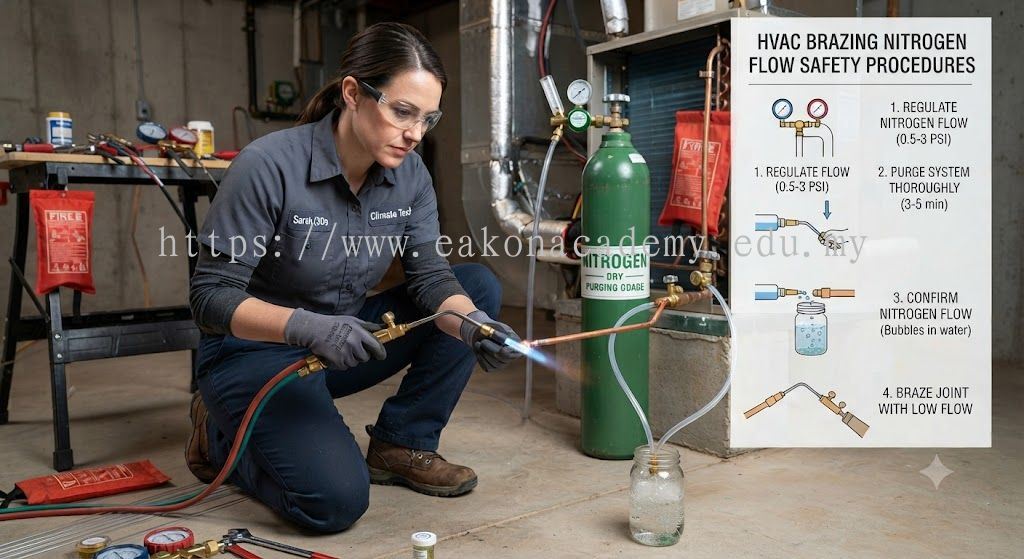
Correct nitrogen flow control is another essential aspect of safe brazing practices. Nitrogen is not intended to create high pressure inside the piping during brazing. Instead, it should be regulated to provide only a gentle and continuous purge that displaces oxygen from the copper tubing. Excessive nitrogen pressure may interfere with filler metal flow, affect joint quality, or even create unnecessary stress inside the piping system. Technicians are trained to use flow meters and pressure regulators correctly so that nitrogen flows consistently without disrupting the brazing process.
Proper ventilation is also an important component of HVAC brazing nitrogen flow safety procedures. Although nitrogen itself is non-toxic, excessive nitrogen released into enclosed spaces can reduce oxygen levels and create an oxygen-deficient atmosphere. Technicians should always perform brazing work in well-ventilated areas or ensure adequate mechanical ventilation when working indoors. This helps maintain a safe breathing environment while also removing heat and fumes generated during brazing. Awareness of confined space safety is particularly important when working inside plant rooms, crawl spaces, or enclosed equipment rooms.
Safe torch handling must always be coordinated with nitrogen purging. Technicians should ignite the brazing torch only after confirming that nitrogen flow has been properly established through the copper piping. The flame should be carefully controlled and directed only at the joint area while protecting nearby electrical wiring, insulation materials, valves, and other sensitive components. Heat shields may be used where necessary to minimize fire hazards and protect adjacent equipment from excessive temperatures.
Following the completion of brazing, HVAC brazing nitrogen flow safety procedures require technicians to shut down equipment in the correct sequence. The torch should be extinguished safely, gas cylinders should be closed securely, and nitrogen pressure should be released from the regulator before disconnecting hoses. Copper joints should be allowed to cool naturally before handling or conducting pressure tests. After cooling, technicians should inspect the brazed joints visually and perform nitrogen pressure testing or leak testing to verify that the system remains fully sealed and free from defects.
Professional training is essential for mastering HVAC brazing nitrogen flow safety procedures because safe work practices combine technical knowledge with practical experience. At Eakon Academy, students receive comprehensive hands-on training that covers nitrogen cylinder handling, pressure regulator adjustment, safe torch operation, copper pipe preparation, leak testing, and industry-standard refrigeration installation procedures. The programs are designed to help learners develop confidence while following internationally recognized HVAC-R safety standards and best practices.
In conclusion, understanding HVAC brazing nitrogen flow safety procedures is fundamental for every refrigeration and air conditioning technician. Proper nitrogen handling, accurate flow regulation, effective personal protective equipment, safe torch operation, and disciplined inspection procedures all contribute to producing clean, leak-free refrigeration systems while protecting technicians and equipment. Through quality training and practical experience at Eakon Academy, HVAC professionals can develop the expertise required to perform safe, efficient, and professional copper brazing work that meets modern industry expectations and delivers reliable long-term system performance.
More detail about EAKON ACADEMY SDN BHD Malaysia