
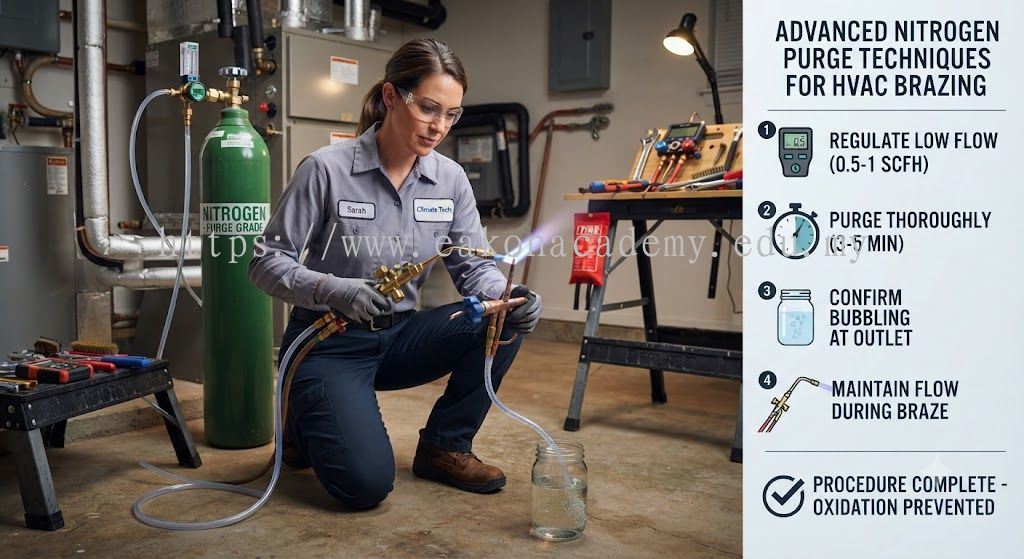
Advanced HVAC Brazing Nitrogen Flow Techniques
Eakon Academy is a professional HVAC-R training institution dedicated to producing highly skilled technicians through structured, hands-on education in refrigeration and air conditioning systems. One of the most advanced and critical skill areas in modern refrigeration work is advanced HVAC brazing nitrogen flow techniques, which ensures the internal cleanliness, structural integrity, and long-term performance of copper piping systems. In HVAC-R applications, brazing is used to permanently join copper tubes that carry refrigerant, and the use of controlled nitrogen flow during this process is essential to prevent internal oxidation, maintain system efficiency, and protect key components such as compressors and expansion valves.
Advanced HVAC brazing nitrogen flow techniques begin with a proper understanding of nitrogen’s role in the brazing process. When copper tubing is heated without protection, oxygen inside the pipe reacts with the metal surface, creating internal oxidation or scale. This contamination can reduce refrigerant flow, decrease heat transfer efficiency, and cause long-term damage to the system. By introducing a controlled flow of nitrogen during brazing, technicians can displace oxygen inside the pipe, preventing oxidation and ensuring a clean internal surface. This results in higher system efficiency and significantly improved reliability.
One of the key aspects of advanced HVAC brazing nitrogen flow techniques is correct flow regulation. Nitrogen must be introduced at a very low and controlled pressure, typically just enough to maintain a gentle purge without creating turbulence inside the pipe. Excessive flow can disrupt the brazing process by cooling the joint too quickly or disturbing the molten filler metal, while insufficient flow may fail to fully prevent oxidation. Skilled HVAC technicians are trained to adjust regulators precisely to achieve optimal nitrogen flow conditions for different pipe sizes and system requirements.
Proper setup of nitrogen flow is another essential component. Before brazing begins, technicians must connect the nitrogen cylinder, regulator, and flow control system securely to the refrigeration piping. The nitrogen should be introduced from one end of the piping system and allowed to exit through the open end, ensuring continuous purging throughout the brazing process. This controlled flow must be maintained consistently from pre-heating until the joint has fully cooled to prevent any exposure to oxygen.
Timing is also critical in advanced HVAC brazing nitrogen flow techniques. Nitrogen flow should begin before heat is applied and continue throughout the entire brazing operation, including the cooling phase. This ensures that oxidation is prevented not only during heating but also as the metal cools and solidifies. Proper timing helps maintain a clean internal pipe surface and enhances long-term system performance.
Integration of nitrogen flow with heat control is another advanced skill. Technicians must balance torch movement, heat intensity, and nitrogen flow simultaneously to achieve high-quality brazed joints. Overheating combined with improper nitrogen control can still lead to defects, while proper coordination ensures smooth filler metal flow, strong bonding, and clean internal surfaces.
Post-brazing verification is also part of advanced HVAC brazing nitrogen flow techniques. After completion, technicians inspect joints for external quality and ensure system cleanliness through pressure testing and leak detection. A properly purged system will show improved reliability, reduced contamination risk, and better overall refrigeration performance.
At Eakon Academy, students are trained through advanced HVAC-R programs that emphasize advanced HVAC brazing nitrogen flow techniques in real-world applications. The training focuses on precision control, industry standards, and practical skills development to prepare learners for professional careers in refrigeration and air conditioning systems.
In conclusion, mastering advanced HVAC brazing nitrogen flow techniques is essential for achieving clean, efficient, and durable refrigeration systems. Proper nitrogen control, disciplined brazing practices, and professional training ensure long-term system reliability, reduced maintenance costs, and excellence in the HVAC-R industry.
More detail about EAKON ACADEMY SDN BHD Malaysia
