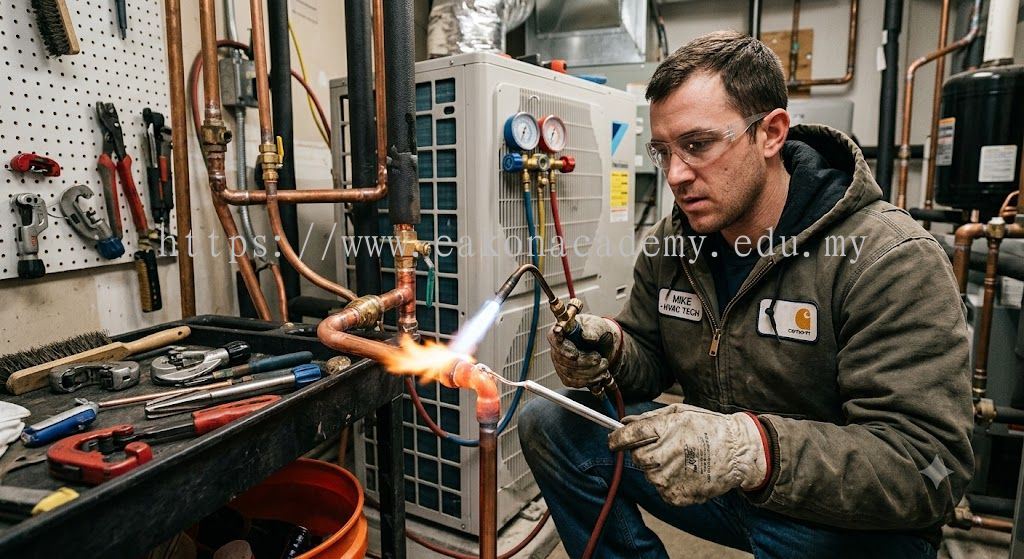
COPPER TUBE BRAZING HVAC JOINING METHOD FOR HIGH-PERFORMANCE REFRIGERATION SYSTEMS
The copper tube brazing HVAC joining method is one of the most critical and widely used techniques in modern refrigeration and air conditioning systems, ensuring strong, durable, and leak-free connections between copper pipes. In HVAC installations, copper tubing is the backbone of refrigerant circulation, and the quality of every joint directly affects system performance, energy efficiency, and long-term reliability. At eakonacadem.edu.my, understanding the copper tube brazing HVAC joining method is essential for technicians, engineers, and students who aim to develop professional skills in HVAC installation and maintenance. This method is especially important in high-pressure refrigeration systems where safety, strength, and precision are required to prevent refrigerant leakage and system failure.
Copper tube brazing involves the use of a high-temperature filler metal, typically silver-based alloy, which melts at temperatures above 450°C and creates a metallurgical bond between copper surfaces. Unlike soft soldering, brazing produces significantly stronger joints that can withstand high pressure and vibration commonly found in HVAC systems. One of the most important aspects of this method is proper heat control, as overheating or uneven heating can weaken the joint or damage the copper tubing. When performed correctly, brazed joints provide excellent mechanical strength and long-term durability, making them ideal for commercial air conditioning, refrigeration systems, cold rooms, and industrial HVAC applications.
Another essential component of the copper tube brazing HVAC joining method is nitrogen purging during the brazing process. Nitrogen gas is passed through the copper pipes to prevent oxidation on the internal surfaces while heating. Without nitrogen purging, oxidation can form inside the pipe, leading to contamination, reduced refrigerant flow efficiency, and potential system blockages. Clean internal piping ensures optimal performance and extends the lifespan of the HVAC system. This practice is considered a professional standard in modern HVAC installations and is widely taught in advanced training programs.
Proper joint preparation is also a key factor in successful copper tube brazing. This includes cutting the copper pipe cleanly, deburring sharp edges, cleaning surfaces with appropriate tools, and ensuring a tight fit between the pipe and fitting before applying heat. Any contamination such as oil, dust, or oxidation must be removed to achieve a high-quality bond. Technicians must also use the correct brazing rod and flux when required, depending on the system design and refrigerant type.
The copper tube brazing HVAC joining method is widely recognized for its reliability and strength, especially in systems that operate under high pressure or extreme temperature variations. It is commonly used in split air conditioning systems, VRF/VRV systems, chillers, and large-scale industrial refrigeration setups. Because of its durability, brazing significantly reduces the risk of refrigerant leakage, which helps improve energy efficiency and environmental compliance by minimizing greenhouse gas emissions from refrigerants.
In conclusion, mastering the copper tube brazing HVAC joining method is essential for any HVAC professional seeking high-quality installation results and long-term system reliability. This technique ensures strong, leak-proof joints that can withstand demanding operating conditions while maintaining optimal system performance. At eakonacadem.edu.my, we emphasize practical training and industry-standard practices in copper tube brazing, helping technicians develop the skills needed to meet global HVAC standards and deliver safe, efficient, and professional refrigeration system installations.
More detail about EAKON ACADEMY SDN BHD Malaysia