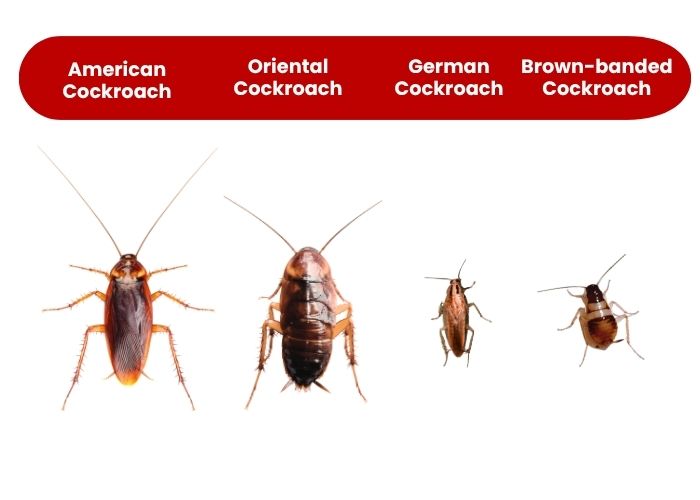
Most people think that when they see a cockroach, kill it – problem solved.
Until one small brown one starts appearing in the kitchen every night, while another giant flying one suddenly fly towards you.
Different cockroaches behave differently. Some stay hidden near food, some come from drains, some hide inside electrical appliances without anyone noticing for months.
In Malaysia, cockroaches are one of the most common pest problems because our weather gives them exactly what they need — heat, moisture, food and endless hiding places.
Knowing which type of cockroach you’re dealing with actually helps a lot. It tells you where they’re likely nesting, what’s attracting them, and why the problem keeps coming back even after spraying.
German Cockroach — the small kitchen nightmare
This is the species most commonly found in homes, restaurants, cafés, and food businesses.
They’re small, light brown, and move ridiculously fast. If you look closely, they usually have two dark lines behind the head.
Most people underestimate them because they’re smaller compared to the large flying cockroaches. But these are actually worse in many ways because they reproduce extremely quickly.
German cockroaches love:
- kitchens
- warm appliances
- greasy surfaces
- hidden cracks near food
They usually hide:
- behind refrigerators
- inside dry food cabinets
- under sinks
- inside microwaves or coffee machines
- behind wall gaps
One reason they spread so easily is because they hitchhike into homes through cardboard boxes, grocery bags, deliveries, or used appliances.
In apartments and condos, they can also travel between units through shared piping and tiny wall gaps.
If you’re seeing small cockroaches during the daytime, the infestation is usually already quite serious.
American Cockroach — the giant flying one everyone fears
This is the large reddish-brown cockroach that sends people into instant panic mode.
They can grow several centimetres long and are capable of short flights or gliding, which somehow always seems to happen directly toward a human face, like it is trying to attack you.
Unlike German cockroaches, American cockroaches are usually linked to drains and sewer systems.
They commonly hide in:
- floor traps
- sewage lines
- garbage rooms
- basements
- manholes
- wet storage rooms
They prefer damp environments and feed on decaying organic matter.
That’s why they often appear after heavy rain. Flooded drains and underground systems force them upward into homes and buildings.
A lot of homeowners think seeing one or two large cockroaches isn’t a big issue. But if they keep appearing repeatedly, especially from bathrooms or kitchens, there’s usually a drainage-related nesting source somewhere nearby.
Brown-Banded Cockroach — the one hiding in strange places
This species behaves differently from most cockroaches because they don’t rely heavily on moisture.
Instead of hanging around sinks and kitchens all the time, they prefer dry and warm areas, similar to German cockroaches.
They’re smaller in size with light brown bands across the body.
You’ll often find them:
- inside wardrobes
- behind picture frames
- near ceilings
- inside electronics
- inside furniture
- in bedrooms or offices
They often spread through storage boxes, furniture, cartons, and second-hand items.
Because they don’t stay concentrated in kitchens, infestations can go unnoticed for quite a long time.
Oriental Cockroach — the drain and garbage type
These are darker, slower-moving cockroaches usually found in damp and dirty environments.
They prefer:
- drains
- wet storerooms
- garbage areas
- underground piping
- damp utility spaces
Compared to other species, they move slower but tend to carry a stronger unpleasant smell.
They’re more common around older buildings, industrial sites, garbage handling areas, and places with poor drainage conditions. This makes them the most dangerous cockroach in terms of bacteria they carry. They also love eating garbage and decomposing food.
Why cockroaches are so hard to get rid of
Cockroaches are built for survival. Some says that they are significantly older than dinosaurs.
Their bodies can flatten into surprisingly tiny spaces. Some can squeeze into gaps only a few millimetres wide.
They also prefer staying hidden in dark areas where people rarely check.
What makes them difficult is that they don’t need much to survive. Tiny grease stains, food crumbs, cardboard glue, or moisture from condensation can already sustain them.
So even homes that appear clean can still support a hidden infestation. And unfortunately, spraying visible cockroaches rarely solves the actual problem.
Usually, the real nesting areas are hidden:
- inside walls
- behind cabinets
- inside drains
- under appliances
- inside ceiling voids
That’s why cockroaches often seem to “come back again” after DIY treatments.
Common signs of a hidden infestation
Sometimes people rarely see live cockroaches but still have an active infestation nearby.
Some common warning signs include:
- droppings that look like black pepper
- egg casings
- musty smells
- baby cockroaches
- dead cockroaches near cabinets or appliances
- sightings at night when lights are switched on
Baby cockroaches are usually a bad sign because it often means breeding is already happening in your space.
A single female cockroach can produce from 6-50 eggs at once, depending on the species. Common household cockroach like German cockroaches can produce 30-40 eggs, while American cockroaches produce around 14-16 eggs. Can you imagine, if you are already seeing one baby cockroach in your house, how many others are hidden?
Where do cockroaches actually come from?
One of the biggest misconceptions is that cockroaches only appear in dirty places.
Not true.
Cockroaches often enter homes through:
- drains
- deliveries
- cardboard boxes
- neighbouring units
- garbage chutes
- plumbing gaps
- second-hand furniture
- open doors and windows
Even very clean homes can experience infestations if nearby units, drainage systems, or surrounding environments are heavily infested.
That's why...
Different cockroaches tell different stories.
Small ones in the kitchen usually point toward indoor nesting close to food sources. Large flying cockroaches often suggest drainage or sewer activity. Others may be hiding quietly inside furniture or electronics for months before anyone notices.
The earlier the species is identified, the easier it becomes to locate the source and stop the infestation properly before it spreads further.
If you are seeing cockroaches in your house, call us immediately before it turns into a full blast infestation.
Click here to know more about our cockroach treatment methods.


 China
China
