

In 2026, the global industrial landscape is no longer defined solely by the quality of steel or the precision of physical fabrication. While these remain the tangible outcomes of any project, the real differentiator in Engineering & Industrial Services has shifted toward the digital backbone of the project. For engineering managers and facility owners in Singapore, the question of whether "Digital Delivery" matters is no longer a theoretical debate: it is a matter of operational survival and regulatory necessity.
Digital delivery in 2026 refers to the seamless transition of engineering data from the initial Front-End Engineering Design (FEED) through to construction, and ultimately into a live Digital Twin for facility management. This approach replaces fragmented paper-based or disconnected CAD workflows with a unified, cloud-native data environment.
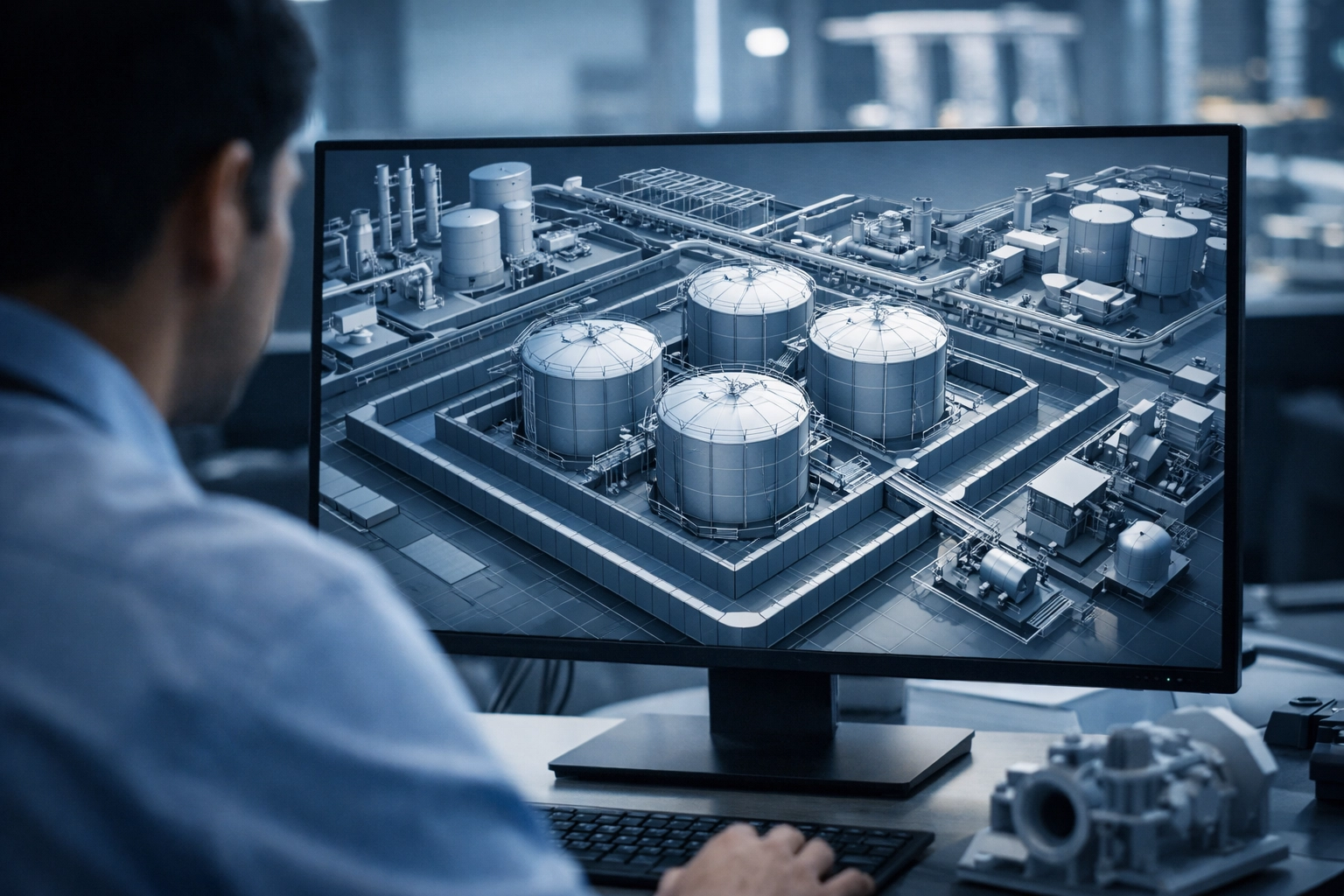
A common misconception is that digital delivery is simply "3D modeling." In 2026, a 3D model is merely the visual shell. The true value lies in the metadata attached to every valve, pump, and pipe segment. Modern plant engineering design requires a transition from static drawings to intelligent, parametric objects.
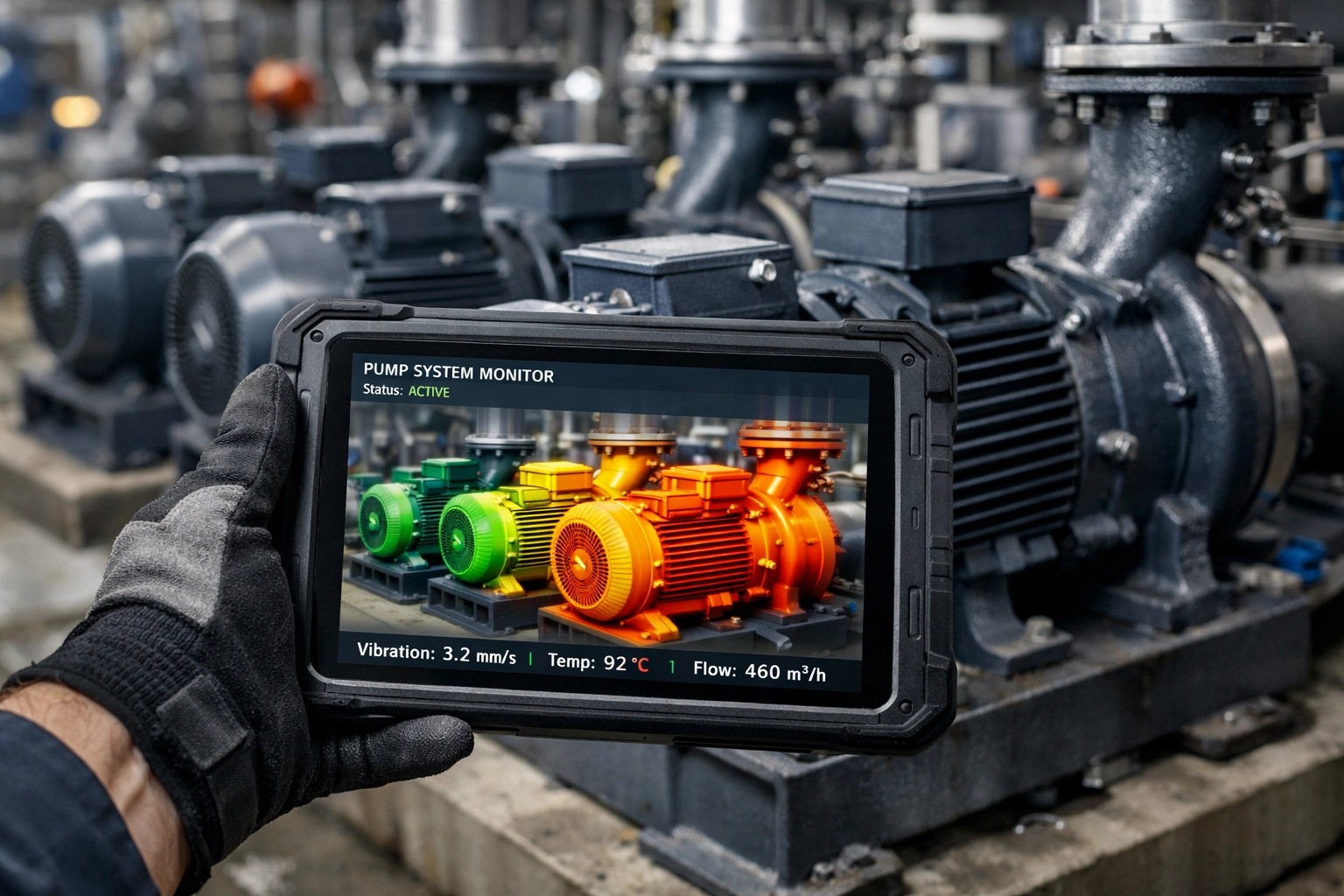
The standard for 2026 is the Cloud-Native Digital Twin. Unlike traditional models that are archived once construction ends, these twins are integrated with real-time sensors and IoT (Internet of Things) devices. This allows for predictive maintenance, where the engineering design software can simulate "what-if" scenarios based on actual operational data. This transition is essential for facilities that require high uptime and cannot afford unplanned shutdowns. By utilizing edge computing, these systems process sensor data directly at the source, reducing latency and allowing for near-instantaneous triggers for quality checks or safety protocols.
AI agents are now standard in checking for clash detection and regulatory alignment. In the past, an engineer might spend weeks manually reviewing Piping and Instrumentation Diagrams (P&ID) against physical layouts. Today, automated algorithms can flag inconsistencies between the logical P&ID and the physical 3D routing in real-time, reducing design errors by up to 30%. These agents don't just find clashes; they suggest optimal routing solutions that account for both space constraints and maintenance accessibility.

The most compelling argument for digital delivery is the measurable impact on the project bottom line. Research and field data from 2026 indicate that firms utilizing fully integrated digital delivery workflows experience timeline reductions of approximately 20%. This is achieved by eliminating the "re-draw" phases that historically occurred when moving from conceptual design to detailed project management and execution.
In the context of Singapore’s high-cost labor market and land constraints, speed is not just a convenience: it is a financial imperative. When engineering data flows directly into procurement and fabrication modules, the "lag time" between design and execution vanishes.
| Feature | Traditional Delivery (Pre-2022) | Digital Delivery (2026) |
|---|---|---|
| Data Format | Disconnected PDF/DWG files | Unified Cloud Database |
| Clash Detection | Manual/Periodic | Real-time / AI-automated |
| Procurement | Manual take-offs from drawings | Automated Bill of Materials (BOM) |
| Regulatory Check | Post-design review | Integrated Compliance (SCDF/SS 532) |
| Handover | Hardcopy folders | Live Digital Twin (Asset Management) |
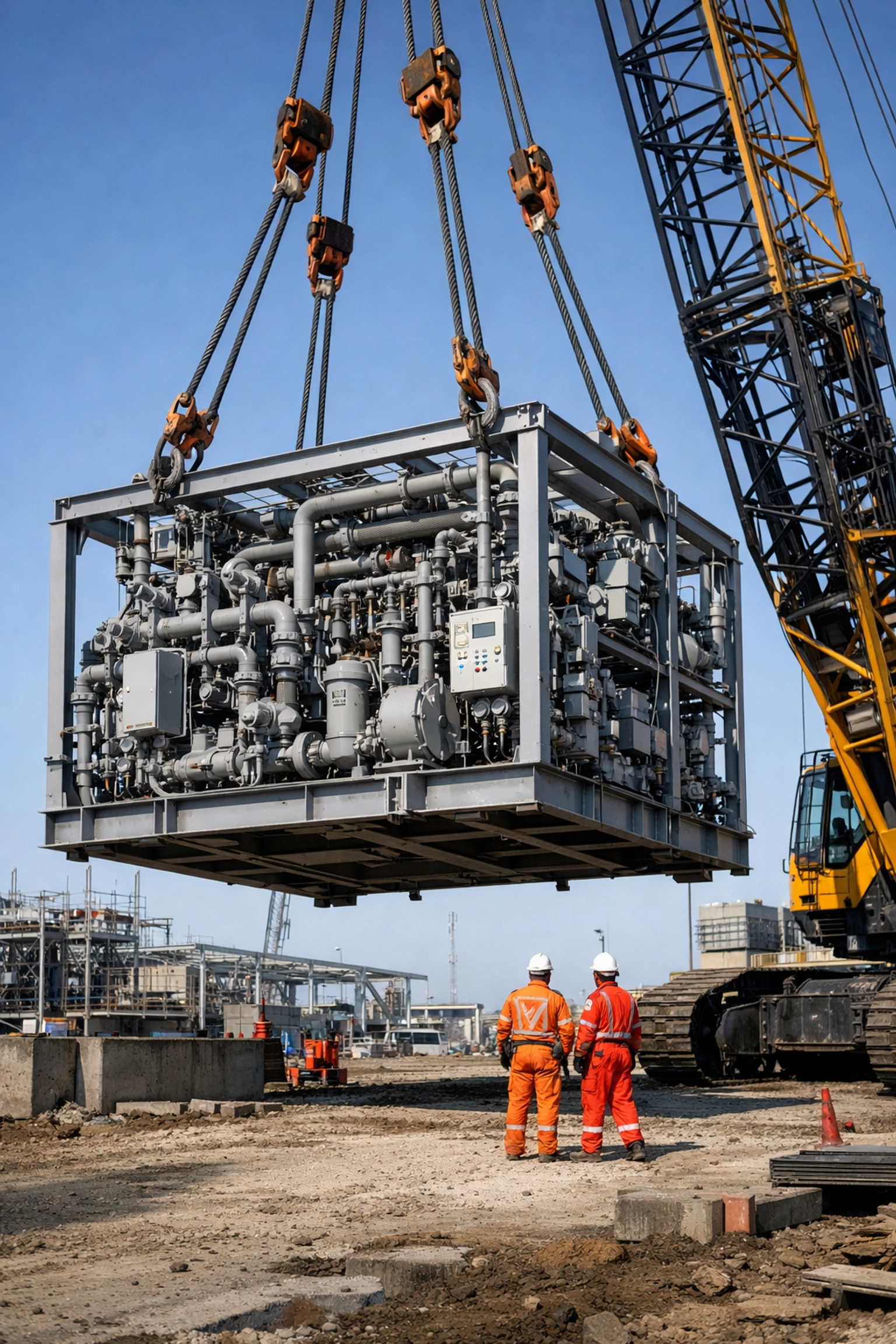
The mantra of 2026 is "Can we produce it globally, repeatedly, and on schedule?" This has led to a massive shift toward Modularization and Prefabricated Prefinished Volumetric Construction (PPVC) for industrial plants.
Digital delivery is the prerequisite for modularization. For a module to be fabricated in a factory and fit perfectly onto a site 5,000 miles away, the digital tolerances must be near-zero. Digital engineering configuration engines allow us to design modular units: such as pump skids or electrical rooms: as independent blocks that are later "snapped" into the master digital model. This factory-led approach reduces on-site labor risks and significantly improves safety, as much of the high-risk work is moved to a controlled factory environment. This is particularly vital in equipment design and fabrication, where precision determines the success of the installation.
While the tools of 2026 are powerful, they are only as effective as the data fed into them. A major hurdle for many organizations is poor-quality data, which undermines the Return on Investment (ROI) of digital twins and AI analytics. If the initial data entry is flawed, the resulting predictive maintenance schedules will be inaccurate, potentially leading to the very equipment failures the system was designed to prevent.
Organizations must implement robust Data Governance frameworks. This means:
At L-Vision Engineering Pte Ltd, we emphasize that digital delivery is not just a software purchase; it is a cultural shift in how data is valued throughout the lifecycle of an industrial asset. We regularly update our latest news with insights on how to manage these data transitions effectively.
Beyond the construction phase, digital delivery provides the foundation for Operational Intelligence. Intelligent modeling workflows allow facility managers to use live streaming data to support predictive, evidence-based decision-making.
For example, in electrical plant engineering, engineers must now design infrastructure that integrates smart grid technology and real-time control systems to manage dynamic loads. A digital delivery package includes the logic for these systems, allowing the facility manager to simulate load changes or renewable energy integration before they are implemented physically. This level of foresight is essential for meeting the sustainability and resilience targets that define the current era. It transforms the engineering model from a static record of what was built into a dynamic tool for managing what is happening.
As we navigate through 2026, the move to digital delivery is no longer a luxury for "mega-projects." It is the standard for any facility that aims to be efficient, compliant, and future-proof. Whether you are operating in the petrochemical sector or food industries, the principles of digital data management remain the same.
For engineering managers and plant owners, the recommendation is clear:
Digital delivery has transitioned from a competitive advantage to a basic requirement for meeting 2026's demand for speed, scale, and resilience. By embracing these tools, firms can ensure their projects are not only built to last but are also designed to adapt to an ever-changing industrial environment.
To see examples of how these digital workflows are applied in real-world scenarios, visit our showcase or explore our full range of engineering services.
 China
China
