Minimum Facilities Required for Worker Hostels in Malaysia
Worker hostels in Malaysia should provide safe, clean and practical facilities for workers. Under Act 446, employers must ensure accommodation is suitable for daily living, properly maintained and supported by basic safety, hygiene and welfare systems.
This guide gives employers a simple checklist of minimum facilities to review before choosing, renting or managing a worker hostel in Malaysia.
Quick Checklist: Minimum Facilities for Worker Hostels
A suitable worker hostel should have:
- Individual beds
- Proper room spacing
- Clean mattresses
- Lockers or storage areas
- Toilets and bathrooms
- Continuous water supply
- Functional drainage
- Kitchen or dining area
- Laundry and drying area
- Adequate lighting
- Proper ventilation
- Fire extinguishers
- Clear emergency exits
- Cleaning schedule
- Pest control records
- Waste disposal system
- House rules
- Complaint channel
1. Sleeping Area
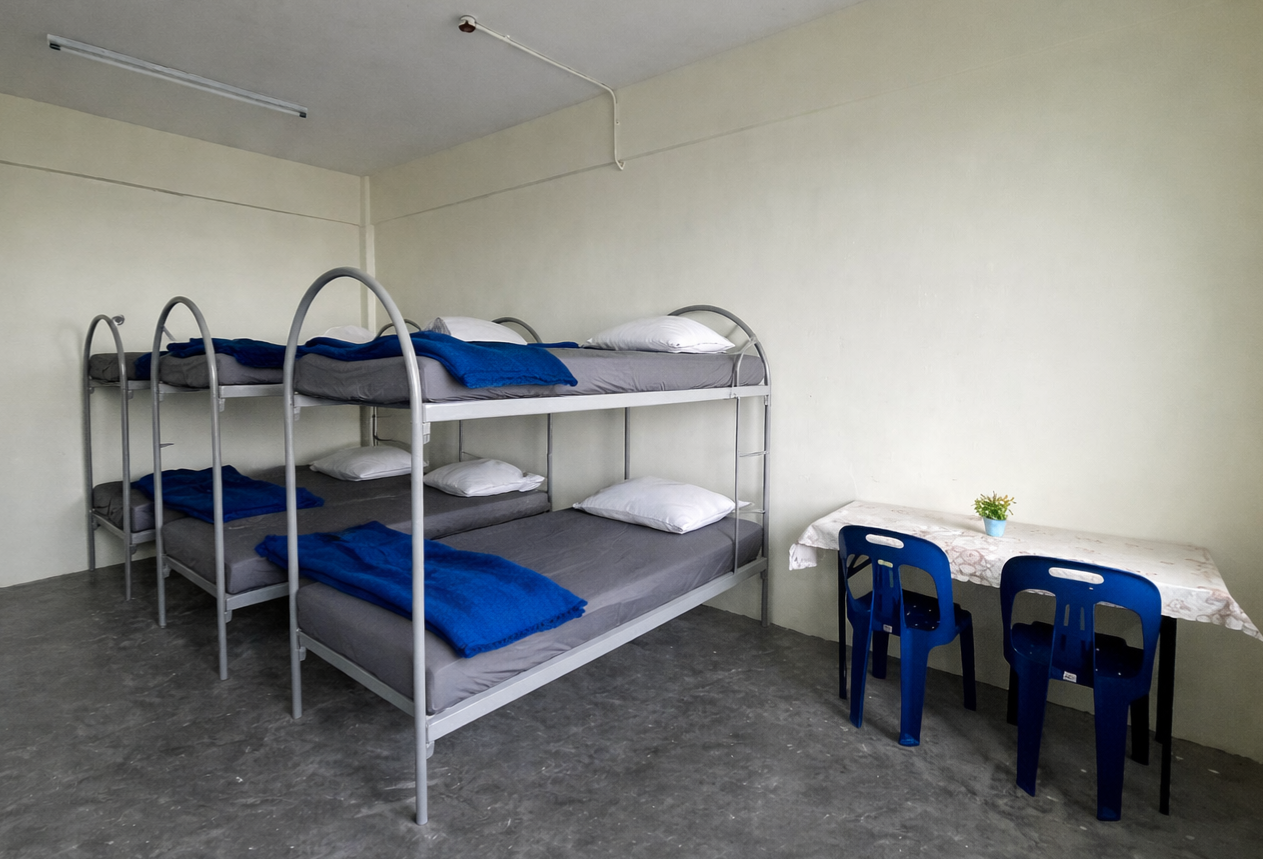
Employers should check whether each worker has proper sleeping space, an individual bed and a clean mattress. Rooms should allow safe movement, rest and ventilation without overcrowding.
Check:
- One bed per worker
- Clean mattress
- Enough room spacing
- Proper ventilation
- Clear walkway
Avoid:
- Bed sharing
- Overcrowding
- Hidden mattresses
- Blocked walkways
2. Storage Space
Workers need a proper place to keep personal belongings, work clothes and valuables. Lockers or storage areas help reduce clutter, improve room cleanliness and prevent disputes over missing items.
Check:
- Locker or personal storage
- Secure area for valuables
- Organised room layout
- Space for daily-use items
Avoid:
- Bags blocking walkways
- Items stored near cooking areas
- No secure storage
- Messy shared rooms
3. Toilets and Bathrooms
Toilets and bathrooms are among the most important facilities in any worker hostel. Employers should check cleanliness, water supply, drainage and whether the facilities are sufficient for the number of workers.
Check:
- Clean toilets and bathrooms
- Continuous water supply
- Functional drainage
- Regular cleaning schedule
Avoid:
- Dirty toilets
- Blocked drains
- Broken doors or fittings
- Insufficient bathroom access
4. Kitchen and Dining Area
A proper kitchen and dining area helps prevent unsafe cooking inside sleeping rooms. Workers should have a designated space for food preparation, cooking and eating.
Check:
- Safe cooking setup
- Clean food preparation area
- Proper waste disposal
- Usable dining space
Avoid:
- Cooking in bedrooms
- Unsafe gas or electrical setup
- Food waste left overnight
- Crowded eating areas
For a practical facility review, employers may refer to this guide on how to inspect a foreign worker hostel before renting.
5. Laundry and Drying Area
Laundry facilities are essential for hygiene and daily living. Workers need a proper place to wash and dry clothes without creating safety or cleanliness issues.
Check:
- Washing area
- Designated drying space
- Proper drainage
- Organised laundry zone
Avoid:
- Clothes drying inside rooms
- Wet floors
- Blocked corridors
- Laundry placed near cooking areas
6. Lighting and Ventilation
Good lighting and ventilation make hostel rooms safer and more comfortable. Poor airflow can cause heat, odour, dampness and discomfort, especially in crowded accommodation.
Check:
- Working lights
- Bright corridors
- Windows, fans or ventilation systems
- Airflow in rooms and toilets
Avoid:
- Dark walkways
- Poor night visibility
- Stuffy rooms
- Damp or smelly areas
7. Safety and Emergency Facilities
Worker hostels should have basic safety systems that are easy to access and properly maintained. These include fire extinguishers, clear emergency exits and visible evacuation information.
Check:
- Valid fire extinguishers
- Clear emergency exits
- Evacuation plan
- First aid readiness
Avoid:
- Blocked exits
- Expired equipment
- Locked emergency routes
- Missing emergency contacts
Employers may also review safety-related support such as ERT and first aid readiness.
8. Cleaning and Waste Management
Cleanliness should be maintained daily, not only before inspections. Toilets, kitchens, dining areas, laundry zones and common areas should be cleaned regularly and monitored properly.
Check:
- Cleaning schedule
- Waste disposal system
- Pest control records
- Clean common areas
Avoid:
- Overflowing rubbish
- Pest problems
- Dirty kitchens
- Cleaning records without real cleanliness
Employers can learn more from this guide on common problems in foreign worker hostels in Malaysia.
9. Worker Welfare and Complaint Channel
A suitable worker hostel should include basic welfare systems. Workers should know the house rules, emergency contacts and how to report maintenance, safety or hygiene issues.
Check:
- House rules displayed
- Complaint channel
- Emergency contact list
- Maintenance request process
Avoid:
- Workers unsure who to contact
- Complaints not recorded
- No follow-up on repairs
- Poor communication
Minimum Worker Hostel Facility Table
| Facility Area | What to Check | Common Risk |
|---|---|---|
| Sleeping area | Bed, mattress, spacing | Overcrowding |
| Toilets | Cleanliness, water, drainage | Hygiene complaints |
| Kitchen | Safe cooking, food prep area | Fire and hygiene risk |
| Laundry | Washing and drying area | Clothes drying in rooms |
| Ventilation | Airflow, windows, fans | Heat and discomfort |
| Safety | Fire extinguisher, exits | Audit failure |
| Welfare | Complaint channel, rules | Worker dissatisfaction |
Facilities Alone Are Not Enough
A hostel may have beds, toilets and kitchens, but still fail if those facilities are dirty, damaged or poorly managed.
Employers should also maintain:
- Cleaning records
- Maintenance logs
- Pest control records
- Safety inspection records
- Worker complaint records
The real issue is not only whether facilities exist, but whether they are properly managed every day.
Need a Managed Worker Hostel in Malaysia?
LG Solution provides managed foreign worker hostel accommodation with room allocation, hygiene monitoring, safety support, maintenance coordination and worker welfare systems.
Employers looking for a structured foreign worker hostel in Malaysia can contact the team to discuss location, capacity and accommodation needs.
Additional support such as CCTV and 24-hour systems can also strengthen hostel monitoring, safety and day-to-day facility control.
Conclusion
Minimum facilities required for worker hostels in Malaysia include proper sleeping areas, toilets, bathrooms, kitchen and dining areas, laundry spaces, lighting, ventilation, safety equipment, cleaning systems, waste control and worker welfare channels.
A good hostel should not only provide these facilities, but also maintain them consistently. When facilities are clean, safe, functional and properly managed, employers can reduce compliance risk, improve worker living conditions and support smoother workforce operations.

Register no. 739151-K